


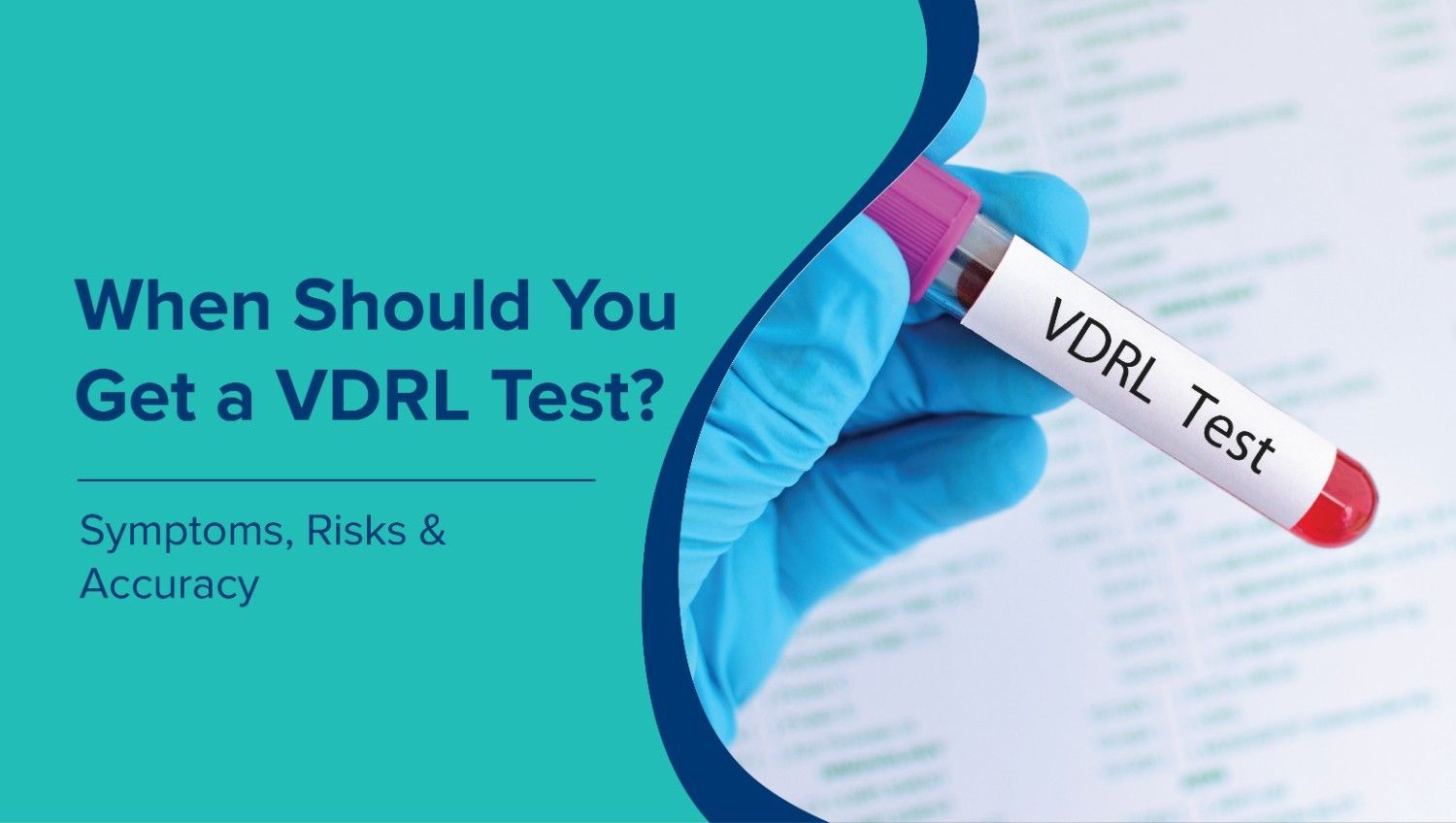


Sexually transmitted infections (STIs) continue to be a major public health concern around the world, with syphilis ranking among the most serious. Despite being a very old disease, syphilis continues to affect millions of people each year, often because it can remain silent in its early stages.
The VDRL test (Venereal Disease Research Laboratory test) is one of the most commonly used diagnostic tests to detect syphilis. Knowing when to get a VDRL test, what the symptoms and risks are, and how accurate the test is can all help with early diagnosis and treatment.What Is the VDRL Test?
The VDRL test is a blood-based screening tool for syphilis, a sexually transmitted infection (STI) caused by the bacterium Treponema pallidum. Rather than directly detecting the bacteria, the VDRL test works by identifying nonspecific antibodies. These antibodies are produced by the body as an immune response to cell damage resulting from the infection.
The VDRL test is commonly utilized as an initial screening tool due to its simplicity, low cost, and broad availability. A positive result from the VDRL test typically requires a subsequent confirmatory test, such as TPHA or FTA-ABS, to finalize the diagnosis.
When Should You Get a VDRLTest?
You should consider getting a VDRL test in multiple situations, even if you feel completely healthy. Early testing is essential because syphilis can progress silently and cause serious complications if left untreated.
1. If You Have Symptoms of Syphilis
Syphilis develops in stages, and symptoms can vary depending on the stage of infection.
Primary syphilis: Characterized by a painless sore at the site of infection, usually on the genitals, anus, or mouth. The sore may heal on its own, so many people ignore it.
Secondary syphilis: Identified by skin rashes (often on palms and soles), fever, sore throat, swollen lymph nodes, fatigue, and muscle aches.
Latent syphilis (silent): It shows no visible symptoms, but the infection remains in the body.
Tertiary syphilis: This type can cause severe complications affecting the brain, heart, nerves, and other organs.
If you notice any unusual sores, rashes, or unexplained symptoms, consult with your doctor for a VDRL test.
2. After Unprotected Sexual Contact
If you have had unprotected sex, you should get tested for STIs, including syphilis. Even if your partner appears healthy, syphilis can be present without symptoms.
3. Partner diagnosed with Syphilis
If your sexual partner tests positive for syphilis, you should get tested right away, regardless of whether you have symptoms. Early detection allows for timely treatment and prevents further spread.
4. During Pregnancy
Routine VDRL testing is recommended for pregnant women. Untreated syphilis during pregnancy can increase the risk of miscarriage, stillbirth, premature birth, or congenital syphilis for the baby. Early screening and subsequent treatment can significantly lower the risk
5. As Part of Routine Health Checkups
In some cases, doctors may recommend a VDRL test as part of routine health screening, especially for individuals at greater risk, such as people with multiple sexual partners or individuals with HIV or other sexually transmitted infections.
Symptoms That Call for a VDRL Test
Syphilis symptoms often resemble those of many other diseases. You should consider a VDRL test if you experience:
- painless genital or oral sores
- Skin rash, particularly on the palms and soles.
- persistent fever or fatigue.
- Swollen lymph nodes.
- Hair loss occurs in patches.
- Neurological symptoms such as headaches, vision problems, or memory issues (in the later stages)
Note: Even if you feel better, testing is still necessary because symptoms may disappear without treatment.
How Is the VDRL Test Performed?
Preparation
Preparing for a VDRL test is simple and requires minimal effort:
Fasting: No fasting or special diet is required before the test.Medications: Inform your doctor about any medications, supplements, or antibiotics you are currently taking, as some may affect results.
Clothing: Wear loose-fitting or short-sleeved clothing to ensure easy access to your arm.
Comfort: Let the technician know if you are nervous about needles so that they can help you comfortably.
Procedure for the VDRL Test (Blood Sample)
Site Preparation: A healthcare expert cleans the skin over a vein in your arm using an antiseptic.Tourniquet Application: A tourniquet may be placed around the upper arm to make the vein more visible.
Blood Collection: A sterile needle is inserted into the vein for blood sample collection
Completion: The bandage is removed, and the sample is sent to the laboratory for analysis.
Duration: The entire procedure usually takes only a few minutes.
VDRL Test Result Interpretation
Negative (Non-Reactive) Result:
A non-reactive VDRL test means no syphilis antibodies are detected in the blood, suggesting the person is unlikely to have syphilis. However, false-negative results can occur in very early or late stages of infection, so a doctor may recommend repeat or additional testing if symptoms or risk factors are present.
Positive (Reactive) Result:
A reactive VDRL test indicates that the body has produced antibodies against Treponema pallidum, the bacterium responsible for syphilis. This result does not confirm an active infection, as antibodies can remain after previous treatment, and a confirmatory treponemal test is required to make a definitive diagnosis.
Complications With Syphilis if Left Untreated
Delaying or avoiding syphilis testing can have serious consequences:
- Disease progression: Untreated syphilis can cause damage to the heart, brain, nerves, eyes, and other organs.
- Increased HIV risk: Syphilis sores increase the likelihood of contracting or transmitting HIV.
- Pregnancy complications: Serious harm to the unborn child, including congenital syphilis.
- Transmission to others: Failure to diagnose the infection increases the risk of spreading it to sexual partners.


 Call: 9240299624

