


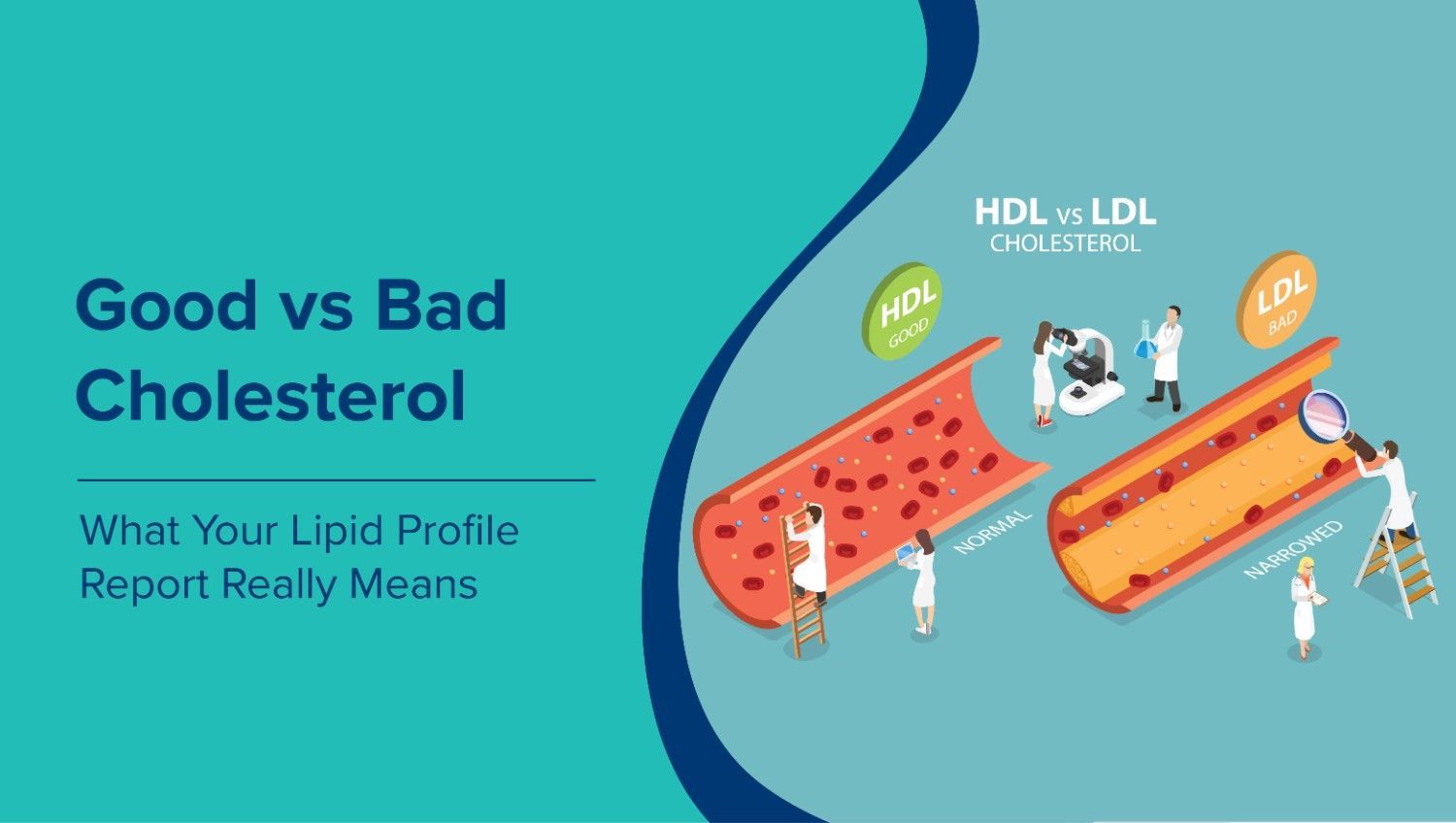


Understanding your cholesterol levels is essential for protecting your heart health. Often, when people get their lipid profile report, they look at the numbers and feel unsure about their significance. Terms like HDL, LDL, triglycerides, and total cholesterol may seem technical, but each provides vital information about your cardiovascular risk.
This guide explains the differences between good and bad cholesterol, how to interpret your lipid profile results, and how to maintain healthy levels.
What Is Cholesterol, and Why Does It Matter?
Cholesterol is a waxy, fat-like substance found in your blood. Cholesterol plays several biological roles, including membrane biosynthesis, hormone production, and vitamin D synthesis. However, too much cholesterol can accumulate in your arteries, leading to blockage, thus increasing your risk of heart disease and stroke.
Good Vs Bad Cholesterol
HDL (High-Density Lipoprotein) Cholesterol
Also known as good cholesterol, it helps remove excess cholesterol from your bloodstream and transports it to the liver, where it can be processed and eliminated. Higher HDL levels are associated with a lower risk of heart disease.
Normal HDL level
- Men: 40 mg/dL or above
- Women: 50 mg/dL or above
- Optimal heart protection: 60 mg/dL or above
LDL(Low-Density Lipoprotein) Cholesterol
Also called "bad" cholesterol because it can clog your arteries. When LDL levels are high, cholesterol can stick to artery walls, forming plaque. Over time, this plaque narrows arteries and increases the risk of heart attack, stroke, and peripheral artery disease.
Normal LDL levels:
- Ideal: Less than 100 mg/dL
- Near optimal: 100–129 mg/dL
- High: 160 mg/dL or above
What Causes High Cholesterol
Below are some of the lifestyle and dietary habits that can lead to a build-up of cholesterol in the blood
Smoking & Tobacco Use: Too much smoking actively lowers your good cholesterol (HDL) while simultaneously raising your bad cholesterol (LDL), damaging your blood vessels in the process, thus affecting overall heart health.Chronic Stress: High stress may trigger hormonal shifts that increase cholesterol production. Managing your mind is a key part of managing your levels.
Alcohol Consumption: Moderation is vital. Excessive alcohol intake can spike your total cholesterol and lead to higher triglyceride levels.
Sedentary Lifestyle: Movement is essential for maintaining your body's fitness. Regular aerobic exercise increases your "good" cholesterol, while long periods of sitting reduce your body’s efficiency in removing harmful substances.
Dietary habits: What you eat is one of the most significant levers you can pull. Certain foods can drive your numbers up or help flush them out. If your levels are a concern, a healthcare provider might suggest specific dietary changes or a consultation with a nutritionist.
Smoking & Tobacco Use: Too much smoking actively lowers your good cholesterol (HDL) while simultaneously raising your bad cholesterol (LDL), damaging your blood vessels in the process, thus affecting overall heart health.
Symptoms of High Cholesterol
High cholesterol comes with no noticeable symptoms. Therefore, a blood test, such as a lipid panel, is usually required for diagnosis. Some common symptoms, however, are listed below.
Chest Pain (Angina): A sensation of tightness or discomfort in the chest caused by reduced blood flow to the heart.Fatigue and Weakness: Persistent tiredness or low energy resulting from inadequate blood circulation to organs and muscles.
Shortness of Breath: Difficulty breathing, especially during physical exertion or when lying flat.
Xanthomas: Yellowish, fatty lumps on the skin, commonly appearing on the elbows, knees, or buttocks.
Xanthelasma: Yellowish deposits that form around the eyelids.
Corneal Arcus: A white or grey ring around the outer edge of the cornea, found in younger individuals.
Leg Cramping or Pain: Aching, cramping, or discomfort in the legs during activity is often linked to peripheral artery disease.
Note: Consult with your doctor to confirm symptoms and find the best treatment options for better recovery
Test to Diagnose High Cholesterol Level In Blood
Your healthcare provider will first perform a physical examination, including checking for symptoms and past medical history. Based on this, they will order a simple blood test called a Lipid Panel (or Lipid Profile).
The Procedure
- A small sample of blood is taken from a vein in your arm or via a quick finger prick.
- To ensure the accuracy of the test results, a fast of 9 to 12 hours is typically required before the lipid profile is drawn. During this time, only water is permitted (no food or other drinks).
A standard lipid profile blood test measures several markers:
Total Cholesterol
This is the total amount of cholesterol in your blood, including HDL, LDL, and other lipid components.
Triglycerides
Triglycerides are a type of fat found in your bloodstream. High levels are frequently accompanied by low levels of HDL and high levels of LDL, indicating an increased risk of developing heart disease.
VLDL (Very Low-Density Lipoprotein)
Some reports also include VLDL, which carries triglycerides. High levels can contribute to the formation of arterial plaque.
Interpreting Cholesterol Level in Adults (20+)
| Category | Total Cholesterol | HDL ("Good") | LDL ("Bad") | Triglycerides (Fats) |
|---|---|---|---|---|
| Good / Optimal | < 200 | 60+ (Ideal) | < 100 | < 150 |
| Borderline | 200 – 239 | 40–59 | 130 – 159 | 150 – 199 |
| High | 240+ | — | 160+ | 200+ |
For Children & Adolescents by Age (Ages 0–19)
| Status | Total Cholesterol | HDL ("Good") | LDL ("Bad") | Triglycerides (Age 0–9) | Triglycerides (Age 10–19) |
|---|---|---|---|---|---|
| Desirable | ≤ 170 | > 45 | < 110 | < 75 | < 90 |
| Borderline | 170 – 199 | 40 – 45 | 110 – 129 | 75 – 99 | 90 – 129 |
| High | ≥ 200 | — | ≥ 130 | ≥ 100 | ≥ 130 |
| Low | — | < 40 | — | — | — |
Key Points
- Females generally require higher HDL levels (above 50 mg/dL) because estrogen typically helps boost "good" cholesterol. A drop in HDL is often seen post-menopause.
- For individuals with existing Coronary Artery Disease (CAD) or diabetes, the "Good" LDL target often drops from 100 to 70 mg/dL or lower.
- Unlike LDL, which is heavily influenced by genetics, triglycerides are highly sensitive to sugar, alcohol, and inactivity.
- Notice that the triglyceride "normal" ranges increase as a child turns 10. This reflects metabolic changes during puberty.
Who Should Get a Lipid Profile Test?
Doctors recommend cholesterol testing for:
- Adults aged 20+ every 4–6 years
- People with diabetes or hypertension (more frequent testing)
- Individuals with family history of heart disease
- Overweight or sedentary individuals
How To Manage Cholesterol Level At Home
Cholesterol levels can often be improved through consistent lifestyle changes and proper medical care.
Consume heart-healthy foods: fruits, vegetables, whole grains, nuts, seeds, and omega-3-rich fatty fish daily. Simultaneously, reduce intake of fried foods, red meat, and processed snacks, which can increase unhealthy cholesterol levels.Exercise Regularly: Physical activity helps raise HDL (good cholesterol) and lower LDL (bad cholesterol). Aim for at least 150 minutes of moderate exercise each week, such as brisk walking, cycling, or swimming.
Maintain a Healthy Weight: Shedding just 5–10% of your body weight can greatly enhance cholesterol levels and promote heart health.
Quit Smoking: Smoking lowers HDL cholesterol and damages blood vessels, thereby increasing cardiovascular risk. Quitting can improve cholesterol balance and circulation within a few weeks.
Medication: If lifestyle changes alone are insufficient, doctors may prescribe statins or other lipid-lowering drugs. These should always be taken under medical supervision and with regular monitoring.
Final Thoughts
Understanding your lipid profile report helps you assess your heart health. Keeping HDL (good cholesterol) high and LDL (bad cholesterol) low through a healthy diet, regular exercise, and consistent testing can greatly lower your risk of heart disease. Regular monitoring, along with prompt medical guidance, is essential for maintaining balanced cholesterol levels and a healthy heart.


 Call: 9240299624

