Hi Guest Login
Home > Service > Sleep Study
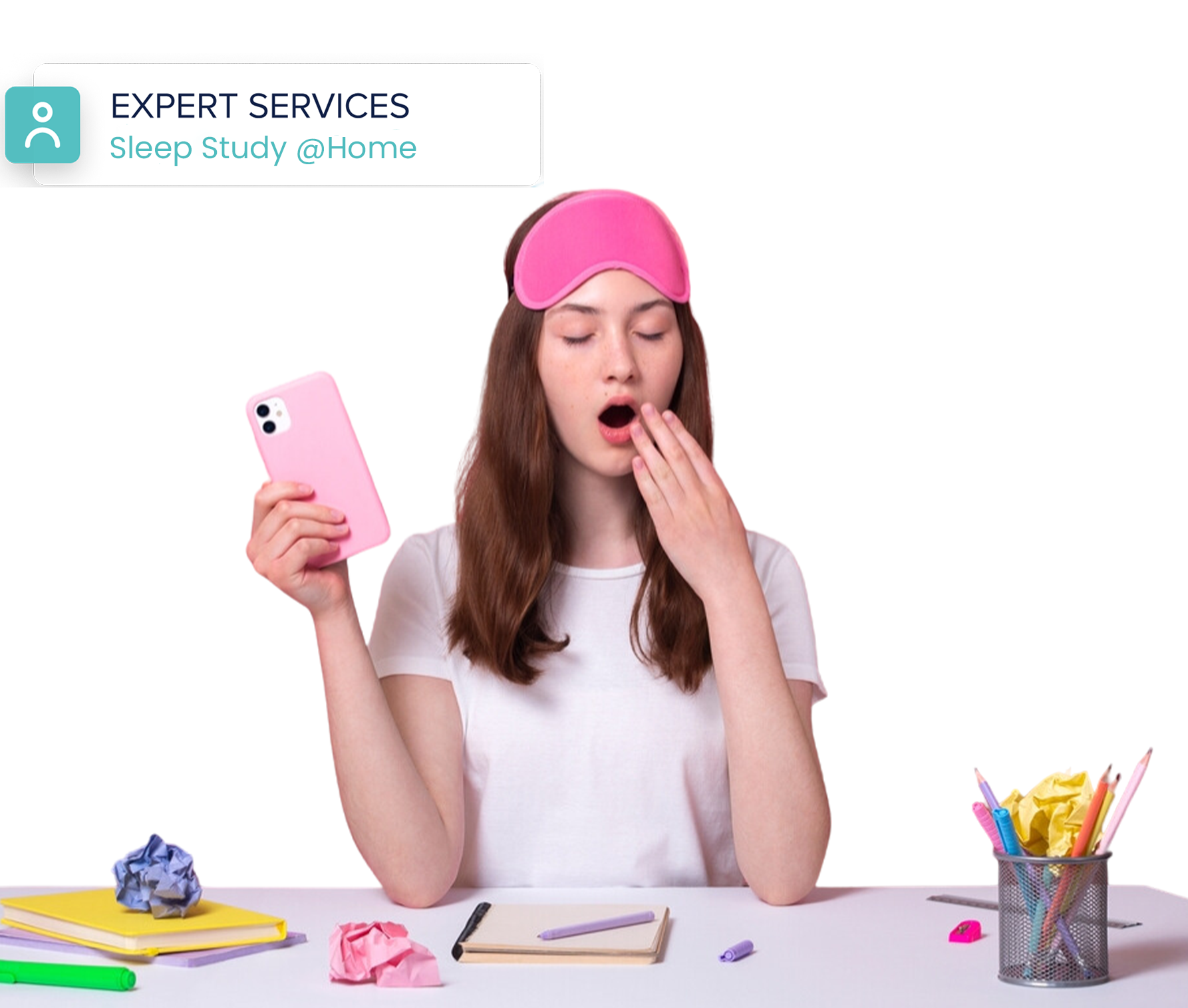
Sleep Study Test
MAX@Home performs Level 2 & Level 3 Sleep Study test at home
Choose Your Specialized Home Diagnostic Test
Select from our comprehensive range of at-home diagnostic services performed by certified healthcare professionals
Home Sleep Study Level-2 (PSG)
₹12200
Save ₹1830
₹10370
Sleep Study-Level 3
₹6500
Save ₹975
₹5525

15% Off on Website Bookings
* T&C apply
 Call: 9240299624
Test Preparation

Test Details
15% Off on Website Bookings
* T&C apply

Report Time
24 Hrs

Age Group
>8 yrs
Book Sleep Study Test with MAX@Home
Poor sleep doesn't just leave one tired, it also affects focus, mood, heart health, and quality of life. Across India, sleep-related issues such as snoring, insomnia, fatigue, and undiagnosed sleep apnea are becoming increasingly common. Yet, many people postpone getting tested because the idea of spending a night in a hospital can be unsettling. That’s where MAX@Home steps in. Our at-home sleep study test brings hospital-grade diagnostics to your home. With expert guidance, world-class equipment, and quick results, you can understand what’s impacting your sleep without facing the hassles involved in visiting a hospital or sleep lab.
Read More
Max@Home Performs Level-II & Level-III Sleep Studies At Home
| Level - 3 | Level - 2 | ||
|---|---|---|---|
| Location | At Home | ✔️ | ✔️ |
| What it Monitors? | Breathing Activity | ✔️ | ✔️ |
| Snoring | ✔️ | ✔️ | |
| Airflows | ✔️ | ✔️ | |
| Oxygen Levels | ✔️ | ✔️ | |
| Heart Rate | ✔️ | ✔️ | |
| Brain Activity | ✘ | ✔️ | |
| What it Diagnoses? | Sleep Quality | ✘ | ✔️ |
| Sleep Apnea | ✔️ | ✔️ | |
| BI-PAP/CPAP Titration | ✔️ | ✘ |
What is a Sleep Study Test?
A sleep study, also known as polysomnography, is a medical diagnostic test that monitors and records what happens to the body during sleep. It helps determine whether an individual is achieving quality sleep and identifies disruptions caused by breathing issues, movement, or abnormal brain activity. Traditionally conducted in sleep labs, this test can now be performed comfortably at home using portable equipment. During the study, key functions such as brain waves, oxygen levels, heart rate, breathing patterns, and muscle activity are monitored. The data aids doctors in assessing sleep conditions like sleep apnea, insomnia, narcolepsy, and more.Signs You May Need a Sleep Study Test
Sleep disorders don’t always manifest in obvious ways. Often, people endure them for years, attributing the symptoms to stress, work, or aging. If you experience any of the following signs consistently, it may be time to consider a sleep disorder test:-
Loud or habitual snoring
-
Gasping or choking sensations during sleep
-
Feeling tired even after a full night’s rest
-
Difficulty falling or staying asleep (insomnia)
-
Morning headaches or dry mouth
-
Poor concentration or daytime sleepiness
-
Mood swings or irritability
-
Waking up multiple times in the night without a reason
-
People who are overweight or obese
-
Individuals with diabetes, high blood pressure, or heart disease
-
Men over 40 years of age
-
People with irregular work schedules or shift patterns
-
Elderly individuals experiencing cognitive or memory issues
Sleep disorders not only affect daily life but can also increase long-term health risks. Timely diagnosis with a sleep study test can lead to better treatment outcomes.
What to Expect During the Sleep Study Test at Home
If you’re wondering how to do a sleep study test at home or feeling unsure about what the night might involve, we’re here to put you at ease. The sleep study test procedure with Max@Home is designed to be simple, stress-free, and medically robust. Here’s how it works:
1. Home Setup
A trained Max@Home technician will arrive at your home at a scheduled time. They’ll set up the portable diagnostic device and guide you on how to wear the lightweight sensors. These are typically placed on your chest, finger, and under the nose to monitor your sleep without disturbing it.
2. Overnight Monitoring
You’ll sleep in your bed, following your usual nighttime routine. The device records key data such as breathing, oxygen levels, heart rate, and movement throughout the night.
3. Data Retrieval and Report
The next day, our team collects the equipment. Your sleep data is reviewed by certified specialists. Within 24 to 48 hours, a detailed report is generated with insights into your sleep behaviour and any abnormalities detected.
4. Consultation and Next Steps
Based on your sleep study test results, a doctor may recommend lifestyle changes, further evaluation, or treatments such as CPAP therapy for sleep apnea.
Even if you think you might not fall asleep during the test, the device is designed to capture data during even short sleep periods, so accurate insights are still possible.
Advantages of Choosing MAX@Home for Your Sleep Test
MAX@Home combines medical precision with at-home convenience. Our approach to a home sleep test is built around comfort, clinical accuracy, and fast turnaround times, making it easier than ever to get diagnosed and take the next step toward better sleep.Comfort of Your Home
No hospital visits, no overnight stays. You get tested in your natural sleep environment for more accurate results.
Quick and Easy Booking
Schedule your test through a simple call or online form—no long queues or multiple appointments.
Expert-Led Process: Our technicians are trained in sleep study setups. Your test is supervised and reviewed by certified sleep specialists.
Cost-Effective Diagnostics
The cost of a home sleep study test is significantly lower than in-lab sleep studies, with no compromise on quality.
Fast Results
Get your complete sleep analysis test report within 1–2 days, ready for a consultation with your doctor.
Ideal for All Ages: Suitable for adults, seniors, and even children (aged 8 and above) showing signs of sleep disruption.
Accurate Sleep Apnoea Detection
Our system is tailored to identify breathing issues like obstructive sleep apnea through clinically approved devices.
If you're seeking clarity around sleep disruptions, the polysomnography sleep study test at home is one of the most effective first steps.
Book a Sleep Study Test Near Me with MAX@Home
Booking a sleep study test at home with Max@Home is simple, straightforward, and designed to work around your schedule.Call Us Directly
Dial 9240299624 and speak with our care team. We'll answer your queries and confirm your appointment right away.
Book Online
Fill out the contact form, and we’ll reach out to schedule a convenient time for the test.
Once your booking is confirmed:
- A technician will visit your home to set up the equipment.
- The overnight sleep machine test at home will record your data while you sleep.
- Your results will be reviewed and delivered within 24–48 hours.
Frequently Asked Questions
What is a sleep study test (polysomnography)?

What is the difference between a Level 2 and a Level 3 sleep study?
Is the sleep study painful?
How long does a sleep study take?
Can children get a sleep study done at home?
What is done in a sleep study?
How many hours is a sleep study test?
What are the 4 levels of sleep study?
Report Time
24 Hrs
Age Group
>8 yrs

What our customers say about us
Prince Kumar

Very satisfied with their sleep test at home. No hospital beds, no discomfort -...
Rohit Mehta
Exceptional home service! I was hesitant about doing a sleep study, but the Max@...
Nayana Banerjee
Very professional team. The technician arrived right on time. Very smooth proces...
Kapil Yadav
Seamless experience from booking to reports. The MAX@Home team handled the entir...
Anjali Chawla
Excellent service by MAX@Home. The staff was very helpful and the hygiene standa...
Ashish Beri
Highly impressed with the tech support. I had a minor question about the sensors...
Shekhar Aggarwal
Excellent service for seniors citizens. My mother needed a sleep study, and taki...
Jyoti Kumari
Quick and efficient. From the moment I called to the technician arriving, the co...
Ajay Dimri
Comfortable and Stress-free. I was worried about the wires, but the technician m...

References
https://www.ncbi.nlm.nih.gov/books/NBK563147/
https://rumcsi.org/services/sleep-disorder/types-of-sleep-tests/
https://www.mayoclinic.org/tests-procedures/polysomnography/about/pac-20394877
https://my.clevelandclinic.org/health/diagnostics/12131-sleep-study-polysomnography
Sleep Study Test Cost in Top Cities
Sleep Study Test Cost in Delhi
|
Sleep Study Test Cost in Mumbai
|
Sleep Study Test Cost in Gurgaon
|
Sleep Study Test Cost in Faridabad
|
Sleep Study Test Cost in Panchkula
|
Sleep Study Test Cost in Mohali
|
Sleep Study Test Cost in Chandigarh
|
Sleep Study Test Cost in Nagpur
|
Sleep Study Test Cost in Noida
|
Sleep Study Test Cost in Greater Noida
|
Sleep Study Test Cost in Dehradun
|
Sleep Study Test Cost in Zirakpur
|
Sleep Study Test Cost in Lucknow
|
Sleep Study Test Cost in Ghaziabad
Sleep Study Test in Top Cities
Sleep Study Test in Faridabad
|
Sleep Study Test in Gwalior
|
Sleep Study Test in Aligarh
|
Sleep Study Test in Lucknow
|
Sleep Study Test in Chandigarh
|
Sleep Study Test in Rewari
|
Sleep Study Test in Kharar
|
Sleep Study Test in Agra
|
Sleep Study Test in Kalyan
|
Sleep Study Test in Kolkata
|
Sleep Study Test in Nagpur
|
Sleep Study Test in Meerut
|
Sleep Study Test in Zirakpur
|
Sleep Study Test in Mohali
|
Sleep Study Test in Haridwar
|
Sleep Study Test in Jalandhar
|
Sleep Study Test in Panipat
|
Sleep Study Test in Moradabad
|
Sleep Study Test in Dehradun
|
Sleep Study Test in Pune
|
Sleep Study Test in Panchkula
|
Sleep Study Test in Kanpur
|
Sleep Study Test in Noida
|
Sleep Study Test in Mira Bhayandar
|
Sleep Study Test in Greater Noida
|
Sleep Study Test in Thane
|
Sleep Study Test in Mussorie
|
Sleep Study Test in Amritsar
|
Sleep Study Test in Nawanshahr
|
Sleep Study Test in Jaipur
|
Sleep Study Test in Roorkee
|
Sleep Study Test in Mathura
|
Sleep Study Test in Jhansi
|
Sleep Study Test in Banglore
|
Sleep Study Test in Varanasi
|
Sleep Study Test in Bhubaneswar
Other Popular Services
Oncotype DX Breast Cancer Test
|
Nursing Care At Home
|
Oncotype Dx DCIS Test
|
Ambulatory Blood Pressure Monitoring (ABPM)
|
Nursing Procedure at Home
|
Speech Therapy at Home
|
Home Ventilator Service for Safe & Reliable Care
|
Healthcare Attendant at Home
|
Palliative Care at Home
|
Elderly Caretaker Services
|
Occupational Health Services
|
Dialysis at Home
|
ELR Test
|
ICU Setup At Home
|
X-RAY At Home
|
Home Fumigation & Sanitization Services
|
Holter Monitor Test
|
ECG At Home
|
Doctor Visit At Home
|
Injection Service at Home
|
Japa Maid Service
|
Physiotherapy Services
|
Oncotype Dx Colon Cancer Test
|
Female Nurse for 12/24 Hour Homecare
|
Arterial Blood Gas (ABG) Test
|
Medical Equipment @HOME
|
Physiotherapy At Home
|
Elder Care Packages for Comprehensive Senior Care
|
Voice Therapy
Popular Tests in Delhi
Dengue NS 1 Antigen Test (Elisa)
|
MP (Malarial Parasite) Test
|
Thyroid Profile Free (T3, T4 & TSH) Test
|
Widal Test (Tube Method)
|
Max Fever Profile Basic
|
Vitamin B Complex Profile (M) Test
|
CBC (Complete Blood Count),EDTA
|
KFT (Kidney Function Test) Profile with Calcium Uric Acid
|
Liver Function Test (LFT)
|
Urine Routine and Microscopy
|
Blood Sugar Fasting,Fluoride Plasma
|
Glycosylated Haemoglobin (HbA1C),EDTA
|
Urine - Culture & Sensitivity
|
Blood Sugar 2 Hr. PP,Fluoride Plasma
|
Lipid Profile,Serum
|
Prothrombin Time (with INR),Citrate Plasma
|
TSH,Serum
|
Creatinine, Serum
|
Vitamin D Test
|
Vitamin B12, Serum
|
MAU / Creatinine Ratio Urine
|
Blood Sugar (Random), Fluoride Plasma
|
APTT (Partial Thromboplastin Time),Citrate Plasma
|
Blood Grouping and RH Factor
|
Rheumatoid Factor(Quantitative), Serum
|
Magnesium Serum
|
Tacrolimus EDTA
|
HCG - Beta Specific,Serum
|
Prolactin, Serum
|
Iron and Total Iron Binding capacity, serum
|
ESR Test (Erythrocyte Sedimentation Rate)
|
Max STD Panel
|
NT-ProBNP Test
|
Immunofluorescence Test By ANA
|
Uric Acid, Serum
|
Hepatitis B Surface Antigen,Serum