Hi Guest Login
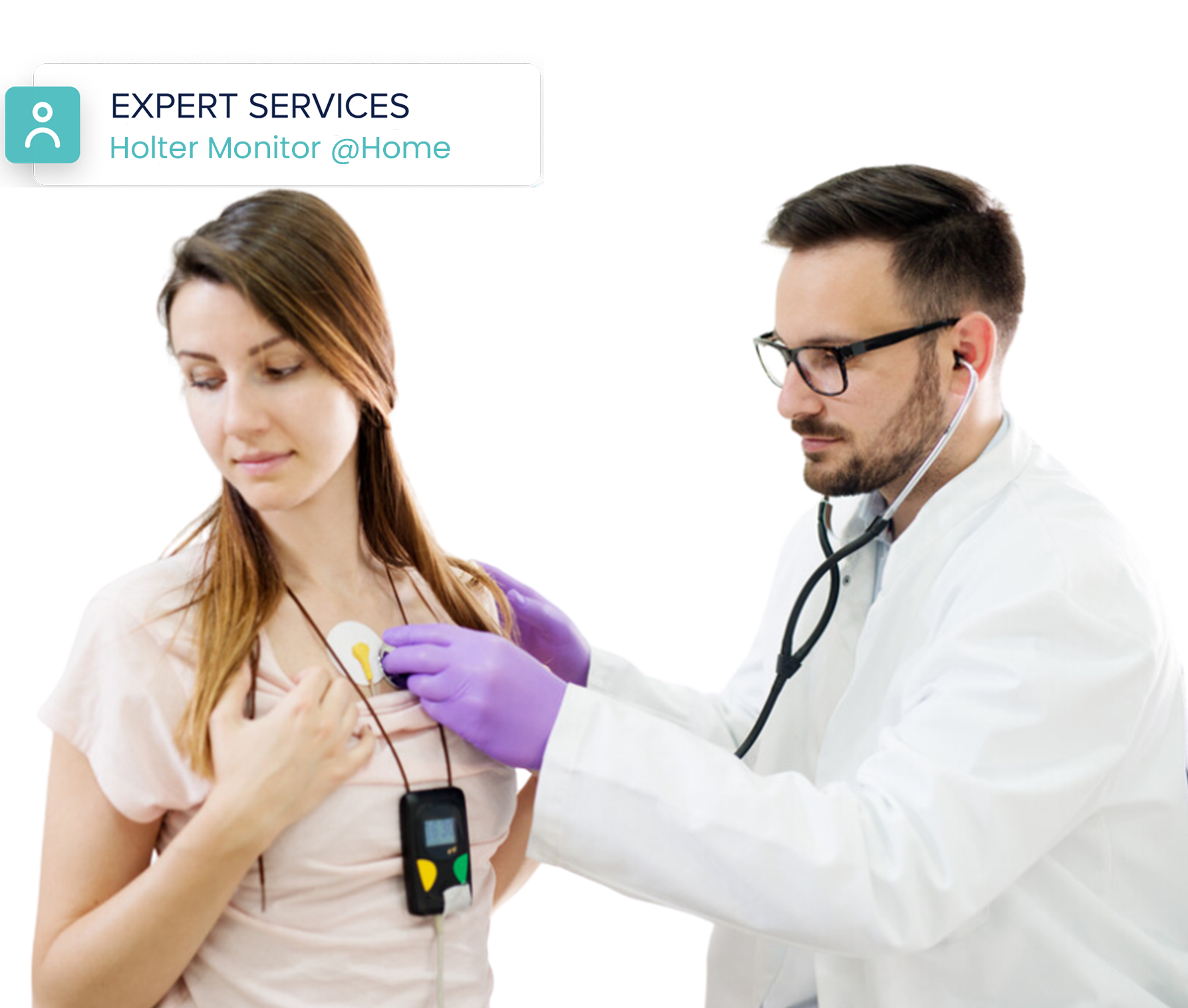
72 Hour Holter Test
Safe & Reliable Holter Monitor Test at your Doorstep.
Choose Your Specialized Home Diagnostic Test
Select from our comprehensive range of at-home diagnostic services performed by certified healthcare professionals
Holter- 2 Days
₹8500
Save ₹1275
₹7225
Holter- 24 Hrs.
₹5000
Save ₹750
₹4250
Holter- 3 Days
₹12000
Save ₹1800
₹10200
Holter- 5 Days
₹19000
Save ₹2850
₹16150
Holter- 7 Days
₹26000
Save ₹3900
₹22100
 Call: 9240299624
Test Preparation

Test Details

Report Time
24 Hrs

Age Group
>8 yrs
Understanding a 72-Hour Holter Test
The Holter monitor is named after the biophysicist Norman Holter, who developed the concept of ambulatory ECG recording in the 1940s. The fundamental principle remains unchanged: a compact, wearable device continuously records the heart's electrical signals in real time as the patient goes about their daily life.
What distinguishes a 72-hour Holter test from its shorter counterparts is the span of observation. Over three days, the monitor captures cardiac activity across an enormous range of physiological contexts: physical exertion and sedentary periods, emotional engagement and quiet rest, meals and digestion, multiple complete sleep cycles, including nocturnal REM stages, and the full spectrum of the autonomic nervous system's daily rhythm. Each of these contexts imposes different demands on the cardiac conduction system and creates an opportunity for an intermittent arrhythmia.
Why Long-term Holter Monitoring May Be Recommended
A long-duration Holter test is not reflexively prescribed for every cardiac complaint. It represents a specific clinical decision, typically made when a patient's symptoms are real and impactful but too infrequent or unpredictable to be captured by shorter monitoring studies. Here are the clinical situations in which 72-hour extended monitoring adds the most value:
Unexplained Palpitations
Palpitations, the intrusive awareness of one's own heartbeat, variously described as fluttering, thumping, racing, or a sudden pause followed by a hard beat, are among the most common cardiac complaints that drive Holter referral. The clinical challenge is that palpitation-causing arrhythmias can be highly infrequent. A patient experiencing one or two significant episodes per week may have returned inconclusive results from a shorter monitoring period. Extending to 72 hours meaningfully increases the statistical probability of capturing an event.
Dizziness or Blackout Episodes
Syncope and presyncope—fainting and related sensations—may result from cardiac rhythm disturbances. Sudden pauses, rapid heart rates, or conduction issues can cause a brief loss of consciousness. Longer monitoring increases the likelihood of capturing these unpredictable events.
Intermittent Chest Discomfort
Brief, unpredictable chest heaviness, pressure, or tightness may indicate transient ischemia or rhythm disturbances. Extended monitoring helps determine if these symptoms coincide with abnormal heart rhythms.
Sleep-Time Cardiac Symptoms
Many cardiac arrhythmias occur at night and may go unnoticed by patients. Bradyarrhythmias, pauses, atrial fibrillation, and ventricular ectopy often increase during sleep. A 72-hour Holter test captures multiple overnight periods, improving detection of nocturnal arrhythmias.
Follow-Up for Known Arrhythmias
Patients with diagnosed rhythm conditions such as atrial fibrillation, supraventricular tachycardia, or ventricular ectopy may need periodic extended monitoring to assess arrhythmia burden, track progression, or evaluate changes in clinical status. A 72-hour Holter study provides a quantitative overview of arrhythmia frequency and characteristics.
Monitoring Treatment or Medication Response
Antiarrhythmic drugs and other cardiac therapies require objective assessment. Extended ECG monitoring provides data on arrhythmia frequency, heart rate control, and potential side effects, supporting evidence-based clinical decisions.
Post-Cardiac Procedure Evaluation
Following catheter ablation for atrial fibrillation or other arrhythmias, cardioversion, pacemaker implantation, or cardiac surgery, cardiac rhythm monitoring at home for 72 hours provides the treating cardiologist with objective insight into whether the intervention has achieved the intended result and whether early complications, such as arrhythmia recurrence, are present.
How the 72 Hour Holter Monitor Works
Wearing a Holter monitor for 72 hours is straightforward, and most patients adjust quickly. The following outlines the monitoring experience:
Electrode placement on the chest
Our technician begins by gently preparing the skin at specific anatomical positions on the chest, typically the upper and lower chest, in positions optimized for multi-lead ECG signal quality. Small, skin-safe adhesive electrode patches are then applied. The placement is precise and follows clinical standards because the correct electrode position directly determines the quality of the recorded cardiac data.
Attachment of the wearable ECG recorder
Lead wires connect the electrodes to a compact Holter device, which can be carried in a pouch, clipped to a waistband, or worn in a vest. The device is lightweight, discreet, and does not restrict movement.
The device records continuously.
Once activated, the device continuously records your heart's electrical signals without requiring any action on your part. It operates passively throughout your daily activities and sleep, collecting three days of cardiac data.
The symptom diary
The symptom diary turns passive ECG data into actionable clinical information. Record the time, description, and activity for any cardiac symptoms you experience. This helps specialists focus their analysis on relevant events.
Comfortable wear through daily activities and sleep
You can continue normal activities such as work, moderate exercise, eating, and socialising while wearing the monitor. The main restriction is to keep the device and electrodes dry; bathing and swimming should be avoided until the study is complete.
Device removal at 72 hours
At the end of the monitoring period, our technician returns to safely remove the device and electrodes. The ECG data is then extracted and prepared for specialist analysis.
Specialist ECG analysis and reporting
Our clinical team review the complete 72-hour dataset using automated detection and clinical expertise to produce a comprehensive Holter report, including rhythm summaries, arrhythmia burden, heart rate statistics, symptom correlations, and clinical findings.
What's included in MAX@Home's 72 Hour Holter monitoring service near me?
MAX@Home's home holter test service near you is designed as a fully managed, end-to-end clinical experience. Every element of the process is handled by our professional team, allowing the patient to focus entirely on living a normal life during the monitoring period.
Technician Home Visit
A trained technician arrives at your home at the scheduled appointment time with all necessary equipment and supplies, ensuring a professional and unhurried setup experience.
Device Installation and Activation
The Holter recording device is activated, verified, and confirmed to be recording correctly before placement on the patient. Signal quality is checked across all recording channels before the technician leaves.
Skin-Safe Electrode Placement
Adhesive electrodes are applied with skin-safe, hypoallergenic adhesives. Skin preparation is performed gently, and electrode positions are precisely placed according to clinical multi-lead placement protocols.
Patient Instructions for Monitor Care
Comprehensive, easy-to-understand guidance is provided on wearing the device comfortably, managing lead wires during sleep, keeping the device dry, and caring for electrode sites across three days.
Symptom Diary Guidance
Our technician explains the purpose and method of the symptom diary clearly, ensuring patients and caregivers understand what to record, how to describe symptoms accurately, and why the diary is clinically important.
Remote Troubleshooting Support
A dedicated support contact is available throughout the 72-hour monitoring period. If an electrode detaches, the device behaves unexpectedly, or any technical question arises, expert assistance is available promptly.
Device Pickup and Removal After Completion
At the conclusion of the 72 hours, our technician returns to safely to remove the device and electrodes, ensure that the recording has been successful, and extract the data for analysis.
ECG Data Analysis
Trained specialists analyse the complete 72-hour recording using professional software and clinical expertise to produce a comprehensive diagnostic report.
Report Coordination Support
The completed Holter report is provided to the patient and referring physician within the agreed timeframe, with full support for report delivery and follow-up coordination.
Integration with Doctor Consultations
When needed, MAX@Home coordinates between the Holter report and the patient's treating physician to ensure timely clinical action.
Who May Need a 72-Hour Holter Test at Home?
Not all patients with cardiac symptoms need a 72-hour study. However, for those with intermittent or infrequent symptoms or inconclusive results from shorter monitoring, extended observation often provides the needed answers.
Home cardiac diagnostics at the 72-hour duration are particularly appropriate for the following:
- Elderly individuals whose cardiac symptoms may be subtler, slower-developing, or more complex, and who may find repeated clinic visits physically demanding
- Patients with unexplained palpitations, particularly those occurring fewer than once per day, or at irregular intervals with no identifiable trigger.
- Individuals with suspected arrhythmias whose standard ECG has been normal or inconclusive, and whose symptoms remain unexplained
- Patients experiencing dizziness or blackouts in whom a cardiac rhythm cause has not been confirmed or excluded by shorter monitoring.
- Cardiac patients requiring prolonged monitoring, those with known rhythm disorders, undergoing periodic assessment or treatment optimization
- Patients whose intermittent symptoms were not captured during a 24-hour or 48-hour study, making longer monitoring the clinically logical next step
- Individuals recovering from cardiac treatment who need objective evidence of post-intervention rhythm status
- High-risk cardiac patients with structural heart disease, prior cardiac events, or multiple cardiovascular risk factors requiring close rhythm surveillance
- Patients are unable to attend hospitals regularly due to mobility limitations, geographical barriers, occupational constraints, or medical complexity.
Advantages of 72 Hour Holter Monitoring at Home
The benefits of extended home cardiac monitoring are well-established. Here is what 72-hour ambulatory ECG monitoring at home provides beyond shorter or hospital-based studies:
Help detect hidden rhythm abnormalities
The fundamental arithmetic of extended monitoring is that the longer the recording, the greater the window of opportunity for an infrequent arrhythmia to occur and be captured. For arrhythmias occurring once every 24 to 48 hours, a 72-hour study can be the difference between detection and uncertainty.
Help observe intermittent symptoms.
Symptoms may occur unpredictably. Extended monitoring increases the likelihood that the recording period will coincide with symptomatic episodes.
Richer symptom-ECG correlation opportunities
Longer recording allows more symptoms to be documented, giving specialists more opportunities to correlate symptoms with heart rhythms and produce a more comprehensive report.
Real-world cardiac rhythm recording
Three days of monitoring during normal daily activities provide a more accurate picture of the heart's response to real-life demands than activity-restricted clinical recordings.
Multiple overnight recordings
The 72-hour study captures at least two complete sleep cycles, significantly improving detection rates for arrhythmias that preferentially occur during sleep or in the early morning hours.
Reduced reliance on repeat diagnostic testing
A 72-hour study captures at least two full sleep cycles, improving detection of arrhythmias that occur during sleep or early morning hours.
No procedural risk
The 72-hour Holter monitor involves no radiation, injections, anaesthesia, or hospital admission. It is highly effective while placing minimal burden on the patient.
Helps in treatment planning
Arrhythmia burden data from a 72-hour study provides quantitative information for decisions about medication, ablation, pacemaker implantation, or continued monitoring, offering an evidence base that brief studies cannot provide.
Professional home support
MAX@Home's team manages the clinical and logistical complexities of the study, allowing patients to focus on living a normal life while their cardiac data is collected.
Accessible for patients with reduced mobility
The home-based format makes extended cardiac monitoring available to patients for whom repeated hospital attendance would be impractical, physically demanding, or clinically inadvisable.
Symptoms That Should Prompt Cardiac Rhythm Evaluation
Cardiac symptoms are easy to rationalise away: fatigue becomes "I need more sleep," becomes "I was anxious"; a dizzy spell becomes "I got up too fast." But some symptoms deserve objective evaluation, not repeated reassurance that they are probably nothing.
If you or a family member is experiencing any of the following, a conversation with a physician about cardiac rhythm monitoring at home is warranted:
- Fluttering heartbeat, a rapid, irregular sensation in the chest lasting seconds to minutes
- Sudden racing pulse episodes of abrupt heart rate acceleration that begin and end without warning
- Irregular heartbeat sensation: awareness of uneven, skipping, or erratic cardiac rhythm
- Episodes of dizziness, recurring unexplained lightheadedness, particularly when occurring without positional or exertional cause
- Fainting or near-fainting, any loss of consciousness or sense of impending blackout, especially without an obvious non-cardiac cause
- Fatigue without an identifiable explanation: persistent tiredness that does not respond to adequate rest and has no clear metabolic or lifestyle cause
- Nighttime palpitations: cardiac symptoms that wake you from sleep or that you are aware of while lying still at night
- Breathlessness disproportionate to activity: shortness of breath during mild exertion or at rest that is unexplained by respiratory disease
- Chest heaviness or pressure: transient sensations of tightness, weight, or pressure in the chest that come and go without a clear cause
- Weakness during physical activity, sudden reduction in exercise tolerance, or episodes of unexpected weakness during exertion
Why Patients Trust MAX@Home for Holter Monitoring Services
Providing 72-hour Holter monitoring at home requires more than delivering a device. It demands trained technicians, clinical-grade equipment, rigorous data handling, specialist analysis, and a supportive care infrastructure that connects the study to ongoing clinical care.
MAX@Home consistently delivers these standards with a patient-centred approach, transforming a technical procedure into a supportive care experience.
- Trained technicians with specific expertise in ambulatory ECG device setup, multi-lead electrode placement, signal quality verification, and patient preparation for extended monitoring
- Accurate wearable monitoring systems MAX@Home uses clinical-grade Holter devices with proven multi-channel recording reliability and data integrity across 72-hour monitoring periods
- Reliable home diagnostics infrastructure, from appointment coordination to technician dispatch, device management, and data processing, our operational systems are designed for clinical consistency at scale.
- Hygienic and patient-friendly processes single-use disposable electrodes, clean device handling between patients, and a professional service manner that puts patients at ease from the moment the technician arrives
- Timely appointment coordination, home visits are scheduled with precision and punctuality, respecting patients' time and clinical urgency.
- High-quality ECG data recording signal quality is verified before the technician leaves, ensuring that the full 72-hour recording will be interpretable and diagnostically useful.
- Seamless doctor support ecosystem: MAX@Home's care network connects the completed Holter report to the patient's clinical team, supporting the next step in their cardiac care journey.
- Personalised patient guidance, every patient and caregiver receives clear, specific, and practical instructions tailored to the individual's circumstances and level of health literacy.
- PAN India service availability: MAX@Home's Holter monitoring services reach patients across major cities and regions throughout India
- Trusted healthcare brand MAX@Home's reputation for clinical quality and patient satisfaction reflects a consistent standard of care that physicians and patients rely on
Step-by-Step Process: 72 Hour Holter Test at Home
Appointment Booking
Contact MAX@Home by phone, mobile app, or website. Provide your details and any instructions from your referring physician. Our care coordinator will schedule your home visit at a convenient time.
Technician Home Visit
A trained technician arrives at your home with all necessary equipment, including the Holter device and sterile electrodes. The setup is conducted professionally and efficiently.
Monitor Placement
The technician gently prepares the skin, applies electrodes to clinically appropriate positions, connects the lead wires, and activates the device. Signal quality is verified before the visit concludes.
Monitoring Period
For 72 hours, you continue your normal activities while the device records your heart's electrical activity. Maintain the symptom diary, noting any cardiac sensations with their time and context. The device operates continuously in the background.
Device Removal
At the end of the 72 hours, our technician returns to remove the device and electrodes. Removal is gentle, quick, and comfortable.
ECG Data Analysis
The complete 72-hour recording is analysed by our specialist team, which prepares a comprehensive Holter report covering arrhythmia detection, heart rate statistics, rhythm summaries, symptom correlations, and diagnostic conclusions.
Report Delivery & Clinical Guidance
Your completed Holter report is provided to you and your physician within the agreed timeframe. MAX@Home supports follow-up coordination and, if needed, schedules doctor consultations to ensure the findings inform your next stage of care.
Patient Safety, Hygiene & Monitoring Standards
The reliability of a Holter study depends on strict protocols. MAX@Home applies rigorous standards at every step of the 72-hour home Holter test process.
Hygienic device handling
Each Holter monitor is cleaned and prepared for patient use between uses, in accordance with infection-control protocols. All skin-contact materials are single-use and disposed of after each study.
Skin-safe adhesive electrode materials
Electrode patches are selected for extended-wear biocompatibility. Skin preparation is performed with appropriate materials, and electrode positioning is tailored to individual skin sensitivity, particularly in elderly or sensitive-skinned patients.
Multi-lead ECG recording protocols
Electrode placement follows clinical multi-lead placement standards, ensuring that the recorded data captures the cardiac activity relevant to arrhythmia detection and symptom correlation analysis.
Comfortable, validated wearable equipment
All Holter devices used by MAX@Home meet clinical performance standards for 72-hour continuous recording, are validated for ECG accuracy, and are chosen for patient comfort during extended monitoring.
Reliable signal quality verification
Our technicians verify ECG signal quality on all channels before completing the setup. Quality verification at setup is essential for reliable clinical data.
Technician training and professionalism
MAX@Home's technicians are trained in ambulatory ECG monitoring, patient education, and safe device management, reflecting our commitment to diagnostic quality at every stage.
Safe patient instructions during monitoring
Every patient receives clear written and verbal instructions on electrode care, lead wire management, activity guidance, water avoidance, and proper use of the symptom diary.
Read More
MAX@Home provides professional 72-hour ECG monitoring in the comfort of your home. Our trained technicians manage device setup, electrode placement, patient guidance, and data collection, ensuring comprehensive ambulatory cardiac monitoring is now more accessible than ever. There is no need for hospital admission, sleep laboratory visits, or disruption to your daily routine during evaluation.
- Continuous 72-hour ECG monitoring at home
- Expert technicians
- No hospital visits
- Safe, convenient, and reliable
Frequently Asked Questions
What is a 72-hour Holter test used for?

Can I sleep while wearing the Holter monitor?
Can I continue normal activities during the 72-hour test?
Is the monitoring device painful or uncomfortable?
What cardiac rhythm abnormalities can a 72-hour Holter test detect?
Is home Holter monitoring near me clinically accurate?
How should I prepare for holter monitor test?
Can elderly patients safely undergo 72-hour Holter monitoring at home?
How do I book a 72-hour Holter test near me from MAX@Home?
Book Your 72 Hour Holter Test at Home with MAX@Home
Report Time
24 Hrs
Age Group
>8 yrs
What our customers say about us
Mr. K.L. Singh
Gurgaon

I opted for GDA services from Max@Home and even though I was initially sceptical...
Himanshi Prakash
MAX@Home is my go-to for all home tests now. Their sleep study service is profes...
Subhrajit Gouda
I needed a 24-hour monitor, and Max@Home sent a technician to my house within ho...
Saurabh Raj
Taking my elderly father to a hospital for a Holter Monitoring is always a strug...
Sridipa Dandapat
The team at MAX@Home is very responsive. I had a small doubt about the device du...
Abhilasha Ojha
The technician sanitized the Holter device in front of me. As a patient, this le...
Suresh Nambiar
I booked the Holter test via MAX@Home website and got a confirmation call instan...
Kartik Sharma
The Holter setup by MAX@Home team was quick and painless. The technician was kno...
Saumya Pandey
The staff is well trained and they follow all medical protocols. Its a bit more...
Raj Gaur
The Holter test was easy to manage at home. The technician was very careful with...

Cost in Top Cities
Holter Monitor Test Cost in Delhi
|
Holter Monitor Test Cost in Noida
|
Holter Monitor Test Cost in Gurgaon
|
Holter Monitor Test Cost in Faridabad
|
Holter Monitor Test Cost in Mumbai
|
Holter Monitor Test Cost in Dehradun
|
Holter Monitor Test Cost in Mohali
|
Holter Monitor Test Cost in Lucknow
|
Holter Monitor Test Cost in Panchkula
|
Holter Monitor Test Cost in Zirakpur
|
Holter Monitor Test Cost in Chandigarh
|
Holter Monitor Test Cost in Ludhiana
|
Holter Monitor Test Cost in Amritsar
|
Holter Monitor Test Cost in Jalandhar
|
Holter Monitor Test Cost in Kharar
|
Holter Monitor Test Cost in Nawanshahr
|
Holter Monitor Test Cost in Jhansi
|
Holter Monitor Test Cost in Gwalior
|
Holter Monitor Test Cost in Meerut
|
Holter Monitor Test Cost in Moradabad
72 Hour Holter Test in Top Cities
Holter Monitor Test in Bhubaneswar
|
Holter Monitor Test in Kalyan
|
Holter Monitor Test in Khurja
|
Holter Monitor Test in Patna
|
Holter Monitor Test in Gurgaon
|
Holter Monitor Test in Kharar
|
Holter Monitor Test in Kanpur
|
Holter Monitor Test in Moradabad
|
Holter Monitor Test in Chennai
|
Holter Monitor Test in Roorkee
|
Holter Monitor Test in Banglore
|
Holter Monitor Test in Alwar
|
Holter Monitor Test in Delhi
|
Holter Monitor Test in Ludhiana
|
Holter Monitor Test in Panipat
|
Holter Monitor Test in Rewari
|
Holter Monitor Test in Nagpur
|
Holter Monitor Test in Jaipur
|
Holter Monitor Test in Mumbai
|
Holter Monitor Test in Mohali
|
Holter Monitor Test in Varanasi
|
Holter Monitor Test in rohtak
|
Holter Monitor Test in Meerut
|
Holter Monitor Test in Saharanpur
|
Holter Monitor Test in Amritsar
|
Holter Monitor Test in Chandigarh
|
Holter Monitor Test in Dehradun
|
Holter Monitor Test in Agra
|
Holter Monitor Test in Jhansi
|
Holter Monitor Test in Mira Bhayandar
|
Holter Monitor Test in Mussorie
|
Holter Monitor Test in Kolkata
|
Holter Monitor Test in Pune
|
Holter Monitor Test in Navi-Mumbai
|
Holter Monitor Test in Aligarh
|
Holter Monitor Test in Sonipat
Other Popular Services
Oncotype DX Breast Cancer Test
|
Nursing Care At Home
|
Oncotype Dx DCIS Test
|
Ambulatory Blood Pressure Monitoring (ABPM)
|
Nursing Procedure at Home
|
Speech Therapy at Home
|
Home Ventilator Service for Safe & Reliable Care
|
Healthcare Attendant at Home
|
Palliative Care at Home
|
Elderly Caretaker Services
|
Occupational Health Services
|
Dialysis at Home
|
Sleep Study Test
|
ELR Test
|
ICU Setup At Home
|
X-RAY At Home
|
Home Fumigation & Sanitization Services
|
ECG At Home
|
Doctor Visit At Home
|
Injection Service at Home
|
Japa Maid Service
|
Physiotherapy Services
|
Oncotype Dx Colon Cancer Test
|
Female Nurse for 12/24 Hour Homecare
|
Arterial Blood Gas (ABG) Test
|
Medical Equipment @HOME
|
Physiotherapy At Home
|
Elder Care Packages for Comprehensive Senior Care
|
Voice Therapy
Popular Tests in Delhi
Dengue NS 1 Antigen Test (Elisa)
|
MP (Malarial Parasite) Test
|
Thyroid Profile Free (T3, T4 & TSH) Test
|
Widal Test (Tube Method)
|
Max Fever Profile Basic
|
Vitamin B Complex Profile (M) Test
|
CBC (Complete Blood Count),EDTA
|
KFT (Kidney Function Test) Profile with Calcium Uric Acid
|
Liver Function Test (LFT)
|
Urine Routine and Microscopy
|
Blood Sugar Fasting,Fluoride Plasma
|
Glycosylated Haemoglobin (HbA1C),EDTA
|
Urine - Culture & Sensitivity
|
Blood Sugar 2 Hr. PP,Fluoride Plasma
|
Lipid Profile,Serum
|
Prothrombin Time (with INR),Citrate Plasma
|
TSH,Serum
|
Creatinine, Serum
|
Vitamin D Test
|
Vitamin B12, Serum
|
MAU / Creatinine Ratio Urine
|
Blood Sugar (Random), Fluoride Plasma
|
APTT (Partial Thromboplastin Time),Citrate Plasma
|
Blood Grouping and RH Factor
|
Rheumatoid Factor(Quantitative), Serum
|
Magnesium Serum
|
Tacrolimus EDTA
|
HCG - Beta Specific,Serum
|
Prolactin, Serum
|
Iron and Total Iron Binding capacity, serum
|
ESR Test (Erythrocyte Sedimentation Rate)
|
Max STD Panel
|
NT-ProBNP Test
|
Immunofluorescence Test By ANA
|
Uric Acid, Serum
|
Hepatitis B Surface Antigen,Serum