Hi Guest Login
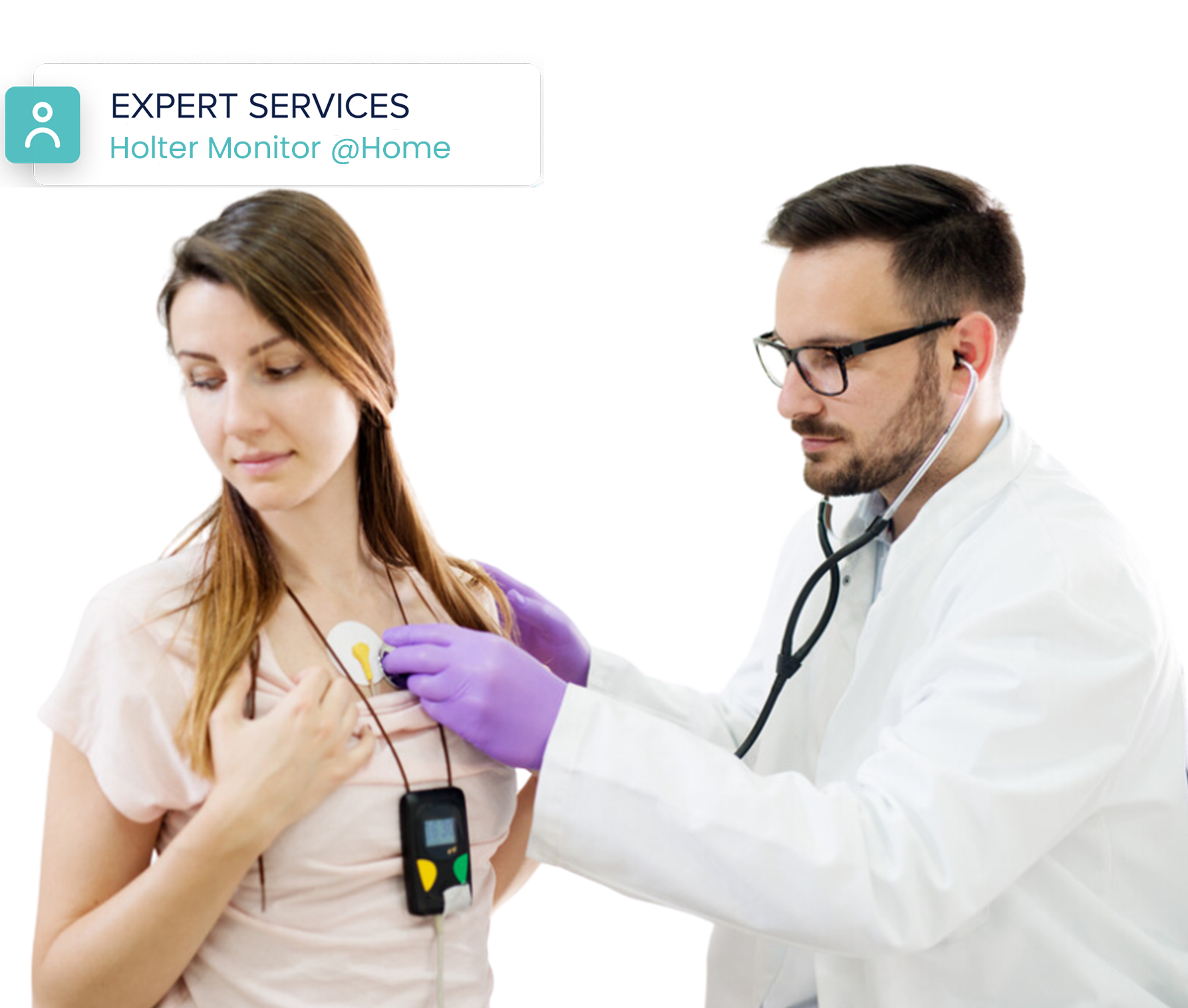
48 Hour Holter Test
Safe & Reliable Holter Monitor Test at your Doorstep.
Choose Your Specialized Home Diagnostic Test
Select from our comprehensive range of at-home diagnostic services performed by certified healthcare professionals
Holter- 2 Days
₹8500
Save ₹1275
₹7225
Holter- 24 Hrs.
₹5000
Save ₹750
₹4250
Holter- 3 Days
₹12000
Save ₹1800
₹10200
Holter- 5 Days
₹19000
Save ₹2850
₹16150
Holter- 7 Days
₹26000
Save ₹3900
₹22100
 Call: 9240299624
Test Preparation

Test Details

Report Time
24 Hrs

Age Group
>8 yrs
What is a 48-Hour Holter Test?
A Holter monitor is a small, lightweight, wearable device that continuously records your heart's electrical activity. It captures the same information as an ECG machine but over an extended period without restricting your movement or daily routine.
A standard ECG (electrocardiogram) records your heart's electrical signals for about 10 to 30 seconds while you lie still on a clinical table. It provides an invaluable diagnostic snapshot but has a fundamental limitation. Many cardiac rhythm abnormalities are intermittent. Arrhythmias, conduction disturbances, and rhythm irregularities often occur unpredictably during daily activities, stress, sleep, or exertion and may not appear during the brief resting ECG.
A 48-hour Holter test monitors your heart over two full days and nights, capturing rhythm patterns during activity, rest, sleep, meals, and emotional changes. Compared to 24-hour recordings, 48-hour monitoring greatly increases the chance of detecting infrequent or unpredictable arrhythmias. It is preferred when symptoms are less frequent or when shorter monitoring is inconclusive.
The test is non-invasive, painless, and requires no change to your daily routine, except avoiding swimming or bathing while the device is on. It is one of the most informative, low-risk diagnostic tests in cardiology and, when done at home, one of the most convenient.
Why Might a Doctor Recommend a 48-Hour Holter Test?
A cardiologist or physician may recommend a home Holter test service for a wide range of symptoms and clinical situations. Here are the most common reasons:
Palpitations or Irregular Heartbeat
Palpitations, the uncomfortable awareness of your heartbeat, often described as fluttering, thudding, racing, or skipped beats, are a common reason for a Holter referral. Many arrhythmias causing palpitations are intermittent and vary in frequency. Monitoring over 48 hours lets specialists correlate symptom times in your diary with ECG recordings to identify the exact rhythm.
Dizziness or Fainting Episodes
Unexplained dizziness, lightheadedness, or episodes of fainting (syncope) can have a cardiac origin, particularly when caused by brief pauses in the heartbeat or sudden drops in heart rate. These episodes are often short-lived and unprovoked, making them difficult to capture on a brief clinical ECG. A dizziness and fainting diagnosis through extended Holter monitoring provides the data needed to determine whether a cardiac rhythm disturbance is responsible.
Chest Discomfort or Shortness of Breath
Chest discomfort, tightness, or breathlessness that occurs unpredictably and resolves quickly may reflect transient cardiac rhythm changes. A 48-hour portable heart monitoring test allows a cardiologist to review the ECG recording during and around the time a patient experienced symptoms, determining whether a rhythm abnormality was present.
Monitoring Existing Heart Conditions
Patients with a known diagnosis of atrial fibrillation, supraventricular tachycardia, heart block, or other arrhythmias may require periodic Holter monitoring to assess the frequency and burden of arrhythmic episodes, to evaluate disease progression, or to inform treatment decisions.
Evaluating Medication Effectiveness
When a patient has been prescribed antiarrhythmic medication, a beta-blocker, or other heart rate–regulating drugs, a follow-up 48-hr Holter monitoring study allows the treating cardiologist to objectively assess whether the medication is achieving the desired rhythm control and whether dosage adjustments are needed.
Post-Cardiac Procedure Monitoring
Patients recovering from cardiac ablation procedures, cardioversion, pacemaker implantation, or other cardiac interventions often require follow-up cardiac monitoring at home to evaluate procedural outcomes and detect early complications or recurrence.
How Does a 48-Hour Holter Monitor Work?
Understanding what to expect from the monitoring process helps patients feel comfortable and prepared. Here is a clear, step-by-step overview of how portable heart monitoring works:
Small electrodes are applied to the chest
Our trained cardiac technician attaches small adhesive electrode patches to specific spots on your chest. The skin is gently prepared to ensure good contact and signal quality. The electrodes are comfortable and secure.
The portable recording device is connected.
The electrodes connect to the Holter monitor via thin, flexible wires, a compact, lightweight device about the size of a small mobile phone. It can be clipped to a waistband or belt or carried in a small shoulder pouch. It records continuously from activation.
You continue your normal daily routine
A key advantage of ambulatory ECG monitoring is that you live your life while the device records. You can walk, work, eat, sleep, and do your usual activities. The device works silently and continuously in the background.
You maintain a symptom diary.
A symptom diary is essential for Holter monitoring. Whenever you experience symptoms like palpitations, dizziness, chest discomfort, breathlessness, or fatigue, note the time and nature in the diary. Specialists then cross-reference diary entries with ECG data to establish symptom-rhythm correlation.
Continuous ECG data is collected for 48 hours
During monitoring, every heartbeat is captured and stored in the device's memory. Modern Holter devices record multiple ECG channels simultaneously, providing a detailed cardiac rhythm record.
Device removal after 48 hours
At the scheduled time, our technician returns to your home to safely remove the device and electrodes.
Report analysis and results
The recorded data is processed and analyzed by trained cardiac specialists. A detailed Holter report is prepared, which your referring cardiologist or physician uses to make diagnostic and treatment decisions.
Services Included in 48-Hour Holter Test at Home
The MAX@Home Holter test service offers a complete, end-to-end patient experience from the initial home visit to report coordination. Here is what is included:
Home Visit by Trained Cardiac Technician
A qualified cardiac technician visits your home at the scheduled time, equipped with all necessary monitoring equipment and sterile supplies.
Holter Device Setup
The device is activated, calibrated, and tested to confirm proper function and signal quality before placement.
Electrode Placement
Adhesive electrodes are carefully positioned on the chest following standard clinical protocols to ensure optimal signal quality throughout the 48-hour recording.
Patient Guidance and Instructions
Our technician provides clear, patient-friendly instructions on wearing the device comfortably, which activities to continue or avoid, and how to care for it during monitoring.
Symptom Diary Explanation
Patients and caregivers are guided on maintaining the symptom diary accurately, a critical component that helps specialists correlate ECG findings with symptoms.
Device Support During Monitoring Period
MAX@Home provides support during the monitoring period for any questions or concerns, ensuring patients and families feel fully supported throughout the 48 hours.
Device Removal After Completion
At the end of monitoring, our technician returns to safely and comfortably remove the device and electrodes.
Data Collection and Report Processing
The recorded cardiac data is processed and submitted for specialist analysis. A formal Holter report is prepared in a clinical format.
Coordination with Doctors if Required
When needed, MAX@Home coordinates the completed report with your cardiologist or physician to ensure continuity of care.
Who May Need a 48-Hour Holter Test Near Me at Home?
A home cardiac monitoring service is beneficial for a wide range of patients across different clinical situations. The convenience and comfort of home-based testing are particularly important for:
- Elderly patients who may find travel to diagnostic centers physically demanding, stressful, or difficult to arrange
- Individuals with unexplained palpitations who have not had their symptoms captured on a standard ECG
- Patients with dizziness or fainting episodes that require cardiac rhythm evaluation to determine their cause
- Individuals with suspected arrhythmias referred for ambulatory ECG monitoring by their cardiologist or physician
- Cardiac patients requiring follow-up monitoring to assess disease management, medication effectiveness, or disease progression
- Patients recovering from cardiac procedures who need post-procedure cardiac monitoring at home without hospital readmission
- Individuals are unable to visit diagnostic centers easily due to mobility limitations, post-surgical recovery, or other health conditions.
- High-risk cardiac patients requiring close rhythm monitoring in a comfortable and controlled environment
- Patients with frequent but brief symptoms that are unlikely to be captured during a shorter monitoring study
If you or a loved one falls into any of these categories, a 48-hour Holter test at home from MAX@Home offers a safe, convenient, and diagnostically reliable solution.
Benefits of 48 Hour Holter Monitoring at Home
For patients and families managing concerns about heart health, the decision to pursue Holter monitoring should feel empowering, not stressful. Home-based cardiac monitoring removes the barriers of inconvenience, travel, and clinical anxiety, allowing you to receive accurate, professional-grade cardiac diagnostics in the most comfortable setting possible.
Comfortable testing in familiar surroundings
Monitoring at home eliminates the stress and discomfort of clinical visits, allowing your heart rhythm to be recorded during a truly representative sample of your daily life.
Continuous heart rhythm monitoring
Unlike a brief ECG snapshot, 48-hour ambulatory ECG monitoring captures your heart's electrical activity over a wide range, including sleep, activity, meals, and emotional variation.
Better detection of intermittent abnormalities.
Arrhythmias and rhythm disturbances that occur infrequently or unpredictably are far more likely to be captured over 48 hours than in any shorter monitoring window, significantly improving diagnostic yield.
Reduced need for hospital visits
A complete home Holter service, from device placement to report coordination, eliminates the need for multiple clinic visits and the logistical challenges they pose, particularly for elderly or mobility-limited patients.
Convenient for elderly and cardiac patients
The home-based format is specifically well-suited to patients for whom travel is difficult, uncomfortable, or clinically inadvisable, delivering the same diagnostic accuracy in a far more accessible way.
Minimal disruption to daily routine
Patients continue their normal activities throughout the monitoring period, which also means the ECG record reflects true daily cardiac behavior, providing more clinically meaningful data than a recording taken in a clinical setting.
Accurate long-duration ECG recording
Modern Holter devices used by MAX@Home provide multi-channel, high-resolution ECG recording with precise timestamping, meeting the same quality standards as center-based monitoring.
Professional home setup and support
Trained technicians handle all aspects of device placement, configuration, and patient education, ensuring optimal recording quality and a smooth patient experience.
Safe and non-invasive diagnostic process
The Holter test involves no needles, no radiation, no pain, and no disruption to the body's normal physiology. It is one of the safest diagnostic investigations in cardiology.
Reduced stress during monitoring
Clinical anxiety, the phenomenon of elevated heart rate and blood pressure caused by the presence of a healthcare setting, is eliminated when monitoring takes place at home, resulting in a more authentic and informative recording.
Symptoms That Should Not Be Ignored
The heart is remarkably good at compensating for disturbances, which means that even when something is wrong, the symptoms may be brief, subtle, or easy to dismiss. But some symptoms are your heart's way of signaling that it deserves a closer look.
Do not ignore these warning signs. If you or a loved one is experiencing any of the following, speak to your doctor about whether a 48 hour Holter test at home is appropriate:
- Frequent palpitations: a recurring sensation of fluttering, racing, or thumping in the chest
- Racing heartbeat: episodes of sudden, rapid heart rate that start and stop without an obvious cause
- Dizziness or lightheadedness: particularly if recurrent or associated with activity or positional changes
- Fainting or near-fainting episodes: any loss of consciousness, or sudden feeling of impending blackout
- Chest discomfort, tightness: pressure, or aching sensations in the chest, even if brief or mild
- Sudden unexplained weakness: episodes of generalized weakness, particularly if accompanied by other cardiac symptoms
- Breathlessness: shortness of breath that seems disproportionate to physical exertion
- Irregular pulse: awareness of an uneven or skipping heartbeat during rest or activity
- Unexplained fatigue: persistent tiredness that cannot be attributed to activity level or sleep quality
Why Choose MAX@Home for a 48 Hour Holter Test at Home?
Choosing a trusted, experienced provider for cardiac diagnostic services matters deeply. Holter monitoring quality is directly dependent on proper electrode placement, well-maintained recording devices, and accurate data processing. A poorly conducted study produces unreliable data, and unreliable cardiac data can lead to missed diagnoses or inappropriate treatment decisions.
At MAX@Home, we deliver home holter test services with the clinical rigor, professional expertise, and patient-centered care that accurate cardiac monitoring demands. Here is why patients and physicians across India trust us:
Trained technicians:
Specialized experience in Holter device setup, electrode placement, and patient guidance, ensuring optimal recording quality from every study
Professional home diagnostic support:
Every aspect of the service is managed by our team, from appointment scheduling to report coordination, with zero burden on the patient or family.
Accurate device setup
Precise electrode placement and device configuration according to clinical standards, ensuring signal quality and comprehensive rhythm capture throughout the 48 hours
Reliable ECG monitoring technology
MAX@Home uses well-maintained, multi-channel Holter recording devices that meet clinical accuracy standards
Hygienic and patient-friendly service,
All equipment is handled according to infection-control standards; electrode placement is performed with patient comfort as the priority.
Timely report coordination
Recorded cardiac data,which is processed promptly, with reports prepared and delivered within agreed timelines to support your clinical pathway
The doctor-connected care ecosystem
MAX@Home can coordinate with your referring cardiologist or physician, ensuring the Holter report reaches the right hands and that follow-up on your care plan is coordinated.
Convenient home appointments
scheduled at your convenience, with punctual technician attendance and minimal disruption to your household routine
Trusted healthcare brand reputation
MAX@Home is one of India's most recognized names in professional home healthcare services, with a track record of clinical quality and patient satisfaction
PAN India support:
availability, our Holter monitoring services are available across major cities and regions throughout India, bringing expert cardiac diagnostics to patients wherever they are
Step-by-Step Process: How the Holter Test at Home Works
The MAX@Home 48-hour holter test at home journey is designed to be simple, reassuring, and entirely managed by our professional team.
Appointment Booking
Book your Holter monitoring appointment by calling our helpline, using the MAX@Home app, or visiting our website. Share basic patient details and your doctor's referral if available. Our care coordinators will schedule a convenient time for a home visit.
Technician Home Visit
A trained cardiac technician arrives at your home at the scheduled time, equipped with the Holter monitoring device, sterile electrodes, and all necessary supplies.
Device Placement
The technician prepares the skin and carefully attaches adhesive electrodes to designated positions on the chest. The Holter recorder is connected and confirmed to be recording correctly. The technician ensures the device is worn comfortably and securely.
Continuous Monitoring Period
With the device in place, you simply return to your daily routine. The recorder captures every heartbeat continuously for 48 hours. You maintain your symptom diary, noting the time and nature of any cardiac symptoms you experience.
Device Removal
At the end of the 48-hour period, our technician returns to your home to safely remove the device and electrode patches. The procedure is quick, painless, and comfortable.
Data Analysis & Reporting
The recorded ECG data is extracted from the device and submitted for specialist analysis. A comprehensive Holter monitoring report, including rhythm summaries, arrhythmia detection, heart rate trends, and symptom correlation, is prepared by trained cardiac analysts.
Doctor Consultation Support
The completed report is made available to you and your referring physician. MAX@Home can assist with report delivery coordination and, where needed, can support follow-up care navigation.
Safety & Comfort Measures Followed by MAX@Home
Patient safety and comfort are integrated into every step of our home Holter test service. Here is how we ensure a safe, reliable, and positive experience for every patient:
Hygienic device handling
All Holter devices and accessories are maintained and handled in accordance with infection-control standards. Single-use disposable electrodes are used for every patient without exception.
Proper electrode placement protocols
Our technicians follow standardized clinical electrode placement guidelines to ensure optimal signal quality, minimize artifacts, and provide comprehensive cardiac coverage throughout the recording period.
Safe monitoring practices
Patients are guided on safe activities during monitoring, on avoiding contact with water when using the device, and on managing the lead wires comfortably during sleep.
Patient education and guidance
Thorough, easy-to-understand instructions are provided to every patient and caregiver before the technician leaves, covering device care, symptom diary use, and support contact details.
Comfortable wearable devices
MAX@Home uses lightweight, compact Holter monitors designed for extended wear comfort, allowing patients to move naturally and sleep without significant disruption.
Professional technician support
MAX@Home provides a dedicated support contact during the monitoring period, ensuring patients and families have access to expert guidance if any questions or concerns arise.
Reliable data recording standards
Devices are tested and confirmed operational before placement, and recording quality is verified during device setup to ensure the study will produce interpretable, clinically valid data.
Book a professional 48-hour Holter Test at your doorstep
Your heart works without pause, every moment of your life. When it sends you a signal, a flutter, a racing beat, an unexpected dizziness, it deserves to be heard clearly and evaluated expertly. Waiting, dismissing symptoms, or accepting an inconclusive result from a brief ECG is not the answer your health deserves.
Call MAX@Home now to schedule your 48-hour Holter test at home. Book online in minutes, and have a trained cardiac technician at your door at your convenience. Because your heart health deserves accurate answers, expert care, and the comfort of home.
Read More
For many patients, particularly the elderly, those managing heart conditions, or individuals with mobility limitations, wearing a monitoring device at a diagnostic center is inconvenient, stressful, and sometimes impossible. MAX@Home brings professional 48-hour Holter monitoring directly to your home. Our trained technicians visit at your convenience, set up the device precisely, guide you through the monitoring period, and coordinate report processing so you receive accurate cardiac insights without leaving your home.
- 48-hour continuous heart monitoring at home
- Detects irregular heartbeat and cardiac abnormalities
- Comfortable portable device with easy setup
- Expert-reviewed reports for accurate diagnosis
Frequently Asked Questions
What is a 48-hour Holter test?

Is the Holter test painful?
Can I sleep while wearing the Holter monitor?
Can I continue daily activities during monitoring?
What symptoms can a Holter test detect?
Is home Holter monitoring accurate?
How should I prepare for the test?
When will I receive the report?
Can elderly patients undergo the test at home?
How do I book a 48-hour Holter test from MAX@Home?
Report Time
24 Hrs
Age Group
>8 yrs
What our customers say about us
Mr. K.L. Singh
Gurgaon

I opted for GDA services from Max@Home and even though I was initially sceptical...
Himanshi Prakash
MAX@Home is my go-to for all home tests now. Their sleep study service is profes...
Subhrajit Gouda
I needed a 24-hour monitor, and Max@Home sent a technician to my house within ho...
Saurabh Raj
Taking my elderly father to a hospital for a Holter Monitoring is always a strug...
Sridipa Dandapat
The team at MAX@Home is very responsive. I had a small doubt about the device du...
Abhilasha Ojha
The technician sanitized the Holter device in front of me. As a patient, this le...
Suresh Nambiar
I booked the Holter test via MAX@Home website and got a confirmation call instan...
Kartik Sharma
The Holter setup by MAX@Home team was quick and painless. The technician was kno...
Saumya Pandey
The staff is well trained and they follow all medical protocols. Its a bit more...
Raj Gaur
The Holter test was easy to manage at home. The technician was very careful with...

Cost in Top Cities
Holter Monitor Test Cost in Delhi
|
Holter Monitor Test Cost in Noida
|
Holter Monitor Test Cost in Gurgaon
|
Holter Monitor Test Cost in Faridabad
|
Holter Monitor Test Cost in Mumbai
|
Holter Monitor Test Cost in Dehradun
|
Holter Monitor Test Cost in Mohali
|
Holter Monitor Test Cost in Lucknow
|
Holter Monitor Test Cost in Panchkula
|
Holter Monitor Test Cost in Zirakpur
|
Holter Monitor Test Cost in Chandigarh
|
Holter Monitor Test Cost in Ludhiana
|
Holter Monitor Test Cost in Amritsar
|
Holter Monitor Test Cost in Jalandhar
|
Holter Monitor Test Cost in Kharar
|
Holter Monitor Test Cost in Nawanshahr
|
Holter Monitor Test Cost in Jhansi
|
Holter Monitor Test Cost in Gwalior
|
Holter Monitor Test Cost in Meerut
|
Holter Monitor Test Cost in Moradabad
48 Hour Holter Test in Top Cities
Holter Monitor Test in Bhubaneswar
|
Holter Monitor Test in Kalyan
|
Holter Monitor Test in Khurja
|
Holter Monitor Test in Patna
|
Holter Monitor Test in Gurgaon
|
Holter Monitor Test in Kharar
|
Holter Monitor Test in Kanpur
|
Holter Monitor Test in Moradabad
|
Holter Monitor Test in Chennai
|
Holter Monitor Test in Roorkee
|
Holter Monitor Test in Banglore
|
Holter Monitor Test in Alwar
|
Holter Monitor Test in Delhi
|
Holter Monitor Test in Ludhiana
|
Holter Monitor Test in Panipat
|
Holter Monitor Test in Rewari
|
Holter Monitor Test in Nagpur
|
Holter Monitor Test in Jaipur
|
Holter Monitor Test in Mumbai
|
Holter Monitor Test in Mohali
|
Holter Monitor Test in Varanasi
|
Holter Monitor Test in rohtak
|
Holter Monitor Test in Meerut
|
Holter Monitor Test in Saharanpur
|
Holter Monitor Test in Amritsar
|
Holter Monitor Test in Chandigarh
|
Holter Monitor Test in Dehradun
|
Holter Monitor Test in Agra
|
Holter Monitor Test in Jhansi
|
Holter Monitor Test in Mira Bhayandar
|
Holter Monitor Test in Mussorie
|
Holter Monitor Test in Kolkata
|
Holter Monitor Test in Pune
|
Holter Monitor Test in Navi-Mumbai
|
Holter Monitor Test in Aligarh
|
Holter Monitor Test in Sonipat
Other Popular Services
Oncotype DX Breast Cancer Test
|
Nursing Care At Home
|
Oncotype Dx DCIS Test
|
Ambulatory Blood Pressure Monitoring (ABPM)
|
Nursing Procedure at Home
|
Speech Therapy at Home
|
Home Ventilator Service for Safe & Reliable Care
|
Healthcare Attendant at Home
|
Palliative Care at Home
|
Elderly Caretaker Services
|
Occupational Health Services
|
Dialysis at Home
|
Sleep Study Test
|
ELR Test
|
ICU Setup At Home
|
X-RAY At Home
|
Home Fumigation & Sanitization Services
|
ECG At Home
|
Doctor Visit At Home
|
Injection Service at Home
|
Japa Maid Service
|
Physiotherapy Services
|
Oncotype Dx Colon Cancer Test
|
Female Nurse for 12/24 Hour Homecare
|
Arterial Blood Gas (ABG) Test
|
Medical Equipment @HOME
|
Physiotherapy At Home
|
Elder Care Packages for Comprehensive Senior Care
|
Voice Therapy
Popular Tests in Delhi
Dengue NS 1 Antigen Test (Elisa)
|
MP (Malarial Parasite) Test
|
Thyroid Profile Free (T3, T4 & TSH) Test
|
Widal Test (Tube Method)
|
Max Fever Profile Basic
|
Vitamin B Complex Profile (M) Test
|
CBC (Complete Blood Count),EDTA
|
KFT (Kidney Function Test) Profile with Calcium Uric Acid
|
Liver Function Test (LFT)
|
Urine Routine and Microscopy
|
Blood Sugar Fasting,Fluoride Plasma
|
Glycosylated Haemoglobin (HbA1C),EDTA
|
Urine - Culture & Sensitivity
|
Blood Sugar 2 Hr. PP,Fluoride Plasma
|
Lipid Profile,Serum
|
Prothrombin Time (with INR),Citrate Plasma
|
TSH,Serum
|
Creatinine, Serum
|
Vitamin D Test
|
Vitamin B12, Serum
|
MAU / Creatinine Ratio Urine
|
Blood Sugar (Random), Fluoride Plasma
|
APTT (Partial Thromboplastin Time),Citrate Plasma
|
Blood Grouping and RH Factor
|
Rheumatoid Factor(Quantitative), Serum
|
Magnesium Serum
|
Tacrolimus EDTA
|
HCG - Beta Specific,Serum
|
Prolactin, Serum
|
Iron and Total Iron Binding capacity, serum
|
ESR Test (Erythrocyte Sedimentation Rate)
|
Max STD Panel
|
NT-ProBNP Test
|
Immunofluorescence Test By ANA
|
Uric Acid, Serum
|
Hepatitis B Surface Antigen,Serum