


Hi Guest Login
Home > Service > Physiotherapy > Overhead Track Harness Therapy
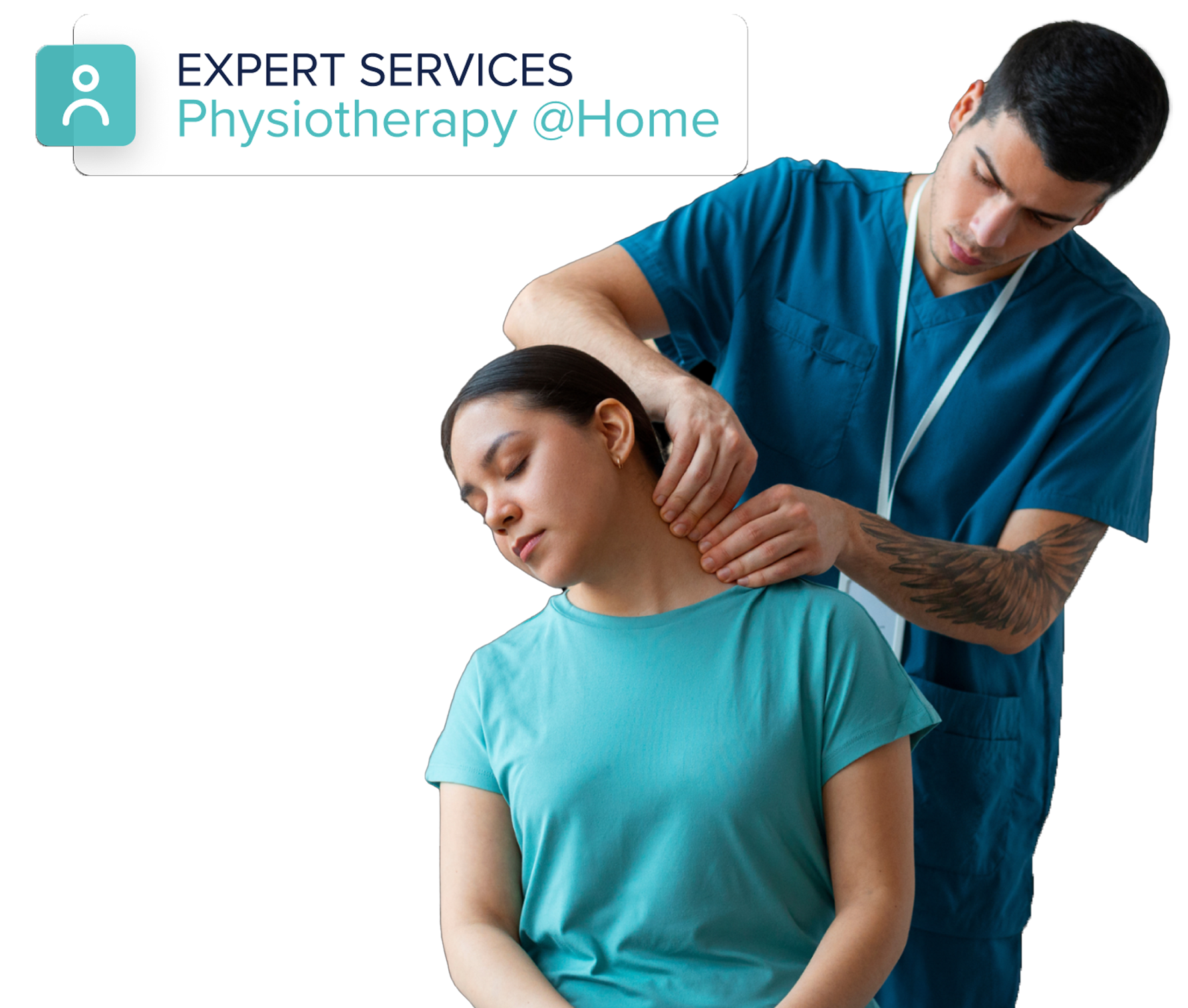
Overhead Track Harness Therapy
Physiotherapy Sessions at Home: Your Journey To Recovery Start Here

Upto 20% Discount on Home Physio Sessions
* T&C apply
Upto 20% Discount on Home Physio Sessions
* T&C apply
 Call: 9240299624
 Book Overhead Track Harness Therapy with MAX@Home
Regaining movement and balance after illness or injury requires the right support, environment, and expertise. Overhead Track Harness Therapy at MAX@Home is delivered at our specialised physiotherapy centres, where advanced rehabilitation systems help patients practise walking and mobility exercises safely and confidently. Guided by trained physiotherapists, this therapy focuses on improving gait, balance, and functional independence in a controlled clinical setting.
- Specialised Rehabilitation Equipment
- Trained Physiotherapists for Gait and Neuro Rehabilitation
- Safe, Structured Centre-Based Therapy
What is Overhead Track Harness Therapy?
Overhead Track Harness Therapy is a specialised physiotherapy technique that uses a suspended harness system mounted on a ceiling track to support patients during walking and rehabilitation exercises. By partially supporting body weight, it enables safe, controlled movement and allows individuals to practise gait and balance activities with reduced risk of falling.
MAX@Home physiotherapy centres offer this therapy under professional supervision, providing structured, centre-based rehabilitation using advanced neuro rehabilitation harness systems and track harness gait training equipment.
How Does the Overhead Track Harness Therapy Work?
Overhead Track Harness Therapy is designed to provide safe, controlled support during walking and rehabilitation exercises. At MAX@Home physiotherapy centres, trained therapists follow a systematic process to ensure patients receive effective gait and mobility training. The therapy allows patients to regain strength, improve balance, and practise walking with reduced fall risk. The therapy process includes several key steps:
-
Assessment and Planning: Therapists evaluate the patient’s mobility, balance, and rehabilitation goals to create a personalised plan.
-
Selection of Lifting Device and Sling: Appropriate harness and sling are chosen for optimal support and comfort.
-
Attachment of Lifting Device: The patient is securely fitted into the ceiling-mounted harness system.
-
Transfer Process: Patients practise walking, stepping, and balance exercises with partial body weight support.
-
Monitoring and Support: Therapists continuously observe and adjust assistance to maintain correct posture and movement.
-
Disconnection and Storage: The harness is safely removed and stored for future sessions.
What are the Benefits of Overhead Track Harness Therapy?
Overhead Track Harness Therapy offers targeted support that helps patients regain mobility and confidence in a safe environment. At MAX@Home physiotherapy centres, this therapy is designed to improve walking ability, balance, and overall functional independence for individuals with neurological or musculoskeletal conditions. Key benefits include:
-
Enhanced Balance and Stability: The harness provides support, allowing patients to practise movements safely and improve core and lower-limb stability.
-
Increased Confidence in Walking: Supported practice helps patients regain self-assurance in their mobility.
-
Reduced Fear of Falling: Partial body weight support and Physiotherapist supervision minimise fall risk during rehabilitation.
-
Improved Gait Mechanics: Structured exercises promote correct posture and natural walking patterns.
-
Greater Independence in Daily Activities: Enhanced mobility translates into easier performance of everyday tasks.
- Decreased Risk of Fall-Related Injuries: Controlled training reduces the likelihood of injuries from falls during recovery.
What are the Common Conditions Treated by Overhead Track Harness Therapy?
Overhead Track Harness Therapy is highly effective in addressing mobility and balance challenges associated with a range of neurological, musculoskeletal, and age-related conditions. At MAX@Home physiotherapy centres, therapists use this therapy to provide safe, structured rehabilitation for patients requiring gait training, balance improvement, or recovery support after injury. This therapy is commonly recommended for patients with:
-
Stroke
-
Parkinson’s Disease
-
Multiple Sclerosis
-
Traumatic Brain Injury (TBI)
-
Spinal Cord Injury
-
Degenerative Conditions
-
Fracture Cases
-
Age-Related Balance and Mobility Issues
-
Prosthetics Training
Overhead Track Harness Therapy vs Other Physiotherapy Treatments
Overhead Track Harness Therapy serves a distinct role in rehabilitation when compared to other commonly used physiotherapy techniques. While each treatment has its own clinical purpose, the harness system is specifically designed for safe gait training, balance support, and mobility restoration.
Overhead Track Harness Therapy vs Traction Therapy
Traction therapy primarily focuses on spinal decompression and pain relief. In contrast, overhead harness therapy supports functional movement, enabling patients to practise walking and balance with reduced body weight and fall risk.
Overhead Track Harness Therapy vs Manual Therapy / Myofascial Release (MFR)
Manual therapy and MFR address soft tissue restrictions and muscle tightness through hands-on techniques. Overhead harness therapy, however, emphasises active rehabilitation by improving gait mechanics, posture, and dynamic balance during movement.
Overhead Track Harness Therapy vs Interferential Therapy (IFT)
IFT is mainly used for pain management and muscle stimulation. Overhead track harness therapy goes beyond symptom relief by facilitating mobility training and functional independence.
Contraindications for Overhead Track Harness Therapy
While Overhead Track Harness Therapy is safe and effective for many patients, it may not be suitable for everyone. At MAX@Home physiotherapy centres, therapists conduct a thorough clinical assessment to determine whether this form of rehabilitation is appropriate, particularly for individuals with medical or physical limitations. Overhead harness therapy may be contraindicated or require caution in patients with:
-
Severe cardiovascular or respiratory conditions that limit tolerance to supported walking exercises.
-
Unstable fractures or recent surgical wounds where weight-bearing or movement could delay healing.
-
Severe osteoporosis, increasing the risk of bone injury during assisted movement.
-
Open skin lesions, pressure sores, or infections in areas where the harness or sling is applied.
-
Uncontrolled seizures or severe vertigo, which may compromise safety during suspended gait training.
-
Severe cognitive impairment or behavioural challenges that prevent following instructions or maintaining safe positioning.
How a Typical Overhead Track Harness Therapy Session Works at MAX@Home
A typical Overhead Track Harness Therapy session at MAX@Home physiotherapy centres is designed to provide a comfortable, guided rehabilitation experience for patients working to improve mobility and balance. Each session follows a structured flow while allowing flexibility based on individual progress and tolerance levels. What patients can expect during a session:
-
Initial Check-in: The therapist reviews the patient’s current comfort level, mobility status, and any changes since the previous session.
-
Comfort-Focused Preparation: Time is taken to ensure the patient feels secure and confident before beginning movement-based activities.
-
Guided Movement Practice: Patients participate in walking, stepping, or balance exercises under close supervision, with encouragement and cues provided throughout.
-
Paced Progression: Exercises are adjusted to match endurance and confidence, allowing gradual improvement without overexertion.
-
Session Wrap-Up: The session concludes with therapist feedback, progress discussion, and guidance for upcoming sessions.
When Should You Consider Overhead Track Harness Therapy?
Overhead Track Harness Therapy may be considered when a patient requires structured support to safely practise walking, balance, or mobility-related movements. It is often recommended when conventional physiotherapy alone does not provide sufficient stability or confidence during rehabilitation. You may consider this therapy if:
-
Walking independently feels unsafe due to balance issues or weakness.
-
Fear of falling limits participation in gait or mobility exercises.
-
Partial body weight support is needed to begin or progress walking practice.
-
Neurological conditions require controlled gait retraining under supervision.
-
Post-injury or post-surgical recovery demands safe mobilisation before full weight-bearing.
-
Prosthetic or assistive device training requires additional stability during movement.
Why Choose MAX@Home for Overhead Track Harness Therapy?
Selecting the right physiotherapy centre plays a critical role in achieving safe and consistent rehabilitation outcomes. At MAX@Home physiotherapy centres, Overhead Track Harness Therapy is delivered within a structured, clinically supervised environment designed to support advanced mobility and gait rehabilitation needs. Patients choose MAX@Home for the following reasons:
-
Advanced Rehabilitation Infrastructure: Centres are equipped with modern ceiling track harness systems that enable safe gait training, balance improvement, and mobility restoration.
-
Trained Physiotherapy Professionals: Therapy is delivered by physiotherapists experienced in neuro physiotherapy, gait retraining, and functional rehabilitation.
-
Personalised Treatment Planning: Each patient receives an individualised therapy plan based on clinical assessment and rehabilitation goals.
-
Centre-Based Supervision: A controlled clinical setting allows continuous monitoring, precise adjustments, and enhanced patient safety during therapy.
-
Integrated Physiotherapy Approach: Overhead track harness therapy can be complemented with other physiotherapy techniques when clinically required.

Read More
Our Services
Physiotherapists are professionals trained in employing physical methods to help patients manage pain, enhance mobility, and rehabilitate from injuries. MAX@Home brings these services directly to your home, ensuring comfort, convenience, and personalized care.
Specialised Pain Management Programs
At MAX@Home, we provide specialised pain management programs

Wellness Programs
At MAX@Home, we provide specialised Wellness Programs for your care.
Post-Surgical Physiotherapy
At MAX@Home, we provide specialised Post-Surgical Physiotherapy
Advanced Rehabilation Programs
At MAX@Home, we provide specialised Advanced Rehabilation Programs
Specialised Pain Management Programs
- Targeted Care for Joint and Muscle Pain
- Upper Body Pain Solutions
- Back and Neck Pain Management
- Specialized Treatments
- Chronic Conditions Focus
- Holistic Pain Relief Approaches
Our Features
Physiotherapists are doctors who have been trained to use physical methods to help patients feel less pain and improve or restore their mobility.

Complimentary upfront and regular supervisor assessment

Specialised kits with assistive equipment

Regular updates to your treating doctor
Care plan designed with your treating doctor

Top Symptoms
Physiotherapy for Foot Pain

Physiotherapy for Muscle Stiffness
Physiotherapy for Joint Pain

Physiotherapy for Headache
Physiotherapy for Loss of Balance
Physiotherapy for Shortness of Breath
Physiotherapy for Shoulder Pain
Physiotherapy for Knee Pain
Physiotherapy for Cracking Joints
Physiotherapy for Back Pain
Physiotherapy for Inflammation
Physiotherapy for Sprains And Strains
Top Conditions
Achilles Tendon Rupture Physiotherapy
Shoulder Impingement Physiotherapy
Chondromalacia Patella Physiotherapy
Disc Bulge Physiotherapy
Slipped Disc Physiotherapy
Hip Replacement Physiotherapy
Carpal Tunnel Syndrome Physiotherapy
Vertigo Physiotherapy
Frozen Shoulder Physiotherapy
Retrolisthesis Physiotherapy
Ankle Sprain Physiotherapy
Meralgia Paresthetica Physiotherapy
Frequently Asked Questions
What is Overhead Track Harness Therapy?

Who can benefit from Overhead Track Harness Therapy?
Is Overhead Track Harness Therapy safe for senior citizens?
How long does each Overhead Track Harness Therapy session last?
Can Overhead Track Harness Therapy be combined with other physiotherapy treatments?
Is Overhead Track Harness Therapy suitable for stroke or neurological rehabilitation?
Is Overhead Track Harness Therapy available at physiotherapy centres near me?
Where can I book Overhead Track Harness Therapy?
What is the cost of Overhead Track Harness Therapy?
Health Blog
View All
Dengue vs Malaria: Symptoms, Tests & Key Differences
Dengue and malaria are both mosquito-borne fevers, but they come from different mosquitoes and diffe...
Swine Flu (H1N1): Symptoms and Recovery
Swine flu is an infection caused by the H1N1 subtype of the influenza A virus


What our customers say about us
Mr. K.L. Singh
Gurgaon

I opted for GDA services from Max@Home and even though I was initially sceptical...
Mayank Verma
Delhi
The services provided by Max@Home were truly a blessing. The spontaneous and eff...
Pallavi Shrivastava
New Delhi
My name is Pallavi Shrivastava, and I was suffering from severe kidney problems...
Mr. Saurav Tyagi
Noida
I cannot thank Max@Home enough for the kind gesture that they have shown; I trie...
Sunil Singh
Delhi
My name is Sunil Singh, and last year I suffered from a severe cerebrovascular a...
Nishi Kashyap
Delhi
My name is Nishi Kashyap, and I opted for nursing procedure at home from Max@Hom...
Mr. Nishi Kashyap
My name is Nishi Kashyap, and I opted for home care services for the nursing pro...
Dipti Pande
Gurgaon
Had some tests done from Max at home. It was a smooth experience and Akhlaq Ahma...
Siddhartha Das
Delhi
I have been availing MAX@Home services regularly for myself and family. Experien...
Mohit Anand
New Delhi
Mr Akhlaq form MAX@Home team came to my house for blood collection. He was perfe...
Dk Singh
Noida
I had an excellent experience with the home blood collection service from MAX@Ho...
Syeed Jawed Sadat
Delhi
Had a great experience with Ankit Kumar Singh from MAX@Home during a home blood...
Overhead Track Harness Therapy Service in Other Cities
Overhead Track Harness Therapy in Noida
|
Overhead Track Harness Therapy in Gurgaon
|
Overhead Track Harness Therapy in Faridabad
|
Overhead Track Harness Therapy in Mumbai
|
Overhead Track Harness Therapy in Dehradun
|
Overhead Track Harness Therapy in Mohali
|
Overhead Track Harness Therapy in Lucknow
|
Overhead Track Harness Therapy in Panchkula
|
Overhead Track Harness Therapy in Zirakpur
|
Overhead Track Harness Therapy in Chandigarh
|
Overhead Track Harness Therapy in Ludhiana
|
Overhead Track Harness Therapy in Amritsar
|
Overhead Track Harness Therapy in Jalandhar
|
Overhead Track Harness Therapy in Kharar
|
Overhead Track Harness Therapy in Nawanshahr
|
Overhead Track Harness Therapy in Jhansi
|
Overhead Track Harness Therapy in Gwalior
|
Overhead Track Harness Therapy in Meerut
|
Overhead Track Harness Therapy in Moradabad
|
Overhead Track Harness Therapy in Agra
|
Overhead Track Harness Therapy in Mathura
|
Overhead Track Harness Therapy in Kanpur
|
Overhead Track Harness Therapy in Prayagraj
|
Overhead Track Harness Therapy in Varanasi
|
Overhead Track Harness Therapy in Mussorie
|
Overhead Track Harness Therapy in Rishikesh
|
Overhead Track Harness Therapy in Haridwar
|
Overhead Track Harness Therapy in Roorkee
|
Overhead Track Harness Therapy in Shimla
|
Overhead Track Harness Therapy in Nagpur
Other Popular Physiotherapy Services
Chest Physiotherapy
|
Neuro Physiotherapy
|
Sports Physiotherapy
|
Kinesiology Tapping Therapy
|
Laser Therapy
|
Lymphatic Drainage Massage
|
Manual Therapy
|
Orthopaedic Physiotherapy
|
Thermotherapy (Heat Therapy)
|
Transcutaneous Electrical Nerve Stimulation (TENS) Therapy
|
Traction Therapy
|
Ultrasound Therapy
|
Post-COVID Physiotherapy
|
Pelvic Floor Physical Therapy
|
Shockwave Therapy
|
Soft Tissue Mobilisation Physiotherapy
|
Myofascial Release Physiotherapy
|
Interferential Therapy (IFT)
|
Cryotherapy (Cold Therapy)
Overhead Track Harness Therapy in Top Cities
Physiotherapy in Lucknow
|
Physiotherapy in Nagpur
|
Physiotherapy in Gwalior
|
Physiotherapy in Jaipur
|
Physiotherapy in Delhi
|
Physiotherapy in Rishikesh
|
Physiotherapy in Patna
|
Physiotherapy in Nawanshahr
|
Physiotherapy in Mumbai
|
Physiotherapy in Prayagraj
|
Physiotherapy in Kalyan
|
Physiotherapy in Meerut
|
Physiotherapy in Noida
|
Physiotherapy in Pune
|
Physiotherapy in Aligarh
|
Physiotherapy in Gurgaon
|
Physiotherapy in Faridabad
|
Physiotherapy in Chandigarh
|
Physiotherapy in Haridwar
|
Physiotherapy in Jalandhar
|
Physiotherapy in Zirakpur
|
Physiotherapy in Mussorie
|
Physiotherapy in Panchkula
|
Physiotherapy in Moradabad
|
Physiotherapy in Mathura
|
Physiotherapy in Jhansi
|
Physiotherapy in Thane
|
Physiotherapy in Navi-Mumbai
|
Physiotherapy in Varanasi
|
Physiotherapy in Mira Bhayandar
|
Physiotherapy in Greater Noida
|
Physiotherapy in Mohali
|
Physiotherapy in Ghaziabad
|
Physiotherapy in Dehradun
|
Physiotherapy in Amritsar
|
Physiotherapy in Sonipat
Other Popular Services
Oncotype DX Breast Cancer Test
|
Nursing Care At Home
|
Oncotype Dx DCIS Test
|
Ambulatory Blood Pressure Monitoring (ABPM)
|
Nursing Procedure at Home
|
Speech Therapy at Home
|
Home Ventilator Service for Safe & Reliable Care
|
Healthcare Attendant at Home
|
Palliative Care at Home
|
Elderly Caretaker Services
|
Occupational Health Services
|
Dialysis at Home
|
Sleep Study Test
|
ELR Test
|
ICU Setup At Home
|
X-RAY At Home
|
Home Fumigation & Sanitization Services
|
Holter Monitor Test
|
ECG At Home
|
Doctor Visit At Home
|
Injection Service at Home
|
Japa Maid Service
|
Oncotype Dx Colon Cancer Test
|
Female Nurse for 12/24 Hour Homecare
|
Arterial Blood Gas (ABG) Test
|
Medical Equipment @HOME
|
Physiotherapy At Home
|
Voice Therapy
Popular Tests in Delhi
Dengue NS 1 Antigen Test (Elisa) in Delhi
|
MP (Malarial Parasite) Test in Delhi
|
Thyroid Profile Free (T3, T4 & TSH) Test in Delhi
|
Widal Test (Tube Method) in Delhi
|
Max Fever Profile Basic in Delhi
|
Vitamin B Complex Profile (M) Test in Delhi
|
CBC (Complete Blood Count),EDTA in Delhi
|
KFT (Kidney Function Test) Profile with Calcium Uric Acid in Delhi
|
Liver Function Test (LFT) in Delhi
|
Urine Routine and Microscopy in Delhi
|
Blood Sugar Fasting,Fluoride Plasma in Delhi
|
Glycosylated Haemoglobin (HbA1C),EDTA in Delhi
|
Urine - Culture & Sensitivity in Delhi
|
Blood Sugar 2 Hr. PP,Fluoride Plasma in Delhi
|
Lipid Profile,Serum in Delhi
|
Prothrombin Time (with INR),Citrate Plasma in Delhi
|
TSH,Serum in Delhi
|
Creatinine, Serum in Delhi
|
Vitamin D Test in Delhi
|
Vitamin B12, Serum in Delhi
|
MAU / Creatinine Ratio Urine in Delhi
|
Blood Sugar (Random), Fluoride Plasma in Delhi
|
APTT (Partial Thromboplastin Time),Citrate Plasma in Delhi
|
Blood Grouping and RH Factor in Delhi
|
Rheumatoid Factor(Quantitative), Serum in Delhi
|
Magnesium Serum in Delhi
|
Tacrolimus EDTA in Delhi
|
HCG - Beta Specific,Serum in Delhi
|
Prolactin, Serum in Delhi
|
Iron and Total Iron Binding capacity, serum in Delhi
|
ESR Test (Erythrocyte Sedimentation Rate) in Delhi
|
Max STD Panel in Delhi
|
NT-ProBNP Test in Delhi
|
Immunofluorescence Test By ANA in Delhi
|
Uric Acid, Serum in Delhi
|
Hepatitis B Surface Antigen,Serum in Delhi
Test by Heath Risk in Delhi
Test by Health Condition in Delhi

