


Hi Guest Login
Best Parkinson’s Movement Physiotherapist Near me in Mumbai
Expert Parkinson’s Movement Physiotherapist Backed by Clinical Experience and Proven Patient Outcomes

Upto 20% Discount on Home Physio Sessions
* T&C apply
Upto 20% Discount on Home Physio Sessions
* T&C apply





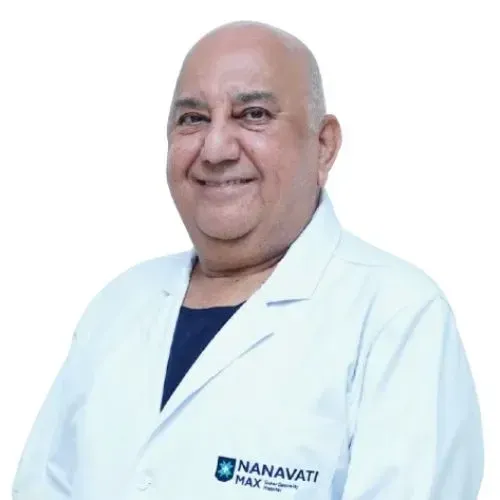
Prof. (Dr.) Ali Irani
Physiotherapist
Experience: 40+ Years
Gender: Male
Location: Mumbai, Navi-Mumbai

Managing Parkinson’s disease requires specialised movement expertise and consistent clinical guidance. At MAX@Home centres in Mumbai, physiotherapists trained in neurological rehabilitation work closely with individuals to address the physical challenges associated with Parkinson’s. Their role extends beyond exercises to include detailed movement assessment, functional training, posture correction, and fall-prevention strategies tailored to each stage of the condition.
-
Physiotherapists experienced in neurological movement disorders
-
Individualised functional assessment and goal setting
-
Supervised, structured rehabilitation support
Understanding Parkinson’s Disease and the Importance of Physiotherapy
Parkinson’s disease is a progressive neurological condition that primarily affects movement control. It develops gradually and may lead to tremors, muscle stiffness, slowed movements, balance difficulties, and changes in posture and coordination. As the condition advances, these motor changes can interfere with walking, daily activities, and overall independence.
While medication helps manage symptoms, physiotherapy is essential in maintaining mobility and functional ability. Structured rehabilitation focuses on improving gait, enhancing balance, increasing flexibility, and training safe movement patterns. Early physiotherapy also helps patients adapt to physical changes and reduce the risk of falls.
At MAX@Home centres in Mumbai, specialised physiotherapy programmes are designed to support individuals with Parkinson’s through structured, supervised, and goal-oriented rehabilitation.
Role of a Physiotherapist in Parkinson’s Disease Management
Physiotherapy plays a structured and ongoing role in helping individuals with Parkinson’s disease maintain mobility and functional independence. As movement patterns gradually change, targeted rehabilitation becomes essential to preserve strength, coordination, and safety. A physiotherapist does not treat the neurological cause but works to manage its physical impact through planned and progressive intervention. At MAX@Home centres in Mumbai, physiotherapists focus on:
-
Improving walking pattern and stride length
-
Enhancing balance to reduce fall risk
-
Reducing muscle stiffness and joint tightness
-
Correcting posture and trunk alignment
-
Training coordinated body movements
-
Supporting independence in daily activities
Movement Challenges Physiotherapists Help Manage in Parkinson’s Disease
Parkinson’s disease affects movement in varied and often progressive ways. These changes are not limited to tremors but extend to posture, coordination, and motor planning. Physiotherapy focuses on identifying these functional limitations early and addressing them through structured rehabilitation strategies. Common movement challenges managed through physiotherapy include:
-
Resting tremors that interfere with hand coordination
-
Slowness of movement, also known as bradykinesia
-
Muscle rigidity leading to reduced joint mobility
-
Shuffling gait or short, hesitant steps
-
Episodes of freezing while walking
-
Postural instability and frequent near-falls
-
Reduced arm swing and facial expression
Physiotherapy Assessment for Parkinson’s Disease at MAX@Home Centres in Mumbai
Effective rehabilitation begins with a detailed and structured physiotherapy assessment. In Parkinson’s disease, movement changes vary from person to person, making individual evaluation essential. The assessment focuses on identifying functional limitations, safety concerns, and areas that require targeted intervention. At MAX@Home centres in Mumbai, the physiotherapy assessment typically includes:
-
Detailed review of medical history and neurologist recommendations
-
Analysis of walking pattern and stride mechanics
-
Balance evaluation and fall risk screening
-
Assessment of posture and trunk control
-
Muscle strength and joint flexibility testing
-
Functional mobility evaluation, including sitting, standing, and turning
Physiotherapy Techniques Used for Parkinson’s Disease Rehabilitation at MAX@Home Mumbai
Parkinson’s rehabilitation requires targeted and evidence-informed movement strategies. Physiotherapy techniques are selected based on the patient’s functional stage, mobility limitations, and safety requirements. The goal is not only to exercise muscles but to retrain movement patterns and improve motor control. At MAX@Home centres in Mumbai, physiotherapy programmes may include:
-
Gait training to improve stride length and walking rhythm
-
Balance training to enhance stability and reduce fall risk
-
Cueing strategies using visual or auditory prompts to overcome freezing
-
Amplitude-based movement training to encourage larger, more controlled movements
-
Postural correction exercises to address stooped alignment
-
Flexibility exercises to manage rigidity
-
Functional task training for safe daily movements
When Should You Consult a Physiotherapist for Parkinson’s Disease in Mumbai?
Physiotherapy should not be delayed until mobility becomes severely restricted. Early intervention helps patients build movement strategies, maintain strength, and adapt to gradual physical changes. Consulting a physiotherapist at the right time can significantly support long-term functional independence. You should consider physiotherapy if there is:
-
Noticeable slowing of movement or difficulty initiating steps
-
Frequent imbalance, near-falls, or fear of falling
-
Increasing muscle stiffness affecting daily tasks
-
Reduced walking endurance or shortened stride length
-
Difficulty turning, getting up from a chair, or changing direction
-
A recent diagnosis requiring structured movement guidance
What to Expect During Parkinson’s Physiotherapy Sessions at MAX@Home in Mumbai
Parkinson’s physiotherapy sessions are structured, goal-oriented, and tailored to individual functional needs. Each session is designed to address specific movement challenges while ensuring safety and measurable progress. Rehabilitation is supervised closely to maintain consistency and effectiveness. During sessions at MAX@Home physiotherapy centres in Mumbai, patients can expect:
-
A comprehensive functional evaluation to review current mobility and movement control
-
A personalised rehabilitation plan aligned with disease stage and daily activity needs
-
One-on-one supervised therapy for focused guidance and correction
-
Structured exercise progression based on tolerance and improvement
-
Ongoing monitoring with periodic reassessment to refine goals
Why Choose MAX@Home for Parkinson’s Physiotherapy in Mumbai?
Parkinson’s rehabilitation requires specialised neurological understanding, structured protocols, and access to appropriate clinical infrastructure. The quality of care depends not only on exercises prescribed but on the expertise and environment supporting recovery. MAX@Home centres in Mumbai stand out for:
-
Physiotherapists trained specifically in neurological rehabilitation
-
Evidence-based Parkinson’s management frameworks
-
Access to advanced equipment for gait, balance, and mobility training
-
Systematic progress tracking aligned with clinical benchmarks
-
Strong emphasis on fall prevention and safe mobility
-
Well-equipped, accessible centres across Mumbai
For further information or appointments, patients may call 9240299624 or refer to the official website.
Frequently Asked Questions
1. Is Parkinson’s physiotherapy effective?
Yes. Physiotherapy is an essential part of Parkinson’s disease management. While it does not cure the condition, it helps improve mobility, balance, posture, and coordination. Structured rehabilitation can reduce fall risk, maintain muscle flexibility, and support independence in daily activities. Consistent therapy under trained neurological physiotherapists improves movement efficiency and physical confidence over time.
2. How long does Parkinson’s disease rehabilitation take?
Parkinson’s rehabilitation is usually ongoing, as it is a progressive condition. The duration and frequency of sessions depend on the stage of the disease, mobility limitations, and functional goals. Some patients may require intensive sessions initially, followed by maintenance programmes. Regular reassessment ensures that therapy adapts to changing movement needs.
3. What is the role of physiotherapy in Parkinson’s disease treatment?
Physiotherapy focuses on managing the physical effects of Parkinson’s disease. It helps improve walking pattern, posture, flexibility, and balance. Physiotherapists also train patients in safe movement strategies and functional tasks to maintain independence. Rehabilitation complements medical management and supports long-term mobility.
4. Can Parkinson’s disease be managed without surgery?
In most cases, Parkinson’s disease is managed through medication and rehabilitation rather than surgery. Physiotherapy plays a key role in maintaining movement and reducing complications such as falls or stiffness. Surgical options are considered only in specific cases and are determined by neurologists. Rehabilitation remains important at all stages.
5. Do physiotherapists treat all stages of Parkinson’s disease?
Yes. Physiotherapy is beneficial across early, mid, and advanced stages. In early stages, therapy focuses on preserving mobility and preventing decline. In later stages, it supports balance, posture, and safe transfers. Treatment goals evolve according to disease progression and functional ability.
6. How does physiotherapy help with balance problems and falls in Parkinson’s disease?
Parkinson’s disease often affects postural stability and reaction time. Physiotherapy includes targeted balance training, gait correction, and fall-prevention strategies. Patients are trained in safe turning, stepping, and movement transitions. These structured techniques help reduce instability and improve movement confidence.
7. Which exercises are recommended in Parkinson’s disease rehabilitation?
Exercises typically include gait training, posture correction, flexibility routines, amplitude-based movements, and functional task practice. Balance drills and coordinated movement training are also important. All exercises are customised according to the patient’s functional capacity and supervised at MAX@Home centres to ensure safety.
8. Can physiotherapy slow Parkinson’s disease progression?
Physiotherapy does not stop the neurological progression of Parkinson’s disease. However, it can help slow functional decline by maintaining strength, flexibility, and movement control. Early and consistent rehabilitation supports better long-term mobility outcomes.
9. What is the cost of Parkinson’s physiotherapy in Mumbai?
The cost of Parkinson’s physiotherapy depends on the frequency of sessions, duration of rehabilitation, and individual treatment needs. For accurate pricing and programme details at MAX@Home centres in Mumbai, patients may call 9240299624 or refer to the official website.
10. Where can I find a Parkinson’s physiotherapist near me in Mumbai?
Individuals searching for a Parkinson’s physiotherapist near them in Mumbai can consult MAX@Home centres, where trained neurological physiotherapists provide structured rehabilitation programmes. Centres are equipped to deliver supervised, stage-appropriate therapy focused on mobility, balance, and functional independence.
Best Spinal Cord Injury Specialist in Top Cities
Best Vestibular Rehab Physiotherapist in Top Cities
Best Vestibular Rehab Physiotherapist in Mumbai
|
Best Vestibular Rehab Physiotherapist in Navi-Mumbai
|
Best Vestibular Rehab Physiotherapist in Delhi
|
Best Vestibular Rehab Physiotherapist in Nagpur
|
Best Vestibular Rehab Physiotherapist in Dehradun
|
Best Vestibular Rehab Physiotherapist in Gurgaon
Best Spine physiotherapist in Top Cities
Best Manual Therapist in Top Cities
Best Lymphedema Therapist in Top Cities
Best Geriatric Physiotherapist in Top Cities
Best Joint Replacement Physiotherapist in Top Cities
Best Joint Replacement Physiotherapist in Mumbai
|
Best Joint Replacement Physiotherapist in Navi-Mumbai
|
Best Joint Replacement Physiotherapist in Delhi
|
Best Joint Replacement Physiotherapist in Nagpur
|
Best Joint Replacement Physiotherapist in Dehradun
|
Best Joint Replacement Physiotherapist in Gurgaon
Best Pediatric Physiotherapist in Top Cities
Best Cerebral Palsy Specialist in Top Cities
Best Post-Natal & Pelvic Floor Physiotherapist in Top Cities
Best Post-Natal & Pelvic Floor Physiotherapist in Mumbai
|
Best Post-Natal & Pelvic Floor Physiotherapist in Navi-Mumbai
|
Best Post-Natal & Pelvic Floor Physiotherapist in Delhi
|
Best Post-Natal & Pelvic Floor Physiotherapist in Nagpur
|
Best Post-Natal & Pelvic Floor Physiotherapist in Dehradun
|
Best Post-Natal & Pelvic Floor Physiotherapist in Gurgaon
Best Chest Physiotherapist in Top Cities
Best Stroke Rehabilitation Specialist in Top Cities
Best Stroke Rehabilitation Specialist in Mumbai
|
Best Stroke Rehabilitation Specialist in Navi-Mumbai
|
Best Stroke Rehabilitation Specialist in Delhi
|
Best Stroke Rehabilitation Specialist in Nagpur
|
Best Stroke Rehabilitation Specialist in Dehradun
|
Best Stroke Rehabilitation Specialist in Gurgaon
Best Oncology Physiotherapist in Top Cities
Best Neuro Physiotherapist in Top Cities
Best Orthopedic Physiotherapist in Top Cities
Best Physiotherapist in Top Cities
Best Parkinson’s Movement Physiotherapist in Top Cities
Best Parkinson’s Movement Physiotherapist in Mumbai
|
Best Parkinson’s Movement Physiotherapist in Navi-Mumbai
|
Best Parkinson’s Movement Physiotherapist in Delhi
|
Best Parkinson’s Movement Physiotherapist in Nagpur
|
Best Parkinson’s Movement Physiotherapist in Dehradun
|
Best Parkinson’s Movement Physiotherapist in Gurgaon
Best Articulation & Phonology Therapist in Top Cities
Best Articulation & Phonology Therapist in Mumbai
|
Best Articulation & Phonology Therapist in Navi-Mumbai
|
Best Articulation & Phonology Therapist in Delhi
|
Best Articulation & Phonology Therapist in Nagpur
|
Best Articulation & Phonology Therapist in Dehradun
|
Best Articulation & Phonology Therapist in Gurgaon
Best Auditory Verbal Therapist in Top Cities
Best Language Learning Specialist in Top Cities
Best Adult Stammering Specialist in Top Cities
Best Augmentative Communication Specialist in Top Cities
Best Augmentative Communication Specialist in Mumbai
|
Best Augmentative Communication Specialist in Navi-Mumbai
|
Best Augmentative Communication Specialist in Delhi
|
Best Augmentative Communication Specialist in Nagpur
|
Best Augmentative Communication Specialist in Dehradun
|
Best Augmentative Communication Specialist in Gurgaon
Best Autism Communication Specialist in Top Cities
Best Fluency & Stammering Specialist in Top Cities
Best Cochlear Implant Rehab Specialist in Top Cities
Best Cochlear Implant Rehab Specialist in Mumbai
|
Best Cochlear Implant Rehab Specialist in Navi-Mumbai
|
Best Cochlear Implant Rehab Specialist in Delhi
|
Best Cochlear Implant Rehab Specialist in Nagpur
|
Best Cochlear Implant Rehab Specialist in Dehradun
|
Best Cochlear Implant Rehab Specialist in Gurgaon
Best Childhood Apraxia (CAS) Expert in Top Cities
Best Cognitive Communication Specialist in Top Cities
Best Cognitive Communication Specialist in Mumbai
|
Best Cognitive Communication Specialist in Navi-Mumbai
|
Best Cognitive Communication Specialist in Delhi
|
Best Cognitive Communication Specialist in Nagpur
|
Best Cognitive Communication Specialist in Dehradun
|
Best Cognitive Communication Specialist in Gurgaon
Best Aphasia Recovery Specialist in Top Cities
Best Puberphonia (High Pitch) Specialist in Top Cities
Best Puberphonia (High Pitch) Specialist in Mumbai
|
Best Puberphonia (High Pitch) Specialist in Navi-Mumbai
|
Best Puberphonia (High Pitch) Specialist in Delhi
|
Best Puberphonia (High Pitch) Specialist in Nagpur
|
Best Puberphonia (High Pitch) Specialist in Dehradun
|
Best Puberphonia (High Pitch) Specialist in Gurgaon
Best Child Development Specialist in Top Cities
Best Paediatric Speech-Language Pathologist in Top Cities
Best Paediatric Speech-Language Pathologist in Mumbai
|
Best Paediatric Speech-Language Pathologist in Navi-Mumbai
|
Best Paediatric Speech-Language Pathologist in Delhi
|
Best Paediatric Speech-Language Pathologist in Nagpur
|
Best Paediatric Speech-Language Pathologist in Dehradun
|
Best Paediatric Speech-Language Pathologist in Gurgaon
Best Speech Therapist in Top Cities
Popular Tests in Mumbai
Dengue NS1 Antigen Test in Mumbai
|
Max Fever Profile Basic in Mumbai
|
CBC (Complete Blood Count),EDTA in Mumbai
|
Blood Sugar 2 Hr. PP,Fluoride Plasma in Mumbai
|
Prothrombin Time (with INR),Citrate Plasma in Mumbai
|
TSH,Serum in Mumbai
|
Creatinine, Serum in Mumbai
|
Vitamin D Test in Mumbai
|
Vitamin B12, Serum in Mumbai
|
Blood Sugar (Random), Fluoride Plasma in Mumbai
|
APTT (Partial Thromboplastin Time),Citrate Plasma in Mumbai
|
Rheumatoid Factor(Quantitative), Serum in Mumbai
|
Magnesium Test (Mg) in Mumbai
|
HCG - Beta Specific,Serum in Mumbai
|
Prolactin, Serum in Mumbai
|
NT-ProBNP Test in Mumbai
|
Uric Acid, Serum in Mumbai
|
Hepatitis B Surface Antigen,Serum in Mumbai
|
FSH - Follicle Stimulating Hormone,Serum in Mumbai
|
IgE (Immunoglobulin-E) in Mumbai
|
Prostate Specific Antigen (P.S.A.) - Total in Mumbai
|
LH-Luteinizing Hormone , Serum in Mumbai
|
Anti-Mullerian Hormone (AMH) Test in Mumbai
|
Ferritin,Serum in Mumbai
|
Haemoglobin Estimation,EDTA in Mumbai
|
Typhidot Test (IgG & IgM) in Mumbai
|
Typhidot Test (IGG & IGM) in Mumbai
|
HIV Test ( I and II ),Serum in Mumbai
|
Hepatitis C Antibody (HCV) Test in Mumbai
|
Cortisol (Morning Sample),Serum in Mumbai
Blood Tests in Top Cities
Lab Test in Gurgaon
|
Lab Test in Delhi
|
Lab Test in Dehradun
|
Lab Test in Mohali
|
Lab Test in Mumbai
|
Lab Test in Lucknow
|
Lab Test in Noida
|
Lab Test in Greater Noida
|
Lab Test in Faridabad
|
Lab Test in Ghaziabad
|
Lab Test in Nagpur
|
Lab Test in Chandigarh
|
Lab Test in Panchkula
|
Lab Test in Zirakpur
|
Lab Test in Kalyan
|
Lab Test in Thane
|
Lab Test in Mira Bhayandar
|
Lab Test in Navi Mumbai
Full Body Checkup Packages in Top Cities
Full Body Checkup in Gurgaon
|
Full Body Checkup in Delhi
|
Full Body Checkup in Dehradun
|
Full Body Checkup in Mohali
|
Full Body Checkup in Mumbai
|
Full Body Checkup in Lucknow
|
Full Body Checkup in Noida
|
Full Body Checkup in Greater Noida
|
Full Body Checkup in Faridabad
|
Full Body Checkup in Ghaziabad
|
Full Body Checkup in Nagpur
|
Full Body Checkup in Chandigarh
|
Full Body Checkup in Panchkula
|
Full Body Checkup in Zirakpur
|
Full Body Checkup in Kalyan
|
Full Body Checkup in Thane
|
Full Body Checkup in Mira Bhayandar
|
Full Body Checkup in Navi Mumbai
Other Popular Services
Covid Care Services in Mumbai
|
Healthcare Attendant at Home in Mumbai
|
X-RAY At Home in Mumbai
|
ICU Setup At Home in Mumbai
|
Physiotherapy At Home in Mumbai
|
Nursing Care At Home in Mumbai
|
Medical Equipment @HOME in Mumbai
|
Nursing Procedure at Home in Mumbai
|
MAX Lab Tests in Mumbai
|
Speech Therapy at Home in Mumbai
|
Japa Maid Service in Mumbai
|
Sleep Study Test in Mumbai
|
Holter Monitor Test in Mumbai
|
Ambulatory Blood Pressure Monitoring (ABPM) in Mumbai
|
ECG At Home in Mumbai
|
Doctor Visit At Home in Mumbai
|
Dialysis at Home in Mumbai
|
Elderly Caretaker Services in Mumbai
|
Arterial Blood Gas (ABG) Test in Mumbai
|
Injection Service at Home in Mumbai
|
Female Nurse for 12/24 Hour Homecare in Mumbai
|
Voice Therapy in Mumbai
|
Oncotype DX Breast Cancer Test in Mumbai
|
Home Ventilator Service for Safe & Reliable Care in Mumbai
|
Occupational Health Services in Mumbai

