


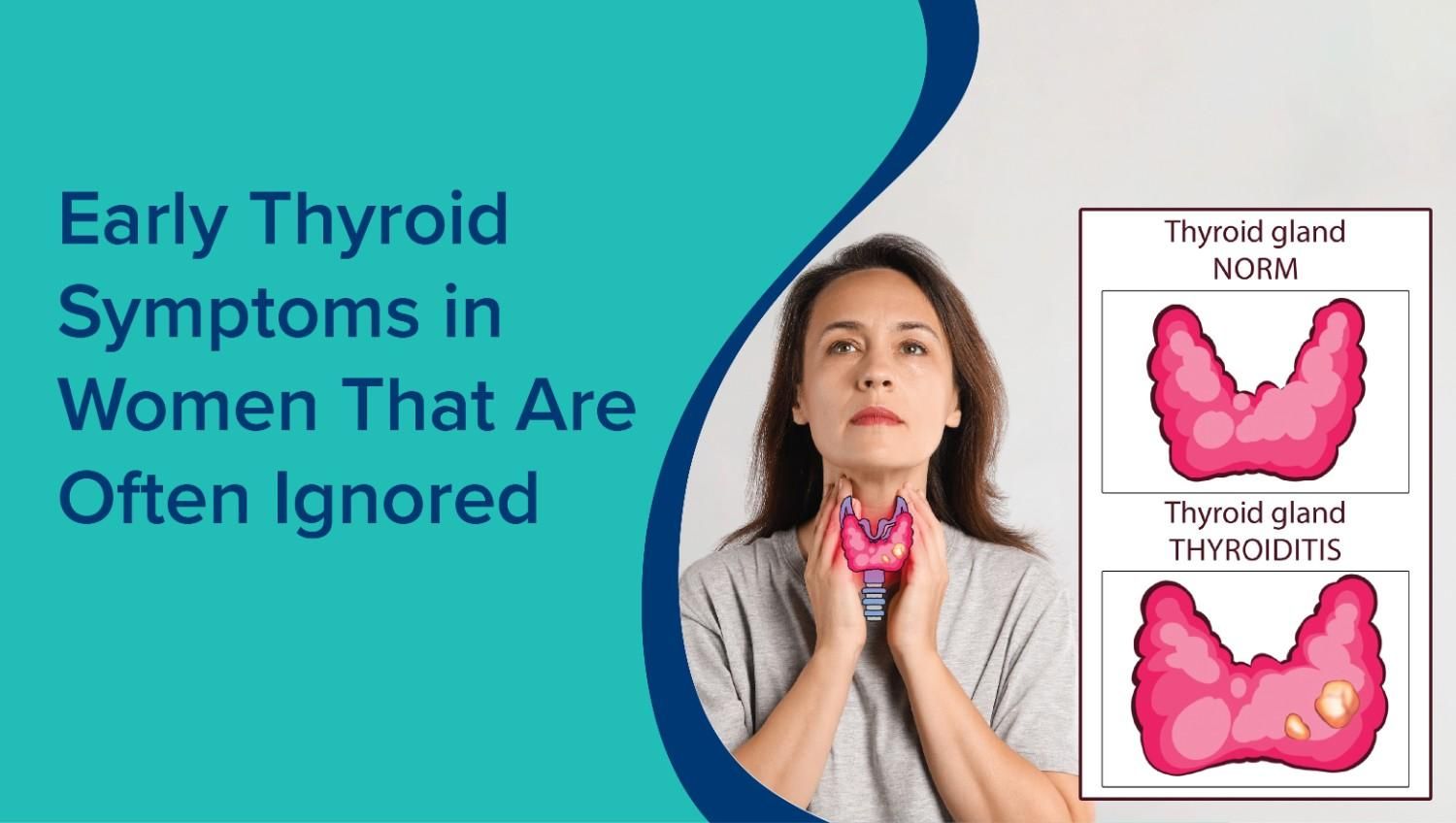


The thyroid gland may be small, but it plays a powerful role in regulating metabolism, hormones, energy levels, mood, and reproductive health. Situated at the base of the neck, this butterfly-shaped gland produces hormones that influence nearly every organ system in the body.
Thyroid disorders are particularly common among women. Hormonal changes during puberty, pregnancy, and menopause increase their risk of thyroid problems. Early symptoms are often subtle and can be mistaken for stress, lifestyle factors, or normal hormonal shifts. Consequently, many women ignore these early signs until the condition worsens.
This blog explores the early thyroid symptoms women frequently overlook, why they happen, and when to seek medical advice.
Common Symptoms of Thyroid in Women
Below are some symptoms commonly seen in women. dont ignore them, as they may indicate thyroid issues or related conditions.
Persistent Fatigue
Low thyroid hormone levels slow metabolism, reducing cellular energy production and leading to tiredness. Women may feel constant, heavy, and unrelieved by rest and may wake up exhausted despite sleeping well.
Unexplained weight change
Women may gain or lose weight for no reason. This could be due to a hormonal imbalance due to thyroid issues. Women often overlook them as warning signs.
Mood Swing
Thyroid dysfunction affects the neurotransmitters in the brain, leading to depression (low thyroid hormone levels) and difficulty concentrating. Irritability and anxiety are both signs of an overactive thyroid.
Irregular Periods
Thyroid dysfunction can disrupt the menstrual cycle and even lead to difficulty conceiving, related to fertility issues. Women frequently attribute menstrual irregularities to PCOS, stress, or age rather than checking thyroid levels.
Sensitivity to Temperature
One overlooked sign is unusual sensitivity to heat or cold, which may be due to irregular thyroid hormone levels. Feeling cold when others are comfortable (possible hypothyroidism). Feeling overheated or sweaty (possible hyperthyroidism).
Skin-related problems
Thyroid hormones influence skin cell turnover and hydration. Early imbalance may lead to dry or rough skin, cracked heels, brittle nails, and a pale complexion. Many women assume these are cosmetic issues rather than hormonal signs.
Brain Fog and Memory Problems
This can be due to an underactive thyroid. Forgetfulness, slower thinking, difficulty focusing, and mental fatigue.
Irregular Heartbeat
Thyroid hormones affect cardiovascular function. A slow heart rate is possible with an underactive thyroid. A rapid or irregular heartbeat is possible with an overactive thyroid. Consult your doctor for better guidance.
Swelling near the neck region
Mild neck swelling, indicating a thyroid enlargement (goitre). Early swelling is painless and often goes unnoticed without a specific examination.
ALSO READ: Thyroid Diet Plan: Foods to Eat and Avoid for Healthy Thyroid Function
Risk Factors That Increase Thyroid Problems in Women
Family history of thyroid diseaseGenetics play a major role. If close relatives have thyroid disorders, your risk of developing one is higher.
Autoimmune disorders
Conditions such as rheumatoid arthritis or lupus increase risk because many thyroid diseases (such as Hashimoto’s or Graves disease) are autoimmune.
During Pregnancy
Hormonal shifts during and after pregnancy can temporarily or permanently affect the thyroid function.
Menopause
Fluctuating estrogen levels can affect thyroid hormone balance and may worsen existing thyroid conditions.
Iodine imbalance
Both too little and too much iodine can disrupt thyroid hormone production because iodine is essential for their production.
Chronic stress
Long-term stress affects hormone regulation and can interfere with thyroid function via cortisol imbalance.
Vitamin D deficiency
Low vitamin D levels are associated with autoimmune thyroid disorders and may weaken immune regulation.
Certain medications
Some drugs (such as lithium, amiodarone, or interferon) can alter thyroid hormone production or damage thyroid cells.
Who should go for a thyroid test?
Top Signs You Should Go for a Thyroid Test
- People with fatigue, weight gain, dry skin, hair fall, or constipation (hypothyroid signs)
- People with weight loss, anxiety, fast heartbeat, or heat intolerance (hyperthyroid signs)
- Adults over 60 with memory or mood change
- Women above 35 (routine screening)
- Pregnant or recently delivered women
- Anyone with a family history of thyroid disease
- People with autoimmune diseases or high cholesterol
Test To Diagnose Thyroid Level
The thyroid testing panel evaluates your thyroid health and hormone balance. The package includes:
- TSH (Thyroid-Stimulating Hormone): Checks for thyroid underactivity or overactivity and is the primary screening test.(book now)
- T3 (Triiodothyronine): Measures the active thyroid hormone that affects metabolism, heart rate, and energy levels.(book now)
- T4 (Thyroxine): Examine overall thyroid hormone production and helps confirm thyroid disorders.(book now)
These tests are recommended if you have symptoms such as fatigue, weight changes, hair loss, mood changes, or irregular menstrual cycles.
Book Now: MAX@Home makes thyroid testing convenient and accurate.
How to Improve Thyroid Health
Balanced Nutrition: Eat iodine-rich foods (iodized salt, dairy, seafood). Include selenium sources (nuts, seeds) and ensure adequate protein intakeDont take Stress: Chronic stress disrupts hormonal balance. Meditation, yoga, and regular breaks can help.
Exercise Daily: Moderate physical activity supports metabolism and improves hormone regulation.
Improve Sleep: Get Quality sleep. Aim for 7–9 hours to maintain endocrine balance
Regular Checkup: Routine blood tests can detect thyroid imbalances before symptoms become severe (Book Full Body Checkup).
Final Thoughts
Early thyroid symptoms in women are often subtle, gradual, and easy to dismiss. Fatigue, mood swings, hair fall, or irregular periods may seem harmless individually, but together they can signal an underlying thyroid imbalance.
Listening to your body is crucial. If symptoms persist or feel unusual, testing thyroid levels can help clarify. Awareness is the first step toward prevention, early treatment, and long-term health.



 Call: 9240299624

