




Introduction
With the right support, many families successfully manage home ventilator care every day. If your loved one is coming home with a ventilator, or you are preparing for this change, this guide offers simple, practical steps and easy-to-understand information.
What Is Home Ventilator Care?
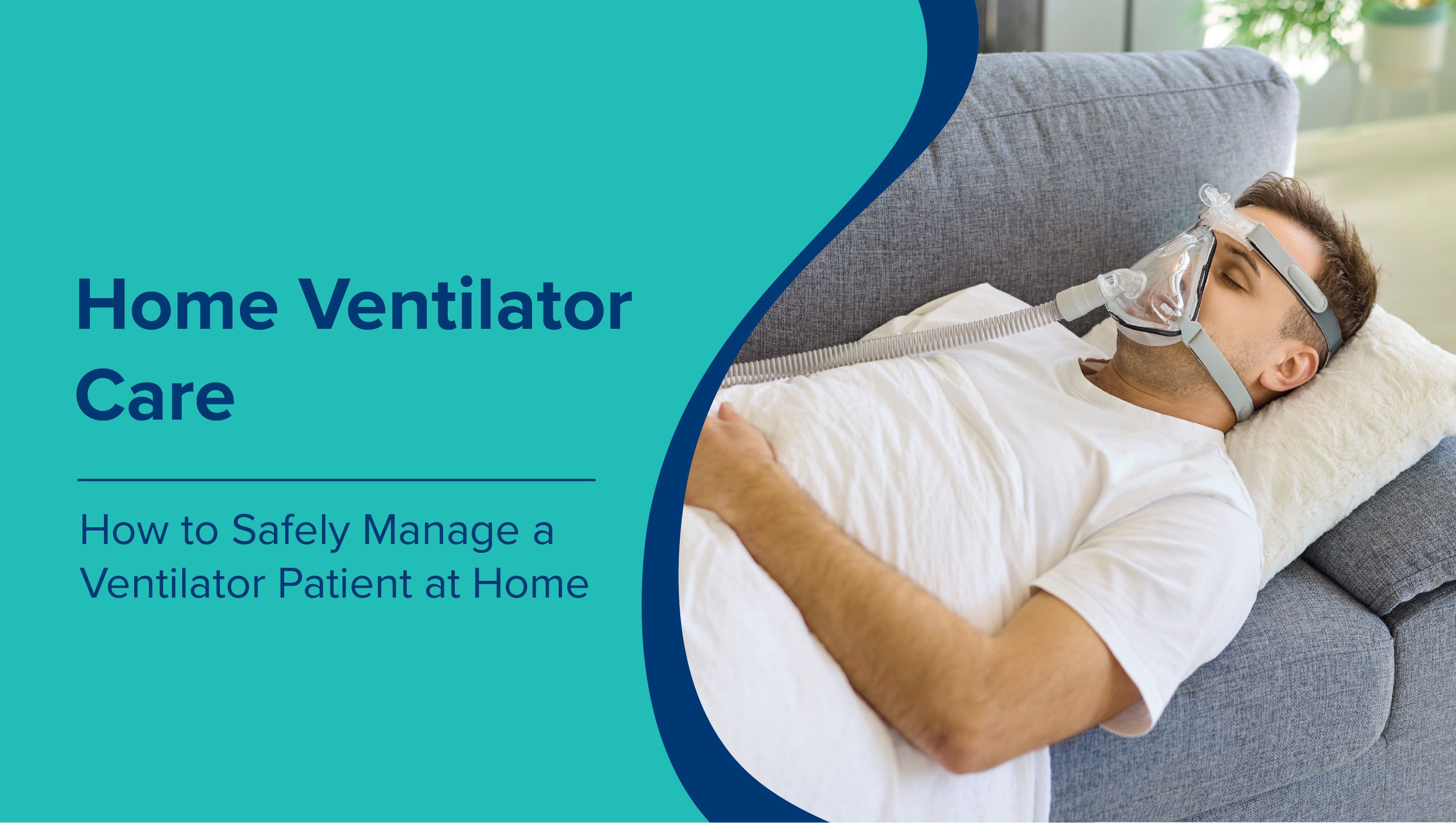
Home ventilator care means using a machine to help someone breathe at home instead of in the hospital. The ventilator delivers controlled breaths via a tracheostomy tube, a face mask, or a nasal device.
Patients who typically need home ventilator support include those with:
- Motor Neurone Disease, like Amyotrophic Lateral Sclerosis (ALS)
- Spinal Muscular Atrophy (SMA)
- High-level spinal cord injuries
- Advanced COPD
- Muscular Dystrophy
- Chronic respiratory failure or hypoventilation
Caring for someone with a ventilator at home can lower the risk of hospital infections, reduce costs, and greatly improve quality of life. Staying in the hospital is no longer the only safe choice.
Setting Up Your Home for a Ventilator Patient
It’s important to get your home ready before your loved one comes home from the hospital.
Power and backup: Ventilators need a steady power supply. Set up a UPS that can run the ventilator for at least four hours, and keep a backup generator ready. Let your local power company know you use life-sustaining equipment so you get priority if there’s an outage.
The room: Keep the room clean, airy, and at a comfortable temperature between 18 and 22°C. Stay away from cigarette smoke, dust, and strong chemical sprays. Use an adjustable hospital bed to help with positioning.
Supplies to always have stocked:
- Ventilator circuits and tubing (30-day supply minimum)
- HME filters or humidifier chambers
- Suction machine and sterile catheters
- Sterile distilled water (never tap water)
- Tracheostomy care kit
- Pulse oximeter
- Ambu bag (manual resuscitator), which is the most important emergency tool
What should be the daily ventilator care routine?
Following a regular daily routine can prevent most problems. Sticking to this routine every day is important for your loved one’s safety.
Every morning, do this:
- Check the ventilator settings against the prescription. Never adjust settings on your own.
- Inspect all tubing for kinks, cracks, or moisture. Drain any water in the circuit into a waste bin and never return it to the humidifier.
- Refill the humidifier with sterile distilled water only.
- Record the patient's oxygen saturation with a pulse oximeter. If levels remain below 92%, contact your healthcare team immediately.
- Observe chest rise. Both sides should rise evenly with every breath the machine delivers.
Suctioning the airway:
Suctioning helps clear mucus that your loved one can’t remove on their own. Always wash your hands and wear gloves. Use a new sterile catheter each time, and don’t suction for more than 10-15 seconds at a time. Only suction when you hear secretions or if the oxygen level drops, not just on a set schedule.
Tracheostomy care:
Clean the stoma every day with gauze dampened with saline. Look for any redness, swelling, or bad smell on the skin. Change the inner cannulas as directed. The tracheostomy ties should be snug but loose enough to fit one finger underneath.
Repositioning:
Turn your loved one every two hours to help prevent bedsores. Check their skin each time you move them.
Ventilator Alarms: What They Mean and What to Do
Alarms indicate that the ventilator has detected a problem that needs your attention.
Always find out why the alarm is sounding before turning it off.
High Pressure Alarm
Cause: blocked airway, kinked tubing, or patient coughing.
Action: Suction the airway. Straighten and inspect tubing.
Low Pressure / Disconnect Alarm
Cause: circuit disconnection or leak.
Action: Reconnect immediately. If you cannot find the disconnect in 30 seconds, use the Ambu bag and call emergency services.
Apnoea Alarm
Cause: the patient has stopped breathing.
Action: This is a medical emergency. Begin Ambu bag ventilation and call emergency services right now.
Low Battery Alarm
Cause: the ventilator is not plugged in, or the UPS is depleted.
Action: Connect to mains power immediately. The machine should always be plugged in.
Low Oxygen Alarm
Cause: the oxygen cylinder is empty, or the concentrator has been disconnected.
Action: Switch to backup oxygen now.
If you cannot resolve the problem within 30 seconds, disconnect the patient, begin manual ventilation with the Ambu bag, and call for help immediately. Prompt action is critical.
Preventing the Most Common Complications
Ventilator-Associated Pneumonia (VAP)
VAP is the leading cause of serious illness in home ventilator patients, but it is largely preventable. Keep the head of the bed elevated at 30–45 degrees at all times. Perform oral care twice daily with an antiseptic mouth rinse. Wash your hands thoroughly before each patient contact. Maintain proper humidification—suction secretions before they accumulate and enter the lungs.
Mucus Plugging
Thick or dried mucus can suddenly block the airway. Make sure the humidifier is always working. Do chest physiotherapy as prescribed, and suction if you hear thick secretions on auscultation. Check your loved one every two hours. Use a mattress that helps prevent pressure sores. Look at all areas where equipment touches the skin, like mask edges, tracheostomy parts, and tubing, each time you give care. Tell your healthcare team right away if you see any redness that doesn’t go away when pressed.
Caregiver Burnout
Caregiver burnout is a real and serious issue. If you are the main caregiver, make sure to take regular breaks and arrange for help so you don’t get too tired. Taking care of yourself helps you give better care to your loved one.
Who Should Be In The Home Ventilator Care Team
Managing a ventilator patient safely requires a team approach. Your care team should include:
- Pulmonologist — manages ventilation prescriptions and conducts regular reviews.
- Respiratory Therapist — your frontline expert for equipment management and caregiver training.(book now)
- Home Health Nurse — clinical assessments, wound care, and medication management.(book now)
- Physiotherapist—chest physiotherapy and secretion clearance techniques.
- Social Worker—navigates insurance, funding schemes, and community support.
- Trained Caregivers—family members or hired professionals providing round-the-clock monitoring and daily care.
Every caregiver should be trained and checked on how to use the ventilator, respond to alarms, use the Ambu bag, do suctioning, care for the tracheostomy, and perform CPR before your loved one comes home.
Equipment Maintenance: What to Do and When
Daily: Drain any water from the ventilator tubing and check the humidifier water. Wipe down the ventilator's exterior and check all connections.
Weekly: Change the full ventilator circuit. Clean and disinfect the humidifier chamber. Replace HME filters.
Monthly: Go over all equipment with your respiratory therapist. Test the backup generator and UPS. Make sure supplies are restocked and review the care plan.
When to Call Emergency Services Immediately
- Sudden severe breathing difficulty not relieved by suctioning
- SpO2 staying below 88% despite oxygen and intervention
- Blue or grey colour in lips, fingertips, or face (cyanosis)
- Loss of consciousness or cardiac arrest
- Ventilator failure, you cannot correct in 30 seconds
- Heavy or uncontrolled bleeding from the tracheostomy site
In any emergency, disconnect your loved one from the ventilator, use an Ambu bag to help them breathe, and call emergency services right away. Keep a printed emergency plan with ventilator settings and important phone numbers clearly posted in the patient’s room.
Get Ventilator At Home With MAX@Home
Maxathome offers professional home ventilator care, with trained respiratory therapists, 24/7 clinical support, equipment management, caregiver training, and ongoing monitoring. This way, your loved one can get hospital-level respiratory care at home.
Reach out to Maxathome to start your journey toward safe and confident home ventilator care, Book Now.




 Call: 9240299624

