




Introduction
Pulmonary Function Tests (PFTs), though they may sound complex, are simple, non-invasive measurements that can give you confidence in understanding your lung health.
This test is also commonly required as part of a medical assessment before major surgery, highlighting that we often appreciate the ease of breathing only when it is compromised.
Understanding the purpose of PFTs is crucial because these tests provide valuable insights into your lung health and help guide your care.
What Are Pulmonary Function Tests (PFTs)?
Pulmonary Function Tests are essential tools that help healthcare providers assess your lung health and reassure you about your respiratory well-being.
Why Are PFTs Performed?
There are several conditions for which a PFT Test is required, including:-
Diagnosing Respiratory Conditions
To identify lung disorders such as asthma, chronic obstructive pulmonary disease (COPD), pulmonary fibrosis, and emphysema. These tests provide valuable information about how well the lungs function and help detect functional abnormalities at an early stage.
To Monitor Existing Lung Disease
For people with respiratory conditions, PFTs are routinely used to track performance over time. Comparing results from earlier tests helps doctors check the effectiveness of a treatment plan and determine whether the disease is stable, improving, or worsening.
Pre-Surgical Lung Function Assessment
Before surgery, PFTs are often recommended to ensure your lungs are strong enough to tolerate anesthesia, supporting your safe recovery and peace of mind.
To Evaluate Conditions Like Shortness of Breath
PFTs can help identify conditions such as shortness of breath that occur without a clear cause. The tests help distinguish between obstructive lung conditions, such as asthma or COPD, and restrictive disorders, such as pulmonary fibrosis.
Evaluating Occupational and Environmental Exposure
Individuals exposed to harmful substances at work, such as asbestos, coal dust, or industrial pollutants, may undergo PFTs to assess the long-term impact on lung health and identify early signs of damage.
Common Types of Pulmonary Function Tests (PFTs)
Below are some types of Tests that your healthcare professionals recommend based on your condition. This includes
Spirometry
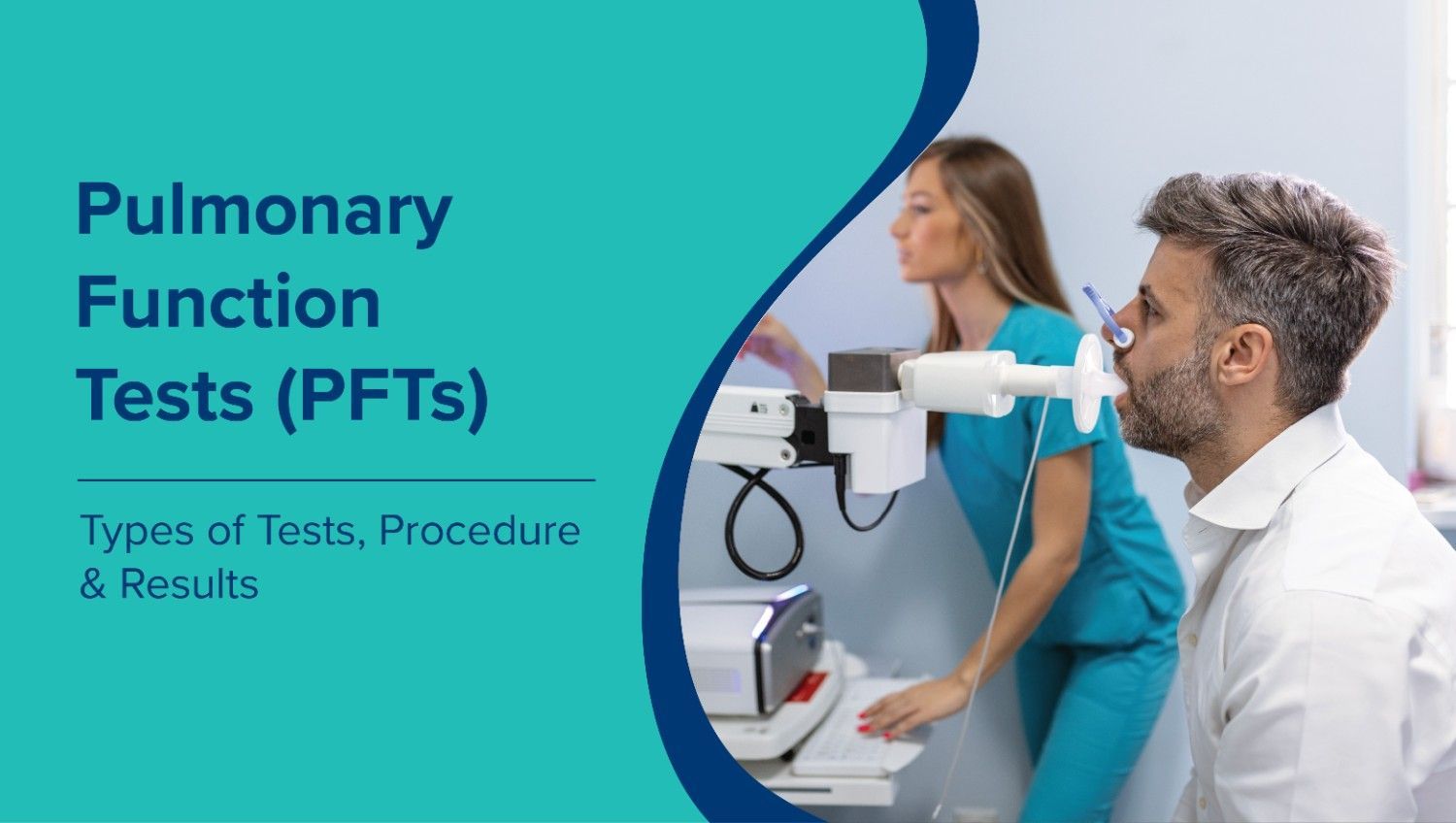
The most commonly used pulmonary function test to evaluate basic lung performance. This test shows how much air you can breathe in and out, and how fast you can do it. During the test, you'll breathe into a mouthpiece connected to a spirometer. Just take a deep breath and exhale as usual; the device will record your effort. The test is repeated several times to ensure accurate and consistent results.
Spirometry testing is also commonly recommended as part of routine respiratory evaluation and ongoing monitoring.
Body Plethysmography
It is an advanced test used to measure total lung volumes, including the amount of air that remains in the lungs after complete exhalation. The test is performed inside a sealed, transparent chamber where pressure changes are recorded as the patient breathes through a mouthpiece. This method provides precise measurements of lung capacity and airway resistance, especially in complex lung conditions.
Gas Diffusion Study
This test evaluates how efficiently oxygen passes from the lungs into the bloodstream. The patient inhales a harmless gas mixture, briefly holds their breath, then exhales. By analyzing exhaled air, doctors can determine how well the alveoli and surrounding blood vessels function in gas exchange.
Cardiopulmonary Exercise Test (CPET)
CPET evaluates how well the heart, lungs, and muscles work together during exercise. The patient exercises on a treadmill or stationary bicycle while breathing through a mask connected to monitoring equipment. Measurements of oxygen consumption, carbon dioxide production, breathing pattern, and heart response help identify limitations in exercise capacity and guide treatment planning.
Bronchial Provocation Test
The bronchial provocation test helps identify airway sensitivity, often associated with asthma. It involves measuring lung function before and after inhaling a substance that could constrict the airways. A notable decrease in airflow suggests airway hyperresponsiveness, a feature that helps diagnose asthma.
Exhaled Nitric Oxide Test (FeNO)
The FeNO test measures nitric oxide levels in exhaled breath to assess airway inflammation. The patient slowly exhales into a portable device that measures nitric oxide levels. High levels suggest airway inflammation, such as asthma, and help guide treatment decisions.
Pulse Oximetry Test
Pulse oximetry is a simple, non-invasive test used to measure blood oxygen levels. A small device placed on the fingertip or earlobe quickly displays oxygen saturation and heart rate. It is commonly used to detect low oxygen levels and monitor respiratory or heart-related conditions.
Plethysmography Test
This test measures lung volume and airway resistance through pressure changes during breathing. The patient performs breathing maneuvers in a sealed booth, enabling calculation of lung capacities such as total lung capacity and residual volume. It aids in examining obstructive and restrictive lung diseases.
Diffusion Capacity Test (DLCO)
The diffusion capacity (DLCO) test measures how effectively gases transfer from the lungs into the blood. The patient inhales a harmless gas mixture, holds their breath briefly, then exhales into a machine for analysis. Lower values suggest lung scarring, emphysema, or issues with pulmonary blood flow problems.
Related Diagnostic Tests & Home Services by Max@Home
Below are some tests that your healthcare professionals recommend based on your condition.
How to Prepare for a Pulmonary Function Test
No additional preparation is required, but you may need to limit certain daily habits before the test, as they could interfere with your results. These include:-
Dont Smoke
Avoid Smoking for at least 24 hours before the test, as tobacco smoke can affect lung performance, which can lead to inaccuracy in results.
Limit Physical Activity
Dont do any exercise for at least 30 minutes before the test, as these can affect breathing patterns and lung function, which may affect test accuracy.
Medication
Inform your doctor if you are taking medicines, including inhalers, bronchodilators, and steroids, as they can affect test results. They can advise whether any need to be paused or adjusted before the test.
Fasting
Fasting isn't required; eat normally, but avoid heavy meals before the test, especially if lung volume or body plethysmography is planned, since a full stomach can cause breathing discomfort.
Choose Comfortable Clothing
Wear loose, comfortable clothing that allows easy breathing. Tight or restrictive clothing can limit deep breathing and may affect the quality of the results.
Prepare Your Medical Details
Tell your doctor if you have any symptoms such as coughing, wheezing, or shortness of breath, along with your medical history and current medications. This information ensures your test results are interpreted correctly results
Procedure Of Pulmonary Test
- You will sit in a chair or a specialized booth.
- A clip will be placed on your nose to ensure all breathing occurs through your mouth.
- You will breathe into a mouthpiece attached to a sensor (the spirometer).
- A specialized technician will help you take deep breaths and exhale with maximum force.
Note: Your accuracy depends upon your effort. It's normal to feel a little lightheaded or tired after taking repeated hard breaths; these sensations are completely normal.
Lung Function Metrics Comparison
Below is a table showing different lung parameters, their primary uses, and clinical significance.
| Metric | Definition | Primary Use | Clinical Significance |
|---|---|---|---|
| FEV1 | Volume of air exhaled in the first second of a forced breath. | Diagnosing & monitoring Obstructive diseases. | Low values indicate airway narrowing (Asthma, COPD). |
| FVC | Total volume of air exhaled after maximum inhalation. | Identifying Restrictive lung capacity. | Low values suggest the lungs can't expand fully (Fibrosis, Chest wall issues). |
| FEV1/FVC Ratio | The fraction of total air exhaled in the first second. | Differential Diagnosis (Obstructive vs. Restrictive). | <70% usually indicates obstruction. Normal/High ratio with low FVC suggests restriction. |
| PEF | The maximum speed of expiration. | Daily monitoring of Asthma. | Helps patients track "Green/Yellow/Red" zones for flare-up management. |
| TLC | Total volume of air in the lungs after maximal inspiration. | Examine lung "size" or volume. | High in "air trapping" (Emphysema); decreased in Restrictive disease. |
| DLCO | How well oxygen passes from alveoli to blood. | Assessing gas exchange efficiency. | Low in Emphysema (loss of surface area) or Fibrosis (thickened membranes). |
Understand Your PFT Test Results(Test Interpretation)
Normal Range
Interpreting Pulmonary Function Test (PFT) results involves comparing measurements to reference values, which vary by age, sex, height, and ethnicity. Results are categorized within these ranges based on these factors.
Quick Reference: Lung Function Benchmarks
- FEV1 (Efficiency): ≥80% of predicted. Values below this suggest an airway obstruction.
- FVC (Capacity): ≥80% of predicted. Values below this indicate the lungs are "restricted," meaning they are unable to expand fully.
- FEV1/FVC Ratio (Gold Standard): 70% to 80%. <70%: Usually confirms Obstructive disease (the air is blocked).
- Normal Ratio + Low FVC confirms Restrictive disease (the lungs are small).
- DLCO (Gas Exchange): 80% of predicted. Low levels indicate that oxygen has difficulty entering the blood, often due to scarred or damaged lung tissue.
- TLC (Volume) Should be within the 80%–120% range.
- Low TLC points to Restrictive disease, while high TLC suggests Hyperinflation or air trapping, typical in Emphysema.
Key Abbreviations
- FEV- Forced Expiratory Volume
- FVC- Forced Vital Capacity
- PEF- Peak Expiratory Flow
- TLC- Total Lung Capacity
- DLCO- Diffusion Capacity
Complications With the PFT Test
Breathing Discomfort: You might experience mild discomfort, dizziness, or shortness of breath during forceful breathing. Please notify the technician if these symptoms become uncomfortable.Temporary Hyperventilation: Deep or rapid breathing during the test can cause brief lightheadedness, which typically resolves quickly.
Inaccuracy in test results: Since results can sometimes vary, it's a good idea to repeat the test if needed. Just remember to follow the instructions closely to get the most accurate results.
Final Thoughts
Pulmonary Function Tests are essential in respiratory care, providing insights into lung health. They help diagnose and monitor conditions like asthma, COPD, and other lung diseases, assisting clinical decisions.
Early testing and regular monitoring can significantly improve the management of respiratory conditions and quality of life.



 Call: 9240299624

