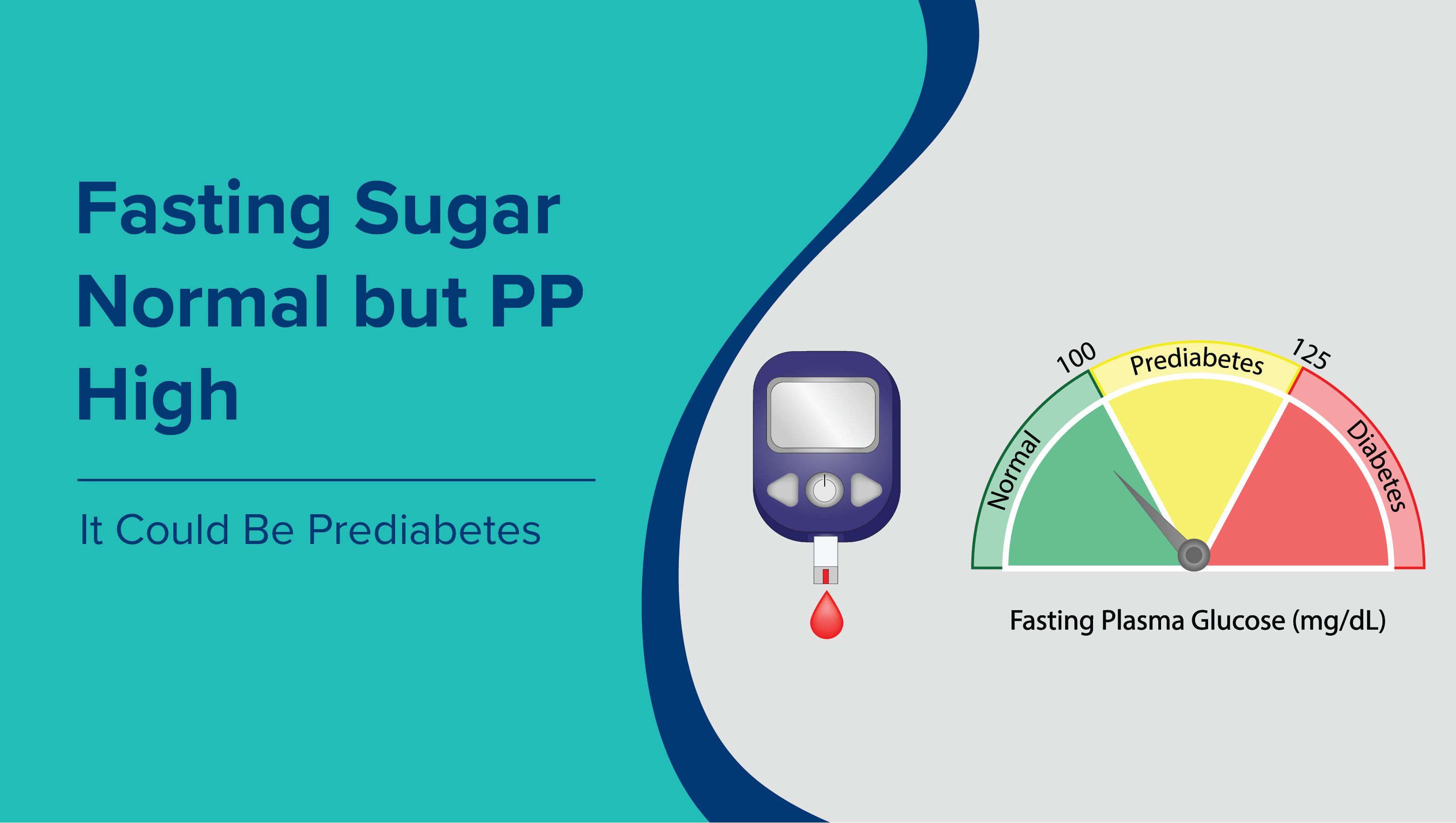


Many people assume that if their fasting blood sugar is normal, they are safe from diabetes. However, a normal fasting level, combined with elevated postprandial (PP) glucose, is an early warning sign of prediabetes or impaired glucose tolerance (IGT). This pattern is common in early metabolic dysfunction and is often overlooked unless post-meal testing is performed. Understanding why this happens can help you take preventive action before full-blown diabetes develops.
What Does "Fasting Sugar Normal and PP High" Actually Mean
When we talk about blood sugar testing, there are two primary time points doctors consider:
Fasting Blood Sugar (FBS)
Measured after 8–12 hours without food. It reflects baseline glucose regulation and liver glucose output.
Postprandial Blood Sugar (PPBS)
This test is taken two hours after you eat. It shows how well your body deals with sugar from your food.
Fasting Blood Sugar and PP Sugar (Normal Range)
| Test Type | Normal | Prediabetes | Diabetes |
|---|---|---|---|
| Fasting Blood Sugar | < 100 mg/dL | 100–125 mg/dL | ≥ 126 mg/dL |
| PP Blood Sugar (2 hrs after meal) | < 140 mg/dL | 140–199 mg/dL | ≥ 200 mg/dL |
Note: You can have a normal fasting level and still be in the prediabetes range for PP glucose.
Why Does PP Sugar Rise Before Fasting Sugar?
Below are some of the points that may lead to this condition:
-
Early Insulin Resistance
-
Delayed Insulin Release
-
High-Carb Diet Patterns
-
Sedentary Lifestyle
-
Early Beta-Cell Dysfunction
Common Causes Behind High PP Sugar
-
Sedentary lifestyle
-
High-carbohydrate diet
-
Excess belly fat
-
Family history of diabetes
-
Polycystic Ovary Syndrome (PCOS)
-
Chronic stress and poor sleep
Symptoms to watch for Post Meals
- Unusual tiredness or 'brain fog': You may feel very tired, sleepy, or mentally slow one to two hours after eating. This is sometimes mistaken for a normal 'food coma.'
- Excessive thirst and frequent urination: You may feel very thirsty and need to use the bathroom more often after meals, as your body tries to eliminate excess sugar.
- Blurred vision: You might have short periods of blurry vision, especially after eating a big meal.
- Unexplained weight gain: You may notice extra fat building up around your belly, which is often linked to insulin resistance.
- Sugar cravings: You might feel hungry or want sweets or refined carbs soon after finishing a meal.
Disclaimer: These symptoms can have other causes besides prediabetes. If you notice them often or they do not go away, talk to a healthcare professional for the right diagnosis.
Tests to Detect Blood Sugar & Insulin Issues
- Oral Glucose Tolerance Test (OGTT): Assesses how your body processes glucose after a 75 g drink; detects early abnormalities.
- HbA1c Test: Measures average blood sugar over the past 2–3 months.
- Fasting Insulin Test with HOMA-IR Calculation: Assesses insulin production and insulin resistance.
- Post-Prandial Blood Sugar Test: Measures glucose 2 hours after meals (target: <140 mg/dL).
- Fasting Blood Glucose Test: Basic screening for diabetes or prediabetes.
- Lipid Profile Test: Identifies cholesterol and triglyceride abnormalities linked to metabolic risk.
- C-Peptide Test: Measures the amount of natural insulin your body produces.
- Liver Function Test (LFT): Screens for fatty liver associated with insulin resistance.
Blood Sugar Reference Table
This table shows the three main tests doctors use to check your blood sugar levels.
| Category | Fasting Glucose | PP Glucose (2-hr) | HbA1c |
|---|---|---|---|
| Normal | < 100 mg/dL | < 140 mg/dL | < 5.7% |
| Prediabetes | 100–125 mg/dL | 140–199 mg/dL | 5.7–6.4% |
| Diabetes | ≥ 126 mg/dL | ≥ 200 mg/dL | ≥ 6.5% |
How To Control Sugar Level(PP) Naturally
Move After Every Meal
Taking a short 10 to 15-minute walk after you eat helps manage your blood sugar. When you move, your muscles use up sugar from your blood without needing as much insulin, which helps naturally lower spikes.
Watch your plate
Always starting your meal with fibre and protein before carbohydrates can significantly help reduce glucose spikes. Focusing on non-starchy vegetables, legumes, lean proteins, and healthy fats can help control the level og blod sugar.
Sleep & Stress Control
Aim for 7–8 hours of quality rest; one night of poor sleep can lower insulin sensitivity by up to ~25%. Also, it is important to manage your stress through practices like meditation, yoga, or breathing exercises, which can positively influence blood sugar regulation.
Build your muscle strength.
Building muscle helps your body use and store sugar better. Lifting weights or doing resistance exercises can make your body more sensitive to insulin, which helps keep your blood sugar steady after meals.
Consider Natural Support
Some natural options, such as soaking fenugreek seeds, adding cinnamon to your food, or taking berberine supplements, have been shown in studies to help lower blood sugar after meals. Always check with your doctor before starting any new supplements.
The Bottom Line
A normal fasting blood sugar does not always mean you are in perfect health, especially if your blood sugar rises after meals. High blood sugar after eating can be an early sign that your metabolism needs support. Finding this early gives you a chance to make changes.
Making healthy lifestyle changes can help you control your blood sugar, protect your heart and nerves, and lower your risk of developing type 2 diabetes.




 Call: 9240299624