




Quick answer
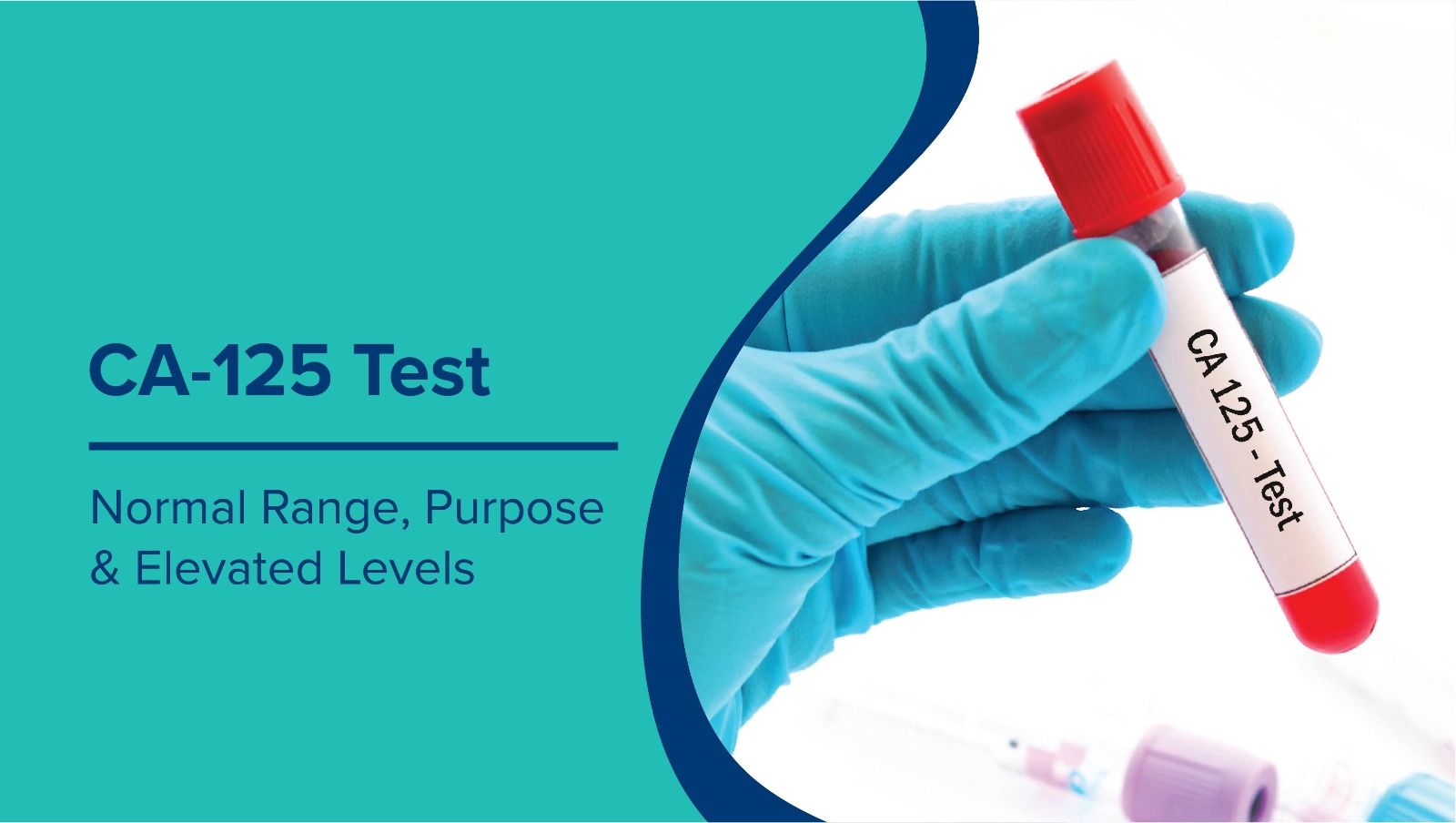
A CA 125 test measures a protein called cancer antigen 125 in your blood which is an important tumor marker that helps in the diagnosis of various gyneological cancers such as ovarian cancer, endometrial cancer and fallopian tube cancer . Most labs consider a level below 35 U/mL as normal. A higher reading does not confirm cancer on its own, because periods, pregnancy, endometriosis, fibroids and several other everyday conditions push the number up too.
Bloating, pelvic pain or a raised CA 125 report?
Book a CA 125 blood test with free home sample collection from MAX@Home and get your digital report within 24 hours.
Book CA 125 Test at Home →What Is the CA 125 Blood Test?
CA 125 full form is Cancer Antigen 125. It is a protein that circulates in small amounts in most adults' blood.
Tissues in the female reproductive system, including the ovaries and fallopian tubes, release more of this protein when they are irritated or inflamed. That irritation can come from something as ordinary as a monthly period. It can also come from ovarian cancer. The blood test simply counts how much of the protein is there on the day your sample was taken.
CA 125 is a tumor marker that helps doctors analyze and examine whether substances are produced either by cancer cells or by healthy cells reacting to cancer, and doctors almost never use them alone. It sits alongside scans, examinations, and, when needed, a biopsy.
Why is it called an ovarian cancer marker test?
Of all the cancers that raise CA 125, ovarian cancer is the one it tracks most closely, which is where the label comes from. The test is also used in cancers of the fallopian tubes, the peritoneum (the lining of the abdomen), and the lining of the uterus.
It is not a general cancer test. It is unreliable for bowel cancer, for instance, and it was never designed to pick up cancer anywhere else in the body.
What Causes High CA-125 Levels?
The list below runs from the most common explanations to the least. That order is deliberate. If your result came back high, the answer is far more likely to sit near the top of this page than the bottom.
1. Normal body changes
Menstruation. Your period alone can lift CA-125 above the normal range. It’s one of the single most common reasons for a mildly raised reading, which is why many doctors prefer to draw the sample once your period has finished.
Pregnancy. Levels commonly rise in the first trimester and again in the weeks after delivery. Nothing is wrong. The tissue is simply more active.
2. Benign gynaecological conditions
Endometriosis. Tissue similar to the uterine lining grows outside the uterus. This is one of the few harmless causes that can push CA-125 to genuinely high numbers, sometimes into the range people associate with cancer.
Ovarian cysts and other benign masses. Fluid-filled sacs on the ovary, including endometriomas, often raise the level. Most cysts are harmless and many clear up on their own.
Uterine fibroids. Non-cancerous growths in the muscular wall of the uterus. Common, often symptomless, and a routine explanation for an elevated result.
Pelvic inflammatory disease. An infection of the reproductive organs. The inflammation itself lifts the number, and it settles once the infection is treated.
3. Other conditions in the abdomen and chest
Liver disease. Cirrhosis raises CA-125, particularly once fluid has collected in the abdomen. Other chronic liver conditions can do the same.
Abdominal inflammation. Peritonitis, diverticulitis and pancreatitis all irritate the lining of the abdomen, and that lining is one of the tissues that produces CA-125.
Inflammatory bowel disease. Crohn’s disease and ulcerative colitis can lift levels during an active flare.
Tuberculosis. Abdominal and pulmonary TB are well-recognised causes of a high CA-125, and worth ruling out early wherever TB is common.
Cancers that can raise CA-125
Not all of them matter equally. Some raise it almost every time, which is why doctors track the number closely. Others raise it only occasionally, and doctors don't use the test to look for them.
Closely linked
Ovarian cancer. Raised in about 8 out of 10 cases in advanced stage (~80% cases). But early-stage disease often doesn't raise it, so a normal result isn't an all-clear.
Fallopian tube cancer. Usually raised. These tumours grow from the same kind of cells as ovarian cancer, so they behave almost identically on this test.
Primary peritoneal cancer. Usually raised. It starts in the lining of the abdomen, and that lining produces CA-125.
Endometrial cancer. Raised in some cases, not most. It can raise the number, but many women with it have a normal reading, so it's a supporting clue rather than a reliable one.
Other cancer types
About 28% of people with pancreatic, lung, breast or colorectal cancer have a high CA-125. Nearly three in four don't. That's too unreliable to be useful, so doctors don't use it to find any of them.
Pancreatic cancer. Sometimes, and when it does climb it can climb a long way. Still not dependable enough to act on.
Breast cancer. Mostly in advanced disease. Early breast cancer rarely touches CA-125.
Lung cancer. Occasionally, with no pattern worth planning around.
Colorectal cancer. Occasionally. But CA-125 is considered unreliable for bowel cancer and shouldn't be used to look for one. If you're asking about bowel cancer, this is the wrong test.
Lymphoma. Rare. It happens mo
Why Your Doctor May Order a CA 125 Test
There are four situations where this test genuinely earns its place.
To track treatment progression. This test helps check the level of CA 125 tumor marker for cancers such as ovarian cancer. Any level above or below normal helps doctors analyze the cancer activity and treatment response
To watch for cancer relapse. After treatment ends, a level that starts creeping up over several tests can be an early sign of recurrence, often before anything shows on a scan.
To investigate any suspicious tumor or mass. If an ultrasound or X-ray scan detects a suspicious, unknown mass or lump, the CA 125 result helps inform how urgently to investigate further.
To screen women at high genetic risk. If you have close relatives with a history of cancer such as ovarian cancer, endometrial or fallopian tube cancer or if you carry a BRCA1 or BRCA2 gene change (requires genetic testing), your doctor may suggest CA 125 testing combined with a transvaginal ultrasound, often every six to twelve months.
Important Things to Know
About 1 in 100 healthy people are above 35 U/mL. The cut-off is set so that only about 1% of healthy people fall outside it. A borderline result is common and usually means nothing.
Cancer isn't the likeliest cause of a high reading. Periods, pregnancy, endometriosis, fibroids, ovarian cysts, pelvic infection, liver disease and recent surgery all raise it, and in everyday practice these come up far more often.
One number means little. Three over a few months mean a lot. Your doctor is watching the trend, not a single day's result.
A normal result doesn't rule cancer out. Some ovarian cancers never raise CA-125. If your symptoms continue, go back within a month and ask about a scan.
This test doesn't diagnose cancer. It works alongside your symptoms, an examination, scans and, if needed, a biopsy. On its own it's one clue, not an answer.
CA 125 Normal Range: What the Numbers Mean
For decades the rule of thumb has been straightforward. A CA 125 level below 35 units per millilitre is considered normal. Above 35, and your doctor will want to look further.
| CA 125 level | What it means | What usually happens next |
|---|---|---|
| Below 35 U/mL | Within the normal range used by most laboratories | Usually nothing further, unless symptoms continue |
| Slightly above 35 U/mL | Mildly raised, most often from a non-cancerous cause | A repeat test after a few weeks, or an ultrasound if symptoms persist |
| Well above 35 U/mL | Significantly raised and needs investigation | Ultrasound of the abdomen and pelvis first, then CT, MRI or biopsy as advised |
Reading your CA 125 test normal range on the report
Here is the part people miss. The normal range for the CA 125 test isn't identical everywhere. Different laboratories use different testing kits and calibrations, so the cut-off printed on your report may sit slightly above or below 35.
Always read your number against the reference range on your own report, not against a figure you found online. And if you are being monitored over time, try to use the same laboratory for every test. Comparing results across labs introduces variation unrelated to your health.
Why some countries now use age-based cut-offs
In April 2026, the UK moved away from a single threshold for everyone. Research showed the test performs less well in younger women, and that CA 125 levels naturally differ across age groups. The age-specific thresholds now used in England, Wales and Northern Ireland look like this:
| Age | Threshold (U/mL) |
|---|---|
| 40 to 49 | 35 |
| 50 to 59 | 31 |
| 60 to 69 | 24 |
| 70 to 79 | 25 |
| 80 and above | 31 |
Women aged 39 and under are handled differently again. Rather than relying on the blood test, doctors there are advised to consider an urgent ultrasound, because CA 125 is least dependable in that age group.
These thresholds are the standard in Indian laboratories, which still use them as the reference range on your report. They matter for one reason: a single CA 125 number, read in isolation, was never meant to carry much weight.
CA 125 Test Meaning: What It Can and Cannot Tell You
Understanding the test's limits is far more useful than understanding the number itself.
It cannot diagnose cancer. Only a biopsy can do that. A raised CA 125 tells your doctor to keep looking, nothing more.
A normal result does not rule cancer out. Some ovarian cancers never raise CA 125, and levels are often still low in the early stages. If your result comes back normal but your symptoms carry on or get worse, go back to your doctor within a month and ask whether a scan is needed. This is the single most important sentence in this article.
It cannot tell you whether cancer has spread. The number says nothing about stage or location.
One reading is close to useless. Doctors order CA 125 in a series to track its direction of travel. A level moving steadily upward across three tests means something. A single number on a single day usually does not.
It is not a screening test for the general population. Research on tumour markers has repeatedly found they work poorly for screening people without symptoms. They miss too many cancers and flag too many women who are perfectly healthy, which leads to anxiety and invasive tests nobody needed. There is also no evidence that CA 125 screening reduces deaths from ovarian cancer in women at average risk.
CA 125 Test for Ovarian Cancer: Where It Fits in Diagnosis
The CA 125 test for ovarian cancer is one step in a sequence, and it is rarely the first or the last.
If your level is raised, the usual next step is an ultrasound of your abdomen and pelvis to look directly at the ovaries. This is typically arranged quickly. Depending on what the scan shows, a CT or MRI may follow, along with a tumour marker called HE4 that is sometimes measured alongside CA 125 for better accuracy in epithelial ovarian cancer. A biopsy is what finally confirms or rules out a diagnosis.
Symptoms associated with ovarian cancer
Ovarian cancer symptoms are vague, which is exactly why they get dismissed. The ones to take seriously are:
- Bloating that persists rather than coming and going
- Feeling full very quickly when eating, or losing your appetite
- Pain in the lower abdomen or pelvis
- Needing to pass urine more often or more urgently than usual
Less commonly, there may be a change in bowel habits, unusual tiredness, weight loss you cannot explain, or vaginal bleeding after menopause.
Tell your doctor if ovarian or breast cancer runs in your family, particularly in your mother, sister or daughter. That history changes how your doctor assesses your symptoms.
How the CA 125 Blood Test Is Done
The procedure itself is unremarkable, which is worth saying out loud if you are nervous.
A technician draws a small blood sample from a vein in your arm. It takes a couple of minutes. You may feel a brief sting, and occasionally a small bruise appears afterwards. Serious problems are rare.
Preparation: none. You don't need to fast for a CA 125 blood test, so you can eat and drink normally beforehand. If your doctor has combined it with other tests on the same sample, fasting rules may apply to those, so check your slip.
Timing: if you can, avoid the days of your period, since menstruation can raise the level on its own.
Medication: mention any hormone therapy or ongoing treatment, because some medicines influence the result.
Report: most laboratories release the result within 24 hours of receiving the sample.
CA 125 Test Price
The CA 125 test price varies by city and by laboratory. And usually start from 799 to 1800 you can book this test from the reputed healthcare brand,MAX@Home CA 125 test rates, all of which include free home sample collection:
If your doctor has advised a broader workup, CA 125 is also bundled into women's health packages such as the WellWise Platinum Profile for Women, and it sits alongside other cancer marker tests like the CEA test where a wider assessment is needed.
Prices are revised from time to time, so confirm the current rate when you book.
What to Do After You Get Your Report
Three scenarios, three sensible responses.
Your level is normal and you have no symptoms. Nothing more is needed. File the report and move on.
Your level is normal, but your symptoms continue. Do not let the normal result close the conversation. Go back to your doctor within a month and ask specifically about an ultrasound. A normal CA 125 does not rule out ovarian cancer.
Your level is raised. Resist the urge to search the number online and panic. Take the report to your doctor, who will almost certainly start with an ultrasound and may repeat the blood test after a few weeks to see which way it is moving. Most elevated results have a benign explanation.
In all three cases, the doctor who knows your history, your symptoms and your examination findin is the one who should interpret your resultgs. A number on a page cannot do that work.
Want the full women's health picture, not just one marker?
The WellWise Platinum Profile for Women bundles CA 125 with a wide women's health workup, collected at home at a time that suits you.
View WellWise Platinum Profile →People Also Ask
What is the normal range for a CA 125 test?
Most laboratories treat a CA 125 level below 35 U/mL as normal. The exact cut-off varies slightly between labs because they use different testing kits, so compare your result to the reference range printed on your report rather than a figure found online.
Does a high CA 125 level mean I have ovarian cancer?
No. High CA 125 levels turn up in many harmless conditions, including endometriosis, fibroids, ovarian cysts, pelvic infection, liver disease, pregnancy and even a normal period. A single raised reading is a reason for further testing, not a diagnosis.
Can you have ovarian cancer with a normal CA 125 level?
Yes. Some ovarian cancers do not raise CA 125 at all, and levels are often still low in the early stages. If your result is normal but your symptoms continue or worsen, return to your doctor within a month and ask about a scan.
Do I need to fast before a CA 125 blood test?
No fasting is needed. You can eat and drink as usual and return to your normal routine straight after the blood draw. If the same sample is being used for other tests, your doctor will tell you whether fasting applies to those.
Can I give the sample during my period?
You can, but menstruation raises CA 125 on its own and makes the result harder to interpret. Many doctors prefer you wait until your period has finished. Either way, mention the date of your last period when the sample is collected.
Is the CA 125 test used to screen healthy women for ovarian cancer?
No. It is not accurate enough for general screening, because too many non-cancerous conditions raise the level while some cancers do not raise it at all. It is offered to women at high genetic or family risk, usually alongside a transvaginal ultrasound.
How long does the CA 125 report take?
Most laboratories release the CA 125 blood test report within 24 hours of receiving the sample. With home collection, the sample is picked up at your door and the report is shared digitally, so a visit to a collection centre is rarely needed.
What happens if my CA 125 level is high?
Your doctor will usually arrange an ultrasound of your abdomen and pelvis to examine your ovaries, and may repeat the CA-125 test after a few weeks to see which direction it is moving. CT, MRI or a biopsy follow if anything looks unusual.
References
- Cleveland Clinic. CA-125 Blood Test. https://my.clevelandclinic.org/health/diagnostics/17830-ca-125-blood-test
- Mayo Clinic. CA 125 test. https://www.mayoclinic.org/tests-procedures/ca-125-test/about/pac-20393295
- Target Ovarian Cancer. CA125 blood test. https://targetovariancancer.org.uk/about-ovarian-cancer/testing/ca125-blood-test
- MedlinePlus, US National Library of Medicine. CA-125 Blood Test (Ovarian Cancer). https://medlineplus.gov/lab-tests/ca-125-blood-test-ovarian-cancer/
- National Cancer Institute. Tumor Markers. https://www.cancer.gov/about-cancer/diagnosis-staging/diagnosis/tumor-markers-fact-sheet


 Call: 9240299624

