


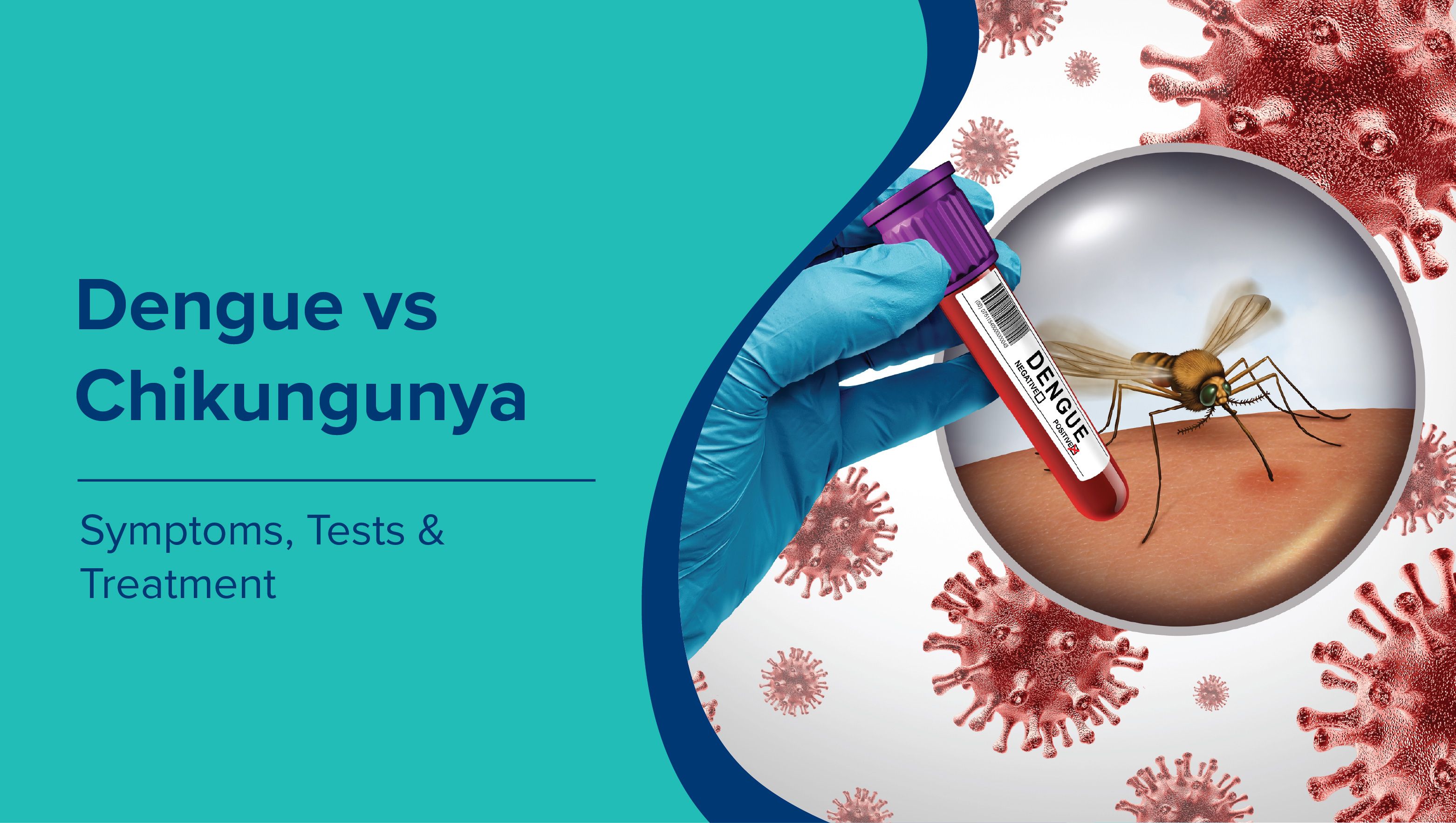


Quick Answer: Both dengue and chikungunya are transmitted by the same Aedes mosquito, and for the first two or three days, they feel almost identical: high fever, body aches, headache, exhaustion. Where they separate is what happens next. Dengue is more likely to hit your platelets hard, raise bleeding risk, and in serious cases, cause a dangerous drop in blood pressure. Chikungunya is the one that goes after your joints with a vengeance, often so badly that walking or holding a cup of tea becomes a struggle, and the joint pain can stick around for weeks or months even after the fever clears. Because both look so similar in the early days.A blood test is the only way to know for sure.
Why Dengue and Chikungunya Are So Often Confused
If you can't distinguish them from each other, it doesn't mean you're exaggerating. Both dengue and chikungunya infections are transmitted via the same mosquito vector (Aedes aegypti, a daytime mosquito species which breeds in stagnant waters); both diseases peak at the same period of time and start with identical sets of symptoms: high fever, chills, intense headache, and severe body pains.
WHO actually calls this out explicitly. Chikungunya so closely resembles dengue and Zika in its early stages that misdiagnosis happens routinely, even in clinical settings. That's partly why countries find it hard to report accurate chikungunya numbers. So if you typed "dengue vs chikungunya" into your phone at 2 a.m. trying to figure out which one you have, you were doing exactly what a reasonable person should do. The symptoms won't give you a definitive answer. A blood report will. This guide covers where the two conditions overlap, where they diverge, and how a home pathology test can get you clarity within a day.
How Common Are These Infections
Indeed. The number of people affected by dengue each year is anywhere between 100 and 400 million individuals all around the world, according to WHO. Over 5.6 billion people live in places where they are vulnerable. 2024 was a record year for these diseases, as WHO recorded 14.3 million cases and 10,500 deaths across 112 countries.
The history of Chikungunya is different for India. This disease first appeared in India in 1963, and disappeared for almost three decades until it resurfaced in 2005. Since then, according to studies listed on NCBI, it has become endemic to all parts of India. Recently, in early 2026, there have been over 2,700 reported cases of Chikungunya in the Indian state of Kerala.
Dengue at a Glance
Dengue fever is a disease caused by one of the four serotypes of the viruses named as DENV-1, DENV-2, DENV-3, and DENV-4; all belonging to the Flavivirus genus. What may surprise you here is that even if someone is infected with dengue once, it does not mean they will have lifelong immunity to all four serotypes. The immunity built against one serotype is permanent, whereas immunity to the other three serotypes is not.
After the mosquito bite, symptoms typically appear in 4 to 10 days (WHO's estimate) or an average of 5 to 7 days (CDC's more detailed estimate). Doctors break the illness into three stages. First comes the febrile phase: high fever, headache, pain behind the eyes, muscle and joint aches, sometimes a rash. Then the critical phase, which begins roughly when the fever starts to break and lasts 24 to 48 hours. This is the window where complications are most likely to develop. Then the convalescent phase, where most people gradually start feeling human again.
Dengue threatens some people because of its effects on blood vessels and platelets. If the disease goes into "severe dengue" stage, there will be leakage of plasma from blood vessels and falling platelet levels, which leads to dangerously low blood pressure that demands emergency treatment. This explains why retesting platelet levels is necessary while one is sick with the disease.
Chikungunya at a Glance
Chikungunya is caused by the chikungunya virus (CHIKV), an alphavirus in the Togaviridae family. The name is from the Makonde language of southeast Africa and translates roughly to "that which bends up." Anyone who's seen severe chikungunya joint pain firsthand understands why. People can look visibly hunched over from the pain in their knees, wrists, and ankles.
Incubation period: The CDC's Yellow Book states that the average is 3 to 7 days post bite, with a possible range of 1 to 12 days. WHO in its fact sheet provides a bit wider average, namely, 4 to 8 days. It should be noted that not everyone who contracts the disease becomes ill. According to CDC, the percent of asymptomatic cases can vary between 15 and 35, whereas in Europe the range is larger and equals from 17 to 39 percent. If one does become ill, then the key symptom is joint pain (polyarthralgia).
The ECDC researchers have identified three clinical phases, namely acute phase, which lasts for the first three weeks; post-acute phase, which runs from week three to week twelve; and the chronic phase for those patients who suffer from chikungunya after three months. Unlike dengue, chikungunya does not cause significant bleeding. If you want the fuller picture on what recovery actually looks like week by week, we've covered it in Chikungunya Symptoms & Recovery: What to Expect.
Dengue and Chikungunya Symptoms: Comparison Table
Look at the table below and you'll see why the first two days are such a diagnostic grey zone. The distinctions become much clearer from day three onwards, or sooner if you get tested. All figures are drawn from WHO, CDC, and ECDC clinical data.
| Feature | Dengue | Chikungunya |
|---|---|---|
| Virus Family | Flaviridae (Flavivirus: DENV 1–4) | Togaviridae (Alphavirus: CHIKV) |
| Incubation Period | 4–10 days (typically 5–7 days) | 1–12 days (typically 3–7 days) |
| Asymptomatic Infections | Common (~50%–80% of cases) | Roughly 15%–39% of cases |
| Fever Pattern | High, sudden; often biphasic ("saddleback") | High, sudden; usually settles within a week |
| Joint Pain | Present, but usually moderate; generalized body aches | Severe, often disabling; symmetrical and bilateral |
| Rash | Common; typically appears on days 3–5 | Common; maculopapular, often itchy, can affect palms/soles |
| Bleeding Risk | Present in severe cases (gums, nose, skin) | Rare |
| Platelet Count Impact | Often drops significantly (Thrombocytopenia) | Usually mild or unaffected |
| Severe Complications | Plasma leakage, shock, organ impairment | Occasional eye, heart, or neurological complications |
| Acute Illness Duration | 2–7 days of febrile phase | Fever typically resolves within a week |
| Post-Illness Symptoms | Fatigue, usually resolves in 1–2 weeks | Chronic joint pain/stiffness can persist for weeks to months |
The early overlap in the table is real. Fever, headache, body ache: all of it shows up in both. That's precisely why "let's just see how it goes" isn't a great strategy during monsoon season. The sooner you know which one you're dealing with, the sooner you can manage it properly.
The One Symptom That Often Gives It Away: Joint Pain
Joint pain is perhaps the most important symptom in determining the correct clinical picture of one illness or the other. Indeed, joint and body pain accompany both diseases, but in dengue, joint pain is bone-crushing in the early stages of infection and diminishes as the fever stabilizes. In chikungunya, joint pain may worsen rather than go away, manifesting symmetrical symptoms (pain and swelling in both wrists and both knees), with morning stiffness like arthritis rather than an ordinary viral syndrome. Clinical studies on alphavirus arthritis describe joint involvement that can begin 2 to 5 days after the bite, even before the development of antibodies.
Timing is the other tell. Dengue body ache fades when the fever does. Chikungunya joint pain can still be very much present weeks after the fever has gone, and ECDC data recognises a distinct "chronic stage" for patients whose symptoms continue past the three-month mark. If joint pain is still dragging you down post-fever, our team offers physiotherapy for joint pain programmes specifically designed for this kind of post-viral recovery.
Same Mosquito, Different Virus
Both infections are spread by Aedes aegypti and, to a lesser extent, by Aedes albopictus. These are day biting mosquitoes that multiply in small amounts of still, clean water: a discarded drum, the base of the pot of a plant, an open overhead tank. Urban India provides them with many opportunities. The WHO has highlighted that the transmission of dengue infection has begun entering areas that were previously too cold for dengue transmission due to urbanization and changes in climate conditions.
The common vector is the reason why both diseases peak at the same period of year, and sometimes both viruses coexist within the same house. This also makes it unnecessary to differentiate between any "dengue protocol" and "chikungunya protocol" in the prevention of either infection.
Who Is at Greater Risk of Complications?
Neither disease is equally threatening to everyone. With dengue, people getting infected a second time (with a different serotype) are at significantly higher risk of severe dengue than first-time patients, per CDC. Infants and people with underlying chronic conditions also fall into a higher-risk group according to WHO clinical materials.
For chikungunya, WHO flags newborns and elderly people with pre-existing conditions as the groups most likely to develop serious organ complications. There's also a particular concern around delivery timing for pregnant women. Chikungunya doesn't appear to increase miscarriage risk in general, but if a mother is viremic (actively carrying the virus in her blood) at the moment of delivery, CDC's travel medicine guidance notes that transmission to the newborn can occur in up to half of those cases, sometimes causing severe illness in the baby. That alone is a strong argument for getting tested promptly rather than waiting out a fever during monsoon months if you're pregnant.
How Doctors Actually Tell Them Apart: Diagnosis & Testing
Guessing based on symptoms in the first 48 to 72 hours isn't reliable. And self-medicating on that guess can backfire badly. The diagnosis comes from blood tests, and which test you need depends on how far along the fever is.
For Dengue
- Dengue NS1 Antigen (ELISA) test: the right call in the first 1 to 5 days. It detects a viral protein that appears in the blood early, before the body has produced antibodies.
- Dengue IgM/IgG antibody tests: better suited to the later phase, usually from around day 5 onwards, to confirm an active or recent infection.
- CBC (Complete Blood Count): measures platelet, white blood cell, and hematocrit counts. The signs the WHO flags as warnings include elevated hematocrit levels alongside rapid platelet reduction, which is one of the most indicative lab test findings for the critical stage of dengue fever.
For Chikungunya
- Chikungunya Virus Antibody IgM (ELISA) test: the go-to test by default according to CDC. The CDC states that IgM antibodies develop 4 to 5 days after symptom onset and can persist for several weeks to months.
- RT-PCR testing: detects viral RNA and is more reliable within 7 days; however, used only when there is doubt regarding other tests.
- ESR (Erythrocyte Sedimentation Rate): added since inflammation of joints due to Chikungunya tends to increase ESR.
Many doctors skip the single-virus approach and go straight to a combined fever panel. It avoids a second blood draw the next day and rules out co-infections or other monsoon illnesses in one step. MAX@Home's Max Fever Profile (Basic) and Max Fever Profile (Comprehensive) both cover dengue, malaria, typhoid, and related infections in a single sample. If typhoid or plain viral fever is also on your mind, it's worth reading our companion piece on dengue vs typhoid vs viral fever.
Worth knowing: Testing very early (day 1 or 2) can yield a false negative on both NS1 and IgM tests because antigen or antibody levels haven't yet reached detectable levels. If your result comes back negative but you're still symptomatic or getting worse, your doctor may suggest repeating the test after 48 to 72 hours before ruling either illness out.
Chikungunya vs Dengue Treatment: What Actually Changes
Neither disease has a specific antiviral cure. Both are managed supportively: rest, fluids, and close monitoring of the patient's condition. But what you're watching for and what medication you can safely take shift depending on which one you have.
When it comes to dengue, hydration, rest and monitoring need to be top priority. Fever and pain can be dealt with paracetamol. Aspirin and NSAIDs such as ibuprofen cannot be taken since they make blood thin and cause complications in case dengue develops. Usually, doctors prescribe daily or every 2 days platelet and CBC tests during the period of fever, especially during the first 24 to 48 hours when the fever subsides. This is when WHO guidance on the disease states that there is the highest risk of developing severe dengue.
For chikungunya, the main issue is joint pain that needs to be addressed when dengue has been eliminated. NSAIDs are suitable for dealing with inflammation in joints, warm compresses can help and once the acute fever goes away, physiotherapy helps to restore joint mobility much faster. There also is the chikungunya vaccine available for people with high risk for getting the disease (travellers with increased risk and laboratory workers aged 12 or older), but this vaccination cannot be recommended to everyone and cannot replace protection from mosquito bites.
The message is simple: do not treat a monsoon fever blindly. Taking ibuprofen during an undiagnosed dengue infection is a big risk. It is better to get a doctor's appointment and blood test done at your home rather than visiting the clinic.
Recovery Timeline & Rare Complications
The course of dengue recovery for most people is fairly typical. The fever should break within 2–7 days, and the patient is expected to feel significantly better within 1 week or 10 days after the infection. Also, fatigue may last for another few weeks. The platelet count should recover within 1–2 weeks; however, a platelet count test may be helpful to confirm that. One more factor affecting dengue is diet; thus, food which increases platelets is discussed separately in our guide on foods that help increase platelet count. Severe dengue is a medical emergency condition. According to WHO estimation, there are about 500 thousand severe dengue cases requiring hospitalisation each year worldwide, and it has an actual mortality rate among these cases.
The recovery course of chikungunya looks different. Although the fever resolves faster than in dengue, the joint pain persists. For some patients, recovery takes 2–3 weeks. For others, it takes much more time: joint stiffness and swelling remain for several months even after the resolution of acute period. Moreover, WHO's fact sheet on chikungunya states that in some rare cases, the virus can also lead to eye, heart and neurological complications. That means that when a symptom does not fit the expected pattern or persists after the fever is resolved, one should visit a doctor again.
Can You Get Both Dengue and Chikungunya at the Same Time?
Not common, but yes. Co-infection has been documented in medical journals, especially in regions where there is a higher density of mosquitoes at their peak season. One Aedes aegypti mosquito can have both viruses. In cases where the symptoms do not fit well with the profile of any single disease, or when the patient is not responding as expected to treatment for each virus, a fever panel test is recommended.
When to Stop Waiting and See a Doctor
Home management is effective for almost all scenarios. However, there are some clear symptoms that will require immediate medical intervention, and according to WHO's clinical classification for dengue, there are seven such symptoms:
- Abdominal pain or tenderness
- Continuous vomiting
- Fluid retention: evidence of swelling
- Mucosal bleeding: gum or nasal bleeding, blood in vomit or feces
- Lethargy, restlessness, or mental confusion
- Liver enlargement
- A rising hematocrit on tests alongside a rapid platelet drop
Two more to add to that list:
- Fever that drops suddenly but the patient feels worse, not better. This is a classic dengue red flag. The fever breaking is when the critical phase begins, not when it's safe to relax.
- For chikungunya: joint swelling bad enough to limit movement, or pain that isn't responding to basic medication.
For a fuller checklist specific to dengue, see our guide on warning signs of dengue fever. If anything on this list applies to someone in your household, don't wait for a booked test slot. A home doctor can assess on the spot and advise whether a hospital visit is needed.
How to Prevent Vector-Borne Disease
Prevention of such diseases requires vector control, specifically mosquitoes. Below are some of WHO's suggestions for both diseases. This involves:
- Clean and disinfect water storage receptacles such as flower pot saucers, cooler water containers, and buckets weekly
- Overhead tanks and sumps should be kept covered
- Repellents and bednets should be used particularly during early morning and evening hours when Aedes mosquitoes are highly active
- Wear full-sleeved clothing when outdoors during those peak hours
- Report stagnant water accumulation in your building or neighbourhood to your local municipal authority
If several people in your home or workplace have come down with a fever in quick succession, it's worth getting a full-body health checkup once everyone's on the mend to confirm nothing was missed.
Not sure if you've been infected by dengue, chikungunya, or any other disease? Why risk it and waste time in the waiting line? MAX@Home can provide a specialist to perform tests on dengue, chikungunya, and combined fever panels right at your doorstep!
Book a Home Blood TestRelated Reading
Frequently Asked Questions
1. What is the main difference between dengue and chikungunya?
In the first day or two, they feel almost the same: sudden fever, headache, body pain. After that, dengue is more likely to drop your platelet count and raise bleeding risk, while chikungunya is more likely to leave you with joint pain that can last weeks or months after the fever is gone. A blood test is the only reliable way to confirm which one you have.
2. Can dengue and chikungunya symptoms look exactly the same at first?
Yes, they do. In fact, according to the WHO, chikungunya is often mistaken for dengue due to similarities in initial symptoms. Both have high fever, headache, muscle pain, and fatigue as their initial symptoms. However, the difference is evident after day 3, especially with regards to joint pain and platelet count, or even right away when tested via blood test.
3. Which test confirms dengue and which confirms chikungunya?
For Dengue virus: The NS1 Antigen ELISA test within the first 1 to 5 days, followed by the IgM and IgG antibodies tests in later stages of disease. For Chikungunya virus: The Chikungunya IgM Antibodies ELISA test, which is valid after 4–5 days of symptoms. Combined fever profile test for both viruses in a single blood sample. Book all tests via MAX@Home pathology services.
4. What is the incubation period for dengue and chikungunya?
In most cases, Dengue fever symptoms begin developing four to ten days following the bite; however, on average, according to the CDC, it takes five to seven days. Chikungunya virus infection occurs within three to seven days; nevertheless, its reported range is between one and twelve days.
5. Is chikungunya more dangerous than dengue?
Immediate threat to life is posed more by dengue than by chikungunya. Dengue haemorrhagic fever poses a risk of leakage of fluid from blood vessels, internal bleeding, and shock. The World Health Organization (WHO) says that about half a million people have to be admitted to hospital annually due to dengue hemorrhagic fever.
6. How long does joint pain from chikungunya usually last?
Most patients start feeling better after two to three weeks. In some cases, stiffness and exacerbation may occur for up to three months (the post-acute phase), while in others, they enter the chronic phase beyond that period. Physical therapy at home and mild exercises speed up the healing process.
7. Can I take ibuprofen if I'm not sure whether it's dengue or chikungunya?
No, not until dengue has been ruled out. Ibuprofen and aspirin thin the blood, which can make things significantly worse if it turns out to be dengue. Stick to paracetamol until you have a confirmed diagnosis.
8. When should I see a doctor instead of just resting at home?
Get medical attention if you see any of the following: severe stomach pain, persistent vomiting, bleeding from the gums or nose, blood in vomit or stool, confusion or unusual restlessness, difficulty breathing, very low urine output, or a sudden drop in fever with worsening symptoms. That last one in particular is a dengue warning sign. A home doctor visit can assess these without a clinic trip.
9. Is it possible to have dengue and chikungunya together?
Indeed, it has been reported before, but it is very rare. One can be bitten by the same mosquito carrying both viruses. In case your symptoms do not match the description of both infections, or you're having trouble recovering, then you should consider a broad-range fever panel test.
10. Do dengue and chikungunya spread the same way?
Yes. Both are transmitted by Aedes aegypti (and to a lesser extent Aedes albopictus), which bites during the day and breeds in small amounts of standing water. Preventing mosquito breeding cuts the risk of both diseases at once.
11. Can chikungunya affect a pregnant woman's baby?
Generally, chikungunya doesn't increase the risk of miscarriage. But if a mother is actively viremic at the time of delivery, CDC notes that virus transmission to the newborn can happen in up to half of those cases, sometimes causing serious illness in the baby. Pregnant women with monsoon fever should get evaluated and tested promptly rather than waiting it out at home.
References
- World Health Organization, Dengue and severe dengue (fact sheet), who.int
- World Health Organization, Chikungunya (fact sheet), who.int
- U.S. Centers for Disease Control and Prevention, Chikungunya, Travelers' Health; and CDC Yellow Book 2026, wwwnc.cdc.gov
- European Centre for Disease Prevention and Control, Factsheet for health professionals about chikungunya virus disease, ecdc.europa.eu
- Pan American Health Organization / World Health Organization, Chikungunya: Questions and Answers, paho.org
This article is for general informational purposes only and is not a substitute for professional medical advice, diagnosis, or treatment. Statistics are drawn from publicly available WHO, CDC, and ECDC sources and may be updated periodically by those agencies. Always consult a qualified doctor for any health concerns or before starting, stopping, or changing any treatment. MAX@Home provides diagnostic sample collection and home healthcare services; test results should be interpreted by a licensed physician.

 Call: 9240299624

