


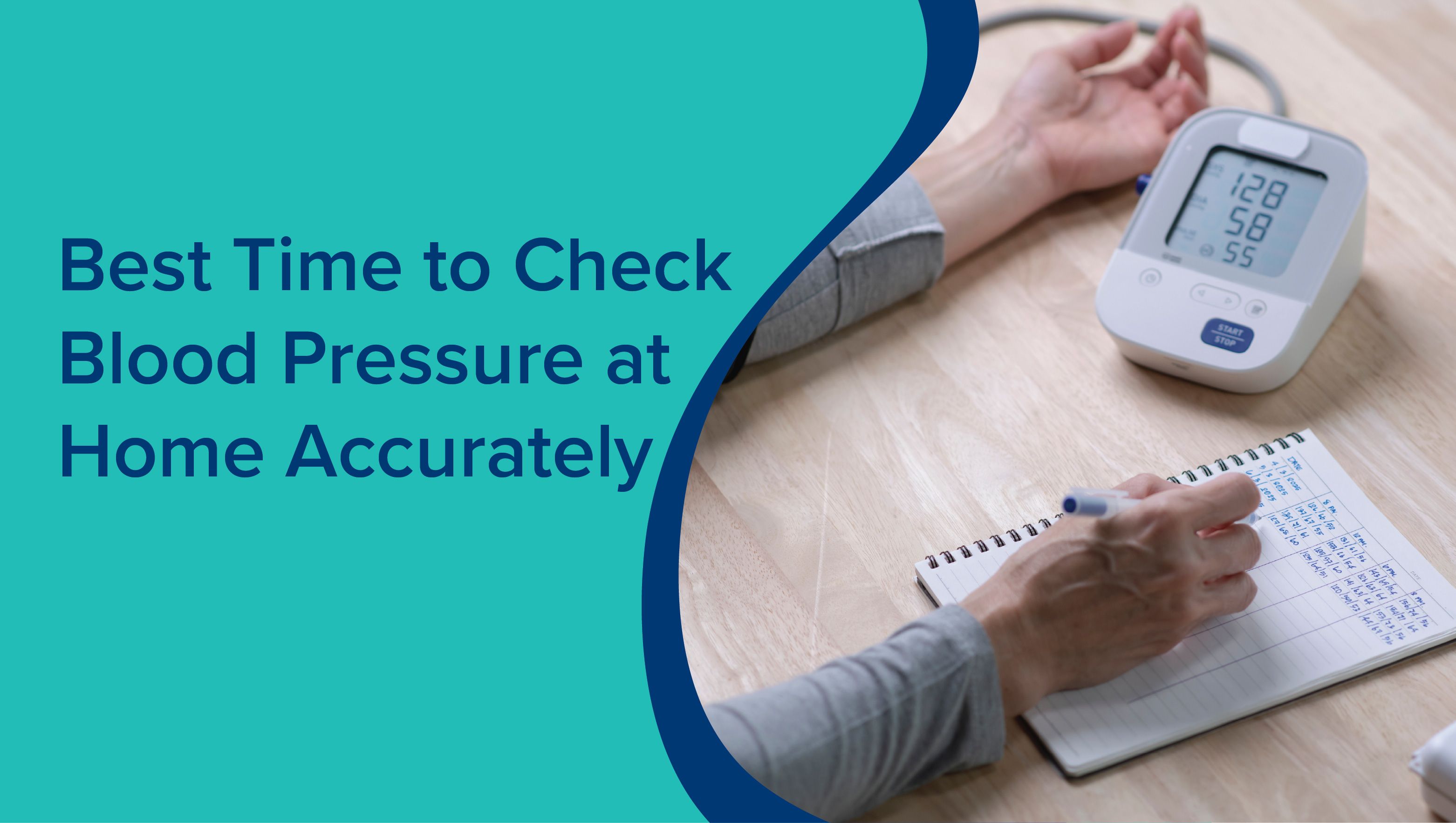


Introduction
Hypertension is called the 'silent killer' for good reason; the symptoms are rarely visible to the patient until it has already built up in the body and done serious harm. Monitoring blood pressure is important for maintaining heart health, and it is even more essential if there is a history of heart problems in the family. Regular blood pressure is key for hypertension and diabetes sufferers and those who are at risk of developing cardiovascular disease.
Here is something that most people neglect to think about: it’s not enough to monitor yourself frequently; you have to do it correctly and at the right moments. Depending on small factors like your monitoring technique or when you take the measurement, you may get a reading of blood pressure that is not accurate to what it actually is, leading to unhealthy stress or, in some worst cases, an unhealthy sense of security.
This guide will tell you the best and most accurate times to check your blood pressure, how to measure blood pressure properly, some techniques people tend to use frequently that should be avoided, and much more.
What Is Considered a Normal Blood Pressure Reading?
Before you start monitoring, it helps to understand what the numbers mean. Blood pressure is measured in millimeters of mercury (mmHg) and recorded as two numbers:
- Systolic pressure – the pressure when your heart beats
- Diastolic pressure – the pressure when your heart rests between beats
| Category | Systolic (mmHg) | Diastolic (mmHg) | Action |
| Normal | Less than 120 | Less than 80 | Maintain a healthy lifestyle |
| Elevated | 120-129 | Less than 80 | Monitor closely |
| High BP – Stage 1 | 130-139 | 80-89 | Consult a doctor |
| High BP – Stage 2 | 140 or higher | 90 or higher | Medical treatment needed |
| Hypertensive Crisis | Higher than 180 | Higher than 120 | Seek emergency care! |
Note: These guidelines are based on standard cardiology recommendations. Always consult your doctor to understand your personal BP targets.
Why Timing Matters When Checking Blood Pressure
Your blood pressure is not a fixed number; it fluctuates throughout the day based on a wide range of physical and emotional factors. Understanding these natural rhythms is key to getting accurate BP readings at home.
Natural Daily Fluctuations
Blood pressure typically follows a daily pattern: it rises sharply in the early morning shortly after waking, remains relatively stable during the day, and dips at night during sleep. This pattern, known as 'dipping,' is considered healthy.
Factors That Affect BP (blood pressure) Readings
Below are some of the known factors that may affect your BP value. A doctor consultation is required for a clearer status regarding your BP values and readings.
Physical Activity
Before measuring BP, physical activity, such as exercise, brisk walking, or climbing stairs, should be avoided, as these activities can raise BP readings. Take a minimum of 5-minute rest before measuring BP.
Stress and Anxiety
Short-term increases in BP can be caused by stress, nervousness, and anxiety. Many people tend to have BP readings that are elevated when taken at a clinic and get diagnosed with “white coat syndrome.
Caffeine, Alcohol, and Smoking
Temporary increases in BP can be caused by both caffeine and nicotine, as both stimulate the heart and blood vessels. Alcohol can temporarily increase BP readings as well, though the effect depends on the amount consumed.
Time of the Day
BP value changes as the day progresses and is typically lower when a person is sleeping and higher in the morning and during active hours.
Body Position
Keeping the arm below the heart level, crossing the legs, and having an improper sitting position can cause affect BP readings. So, an accurate, upright posture is necessary.
Full Bladder
An increased strain on the body, caused by a full bladder, can increase BP. Hence, it is advisable to empty the bladder prior to testing.
Talking During Measurement
An accurate BP reading can be compromised by movement, talking, and laughing during the measurement process, specifically when the BP monitor is in the active position.
Wrong Cuff Fit
Too loose or too tight a BP cuff can provide false readings. The cuff should fit tightly around the upper arm and should not be too loose.
Medications
Blood pressure-increasing effects can be observed with the use of decongestants and steroids, along with other pain medications. However, BP medications typically lower the BP.
Diet and Salt Intake
Salty and large meals can increase blood pressure for a short time. More sodium means more water retention in the body.
Temperature
Constriction of blood vessels leads to higher blood pressure and a colder climate. Higher, warmer climates will have the opposite effect.
Medical Conditions
The ability of a body to regulate blood pressure can be negatively affected by conditions such as diabetes, kidney disease, thyroid disorders, and heart disease.
Best Time to Check Blood Pressure at Home
Morning Hours (An Optimal Choice)
Many cardiologists and physicians suggest taking BP measurements in the morning. This should be done within one hour of getting up after emptying the bladder and should be done before taking BP medications, eating breakfast, or consuming either morning coffee. or caffeine (Plain water before measurement is fine — it does not significantly affect blood pressure readings.)
Measurements during the morning help record your BP as a baseline before it is affected by stress or activity throughout the day. For the majority of hypertension patients, the morning is typically the most appropriate time to take the BP.
Evening Hours (A Useful Read)
A reading taken before your last meal of the day, and before any late-day medications, is helpful in that you can capture a BP assessment for the entire day. It is actually very helpful in diagnosing an illness called 'masked hypertension,' in which a person's BP is within the normal range when taken in a clinic but is elevated when taken at home.
Before BP Medications
For those who are on medications to help lower their BP, it is a good practice to take the BP reading just before taking the medication. This helps your physician evaluate whether the medication is working and is effective for a 24-hour period.
At the Same Time Every Day
Consistency is key. Try to measure at the same time each day the body follows a circadian rhythm, and comparing readings taken at different times of day is not meaningful.
How Often Should Hypertensive Patients Monitor?
- Newly diagnosed patients: Twice daily (morning and evening) for at least 7 days before a doctor's appointment
- Stable hypertension: Once or twice daily, or as recommended by your doctor
- Well-controlled BP: 2–3 times per week may be sufficient
- After any medication change: Daily monitoring for at least 1–2 weeks
How to Measure Blood Pressure at Home Correctly
Having the right timing means nothing if your technique is off. Follow these step-by-step instructions every time you check your BP at home:
- Choose a quiet, comfortable room and sit down. Rest for at least 5 minutes before measuring.
- Sit with your back supported and both feet flat on the floor (do not cross your legs.)
- Place your arm on a flat surface (like a table) at heart level. Keep your palm facing upward.
- Wrap the cuff around your bare upper arm, about 2 cm above the elbow. Make sure it is snug but not tight.
- Do not talk, check your phone, or move during the measurement.
- Take 2–3 readings, waiting at least 1 minute between each. Record the average of the readings.
- Log the date, time, arm used, and both readings in a BP diary or app.
Always use a clinically validated digital BP monitor. Upper-arm monitors are more accurate than wrist-based devices for most people.
Common Mistakes That Cause Inaccurate BP Readings
Even small errors in technique can cause significant variation in your blood pressure readings. Watch out for these common pitfalls:
- Wait 30 minutes to measure after exercising.
- Avoid drinking tea, coffee, or energy drinks, and avoid caffeine for at least 30 minutes.
- Measuring after smoking, for 30 minutes, can raise BP.
- Remain calm and still; do not speak or watch TV.
- Using the wrong cuff size, either too small or too large, can give high or low BP readings.
- Crossing your legs during the measurement can give a false BP reading that is 8 mmHg higher.
- A full bladder can raise your blood pressure by 10–15 mmHg, so be sure to empty your bladder before measuring.
- A colder room can raise BP since it causes blood vessels to constrict.
- To get the best measurement, take 2 to 3 readings and average them.
Morning vs. Evening Blood Pressure: Which Is More Accurate?
Both morning and evening readings serve different but equally important purposes.
Why Doctors Prefer Morning Readings
Morning BP is closest to your 'resting baseline' and is less influenced by daily activities. Studies show that morning BP is a strong predictor of cardiovascular risk, making it the preferred time recommended by most hypertension guidelines.
Check for Evening Readings
Evening readings help detect whether your medication is wearing off by the end of the day. They are also useful for identifying 'white coat hypertension' (elevated BP only at the clinic) and 'masked hypertension' (normal at clinic, high at home).
The Trend Matters More Than a Single Reading
Rather than obsessing over one reading, focus on the pattern over days and weeks. A single high reading could be due to stress or poor technique, but persistently elevated readings over multiple days are a signal to consult your doctor.
Tips for Accurate Blood Pressure Monitoring at Home
Use a clinically validated digital upper-arm BP monitor,check with your doctor or look for validated device lists from recognised health organisations.
- Always use the same arm specifically, the arm that showed the higher reading during your initial two-arm comparison. Consistently use that arm for all future measurements, rather than defaulting to the left arm.
- Maintain a log of BP measurements containing the date, time, arm, readings, and other relevant notes, including "had coffee 2 hours ago" and "felt stressed."
- Wait to measure BP after a stressful event or argument until you have calmed down
- Home and clinic BP readings are both clinically useful—comparing the two can help your doctor identify patterns such as white-coat hypertension or masked hypertension, so there's no need to avoid comparing them.
- Always bring a BP diary to your doctor so that they can be more effective and precise with treatments.
- Periodically validate or calibrate your BP monitor according to the manufacturer's recommendations to maintain accurate readings, rather than replacing it on a fixed annual schedule.
When to see a Doctor?
Home BP monitoring is a complement to, not a replacement for, professional medical care. Contact your doctor immediately if you notice:
- Readings consistently above 140/90 mmHg on multiple days
- A sudden spike above 180/120 mmHg (hypertensive crisis)
- Severe headache, especially at the back of the head
- Chest pain or tightness
- Blurred or double vision
- Sudden dizziness or difficulty in walking
- Shortness of breath without exertion
These could be signs of a hypertensive emergency — do not wait, seek medical help right away.
Note:If a reading is 180/120 mmHg or higher, wait about 5 minutes and repeat the measurement to confirm it. If the repeat reading is still elevated and is accompanied by symptoms such as chest pain, breathlessness, a severe headache, neurological deficits (e.g. weakness, slurred speech), or visual changes, seek emergency medical attention immediately rather than waiting to see if it settles on its own.
Conclusion
Monitoring blood pressure at home can develop into a strong, healthy habit. The morning before medications and breakfast serves as an ideal time to check blood pressure. An optional evening measurement could be taken shortly before dinner. Measure blood pressure after 5 minutes of quiet sitting, with your correctly sized cuff. Take 2-3 measurements for added accuracy. Before measuring your blood pressure, do not drink caffeine, smoke, or exercise, and do not have a full bladder. Record your measurements in a blood pressure (BP) diary and bring it to your next appointment.
Go for home blood pressure monitoring, combined with a healthy lifestyle and regular medical visits, is one of the best tools you have for managing hypertension and protecting your heart health.
People may ask
What is the best time to check blood pressure at home?
Mornings are ideal because it's at least an hour after you wake up, before you eat or drink some caffeine, and before you need to take your BP meds. Most recommendations also suggest doing a second reading before dinner.
Should I measure blood pressure before or after eating?
Always measure blood pressure before eating. A meal, especially one that is large or salty, will alter your readings. If you must measure after a meal, wait at least 30 minutes.
Why are my blood pressure readings different each time?
BP naturally fluctuates due to stress, body position, physical activity, emotions, and time of day. This is why taking 2–3 readings and averaging them gives a more accurate result. Consistent differences could indicate a technique issue or an underlying condition — speak to your doctor.
Can stress affect home blood pressure readings?
Yes, significantly. Stress and anxiety can raise BP by 20–30 mmHg or more temporarily. Always try to measure when you are relaxed. If you feel stressed, sit quietly for 10 minutes before measuring.
How many times should I check my blood pressure in a day?
For most people managing hypertension, twice daily — morning and evening — is recommended. Once your BP is well-controlled, your doctor may advise less frequent monitoring. Never measure more than 3 times in a session; additional readings can cause anxiety and falsely elevated numbers.
Is morning blood pressure usually higher?
Yes. BP tends to rise naturally in the morning as part of the body's circadian rhythm,a phenomenon called the 'morning surge.' This is why morning readings are considered a strong indicator of cardiovascular risk.
Which arm should be used to measure blood pressure?
Ideally, use both arms initially and compare readings. Use the arm with the consistently higher reading for all future measurements. There is no default "standard" arm, the correct arm is whichever one showed the higher BP during your initial assessment, and your doctor can help confirm this.
References:
- https://www.heart.org/en/health-topics/high-blood-pressure/understanding-blood-pressure-readings
- https://www.nhlbi.nih.gov/health/high-blood-pressure
- https://www.mayoclinic.org/diseases-conditions/high-blood-pressure/in-depth/blood-pressure/art-20050982
Blood pressure Calculator




 Call: 9240299624

