




Introduction
As global temperatures continue to rise, heat-related illnesses are becoming an increasingly urgent public health concern. Two of the most common and potentially dangerous conditions are heat exhaustion and heat stroke. While both result from the body overheating, they differ significantly in severity, symptoms, and the level of medical intervention required.
Recognizing the difference between heat exhaustion and heat stroke is essential. Heat exhaustion will lead to heat stroke and can damage organs and be fatal. Understanding the different symptoms of each will help prevent and treat the two heat-related illnesses. Knowing these may save your life and the lives of those around you.
What Is Heat Exhaustion?
Heat exhaustion means the body overheating from high temperature and exertion. It also occurs from high temperature and lack of exertion. If you're stressing the body's ability to regulate temperature, it is signaling you. Fortunately, heat exhaustion is not life-threatening. However, it can become heatstroke, so it is important to treat it.
When you sweat, you're losing salt and water. That is what is happening with heat exhaustion. Your core temperature can rise, but it should be below 104°F (40°C).
Common Causes of Heat Exhaustion
Below are some of the causes that can lead to heat exhaustion. Here's a quick summary.
Prolonged Exposure to High Temperatures or Humidity
Surviving high temperature exposure or high humidity (especially poorly ventilated surroundings) will most certainly overwhelm your body's mechanism for controlling core temperature.
High humidity slows or prevents the evaporation of sweat. Without the ability to evaporate, sweat eventually leads to heat exhaustion.
Heat exhaustion can occur after only a few hours in temperatures above 90 degrees (32°C) with humidity above 60%. Open construction sites, agricultural fields, unshaded outdoor events, and lip service given to ventilation in outdoor buildings in the dry, desert sun.
High Physical Activity in Hot Weather
Unlike the situation described above, heat exhaustion becomes almost instantly unavoidable for construction workers, athletes, agricultural workers, military personnel, firefighters, etc., when internal/external body heat becomes unbalanced as a result of the high output of heat from demanding physical activity in a hot environment.
This situation is even more critical for all but the most elite athletes when a lack of hydration, inadequate rest, or no shade is pushed to the limit. To avoid this, plan or schedule physical activities for the cool part of the day and take shaded breaks. Ensure breaks are at least 10 to 15 minutes every hour.
Inadequate Fluid Intake (Dehydration)
The body's method of cooling itself from the inside out relies heavily on plentiful resources. This mechanism relies on blood volume to adjust circulation. Even slightly losing a couple of percent of body weight bombards this mechanism.
Waiting until you feel thirsty to drink water means you are already mildly dehydrated by the time you feel thirsty. Drink at least 8 glasses (2 liters) each day in normal conditions. 500ml (half a liter) of water each hour during physical activity in the heat.
Excessive Sweating Without Fluid Replacement
The body can lose 1–2 litres of sweat per hour during activity in the heat, though this varies considerably depending on environmental conditions (temperature, humidity) and exercise intensity—this is a significant volume that must be replaced to sustain safe body function
Sweat is a solution of sodium, potassium, and chloride. Replacing sweat simply with water can dilute sodium in the blood, which causes cramping, vomiting, headaches, and confusion.
Any activity that is done in the heat for longer than 1 hour should be accompanied by an oral rehydration solution (ORS) or an electrolyte-containing fluid—particularly for prolonged exertion with heavy sweating to replenish the fluid and minerals that were lost.
Wearing Heavy or Restrictive Clothing in the Heat
Insulating fabrics, which are dark or heavy and non-breathable, block heat from escaping the skin. Also, non-breathable fabrics block evaporative cooling through sweat.
Protective gear offers the same problems of insulation for high-generating body heat during activity that are also hazardous.
Dark fabrics are worse because they absorb solar radiation. Always lightweight, loose-fitting, light-colored clothing made with cotton or moisture-wicking fabrics helps body cooling because it helps sweat evaporate faster.
People going from normal weather to an extremely hot climate
Your body can make some adaptations to help deal with the increased temperatures. Improvements in the body include enhancement of the sweating response, an increased blood plasma volume, and a decrease in the resting core temperature.
To be fully adapted, the body needs to experience the heat for about 10-14 days. While your body is adapting, the likelihood of heat-related illnesses is especially high.
Tourists visiting warm regions, workers who must work outside, and athletes doing summer training are the most affected; they must expose their bodies to the heat for at most 2 hours and gradually for 2 weeks and be on the lookout for when the body starts to give warning signals.
Who Is Most at Risk?
- The older adults (decreased ability to regulate body temperature)
- Young children (less effective sweating)
- Outdoor laborers and farm workers
- People with chronic illnesses (heart disease, diabetes, and chronic kidney disease)
- People taking some medications (diuretics, antihistamines, beta-blockers)
- People who are overweight/obese
What Is Heat Stroke?
Heat stroke is the most severe form of heat-related illness and constitutes a true medical emergency. It is defined as a core body temperature at or above 104°F (40°C) accompanied by central nervous system dysfunction. Unlike heat exhaustion, heat stroke can cause permanent damage to the brain, heart, kidneys, and muscles if not treated immediately.
Core temperatures can heat up and cause organ failure and cellular decomposition within minutes to hours. Heat stroke needs emergency treatment. Call and begin cooling as quickly as possible.
Types of Heat Stroke
Exertional Heat Stroke (EHS)
Exertional heat stroke typically affects healthy, young individuals engaged in intense physical activity, such as athletes, military recruits, and manual laborers. It develops quickly (within hours), and sweating may still be present.
Non-Exertional (Classic) Heat Stroke
Classic heat stroke usually affects older adults, the very young, or those with chronic illness. It develops more gradually, often over several days during heat waves, and the skin is typically hot and dry due to failure of the sweating mechanism.
Why Heat Stroke Is Dangerous
- Core temperature above 104°F causes protein denaturation and cell death
- The brain is especially vulnerable to heat damage, leading to confusion, seizures, and coma
- Multi-organ failure can occur rapidly; heart, kidneys, liver, and muscles are all affected
- Fatality rates can reach 10–15% even with treatment; permanent disability is possible
- Every minute of delayed cooling significantly worsens outcomes
Differences Between Heat Exhaustion vs Heat Stroke
The table below outlines the critical differences between heat exhaustion and heat stroke to help you quickly assess the situation:
| Feature | Heat Exhaustion | Heat Stroke |
| Body Temperature | Below 104°F (40°C) | 104°F (40°C) or above |
| Mental Status | Normal or mildly confused | Severe confusion, disorientation, or unconsciousness |
| Sweating | Heavy sweating | May stop sweating (skin becomes hot and dry) |
| Skin | Cool, pale, moist | Hot, red, dry or damp |
| Severity | Moderate — serious but treatable | Severe—life-threatening emergency |
| Emergency Level | Urgent — needs quick treatment | Critical—call emergency services immediately |
| Treatment | Rest, hydration, cool environment | Immediate cooling and emergency hospitalization |
Note: Body temperature readings can overlap between the two conditions, so temperature alone is not always a reliable way to tell them apart. Neurological dysfunction—confusion, disorientation, slurred speech, seizures, or loss of consciousness—is the key distinguishing feature of heat stroke and should be weighted more heavily than the temperature reading alone.
What are the heat exhaustion symptoms?
Recognizing the symptoms of heat exhaustion early is crucial for preventing progression to heat stroke. According to the CDC, key symptoms include the following:
- Heavy, excessive sweating
- Cool, pale, or clammy skin
- Weakness and fatigue
- Dizziness or fainting
- Headache
- Muscle cramps or spasms
- Nausea or vomiting
- Excessive thirst
- Rapid but weak pulse
Early Warning Signs to Watch For
Before developing heat exhaustion, the body often sends early signals. Look for:
- Unusual tiredness or difficulty concentrating during heat exposure
- Mild swelling of the hands, feet, or ankles (heat edema)
- Excessive thirst even after drinking fluids
- Heat cramps painful muscle spasms, typically in the legs or abdomen
- Skin that feels unusually hot or cold and clammy to the touch
Heat Stroke Symptoms to look for
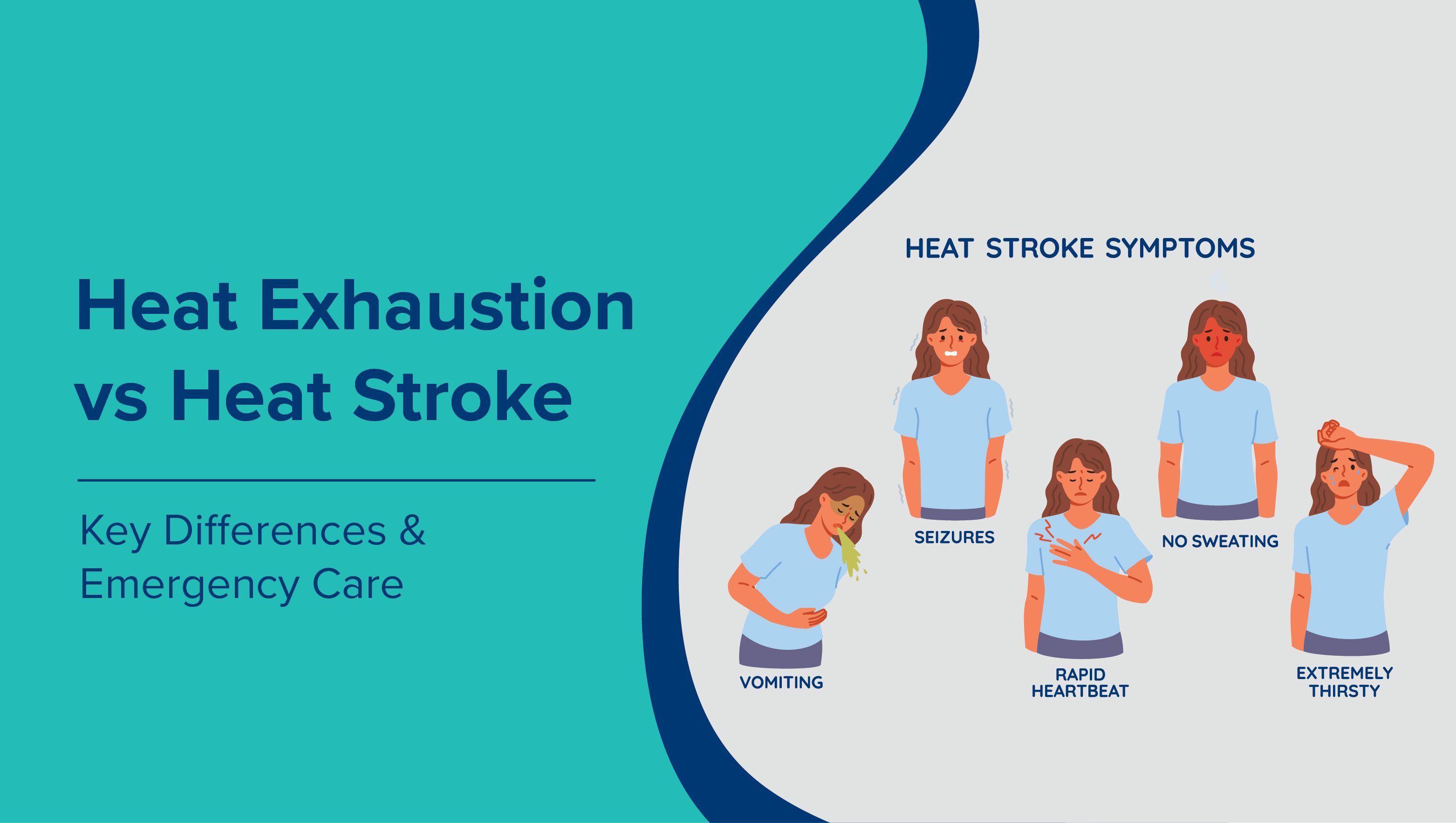
Heat stroke symptoms are far more severe and alarming. They represent a breakdown of the body's ability to regulate temperature. Common heatstroke symptoms include:
- Core body temperature at or above 104°F (40°C) — the hallmark of heat stroke
- Confusion, disorientation, or agitation
- Altered mental status or loss of consciousness
- Slurred speech
- Seizures
- Hot, red, dry, or damp skin
- Rapid, strong heartbeat
- Throbbing headache
- No sweating (in classic heat stroke) despite extreme heat
Signs That Require Immediate Emergency Care
If you observe ANY of the following signs below, seek immediate care:
- Loss of consciousness or unresponsiveness
- Seizure or convulsions
- Inability to walk or stand
- Extreme confusion or abnormal behavior
- Core temperature at or above 104°F (40°C)
- Loss of sweating with hot, dry skin in a hot environment
First Aid for Heat Exhaustion
If you suspect someone has heat exhaustion, act quickly with these steps:
- Move the person to a cool place — indoors with air conditioning or at least into the shade.
- Have them lie down and elevate their legs slightly to improve circulation.
- Remove excess or tight clothing to help the body cool.
- Provide cool fluids such as water or an electrolyte drink (avoid alcohol or caffeine). Encourage slow, steady sipping.
- Apply cool, wet compresses to the skin, especially the neck, armpits, and groin.
- Use a fan to increase evaporative cooling.
- Monitor closely; if symptoms worsen or do not improve within 30 minutes, seek emergency care.
When to Contact a Healthcare Professional
Contact a doctor or seek urgent care if:
- Symptoms do not improve within 30 minutes of treatment
- The person vomits and cannot retain fluids
- Body temperature continues to rise
- The person's mental status changes, or they become confused
- There is a known underlying medical condition (heart disease, diabetes, etc.)
Emergency Care for Heat Stroke
Heat stroke is a medical emergency—every minute counts. Do not wait to see if symptoms improve on their own.
What to Do Immediately
Look for quick help. Do not attempt to drive the person to the hospital yourself unless no emergency services are available.
- Move the person out of the sun and into the coolest available environment.
- Begin rapid cooling immediately — this is the single most important intervention.
- Apply ice packs or cold, wet cloths to the neck, armpits, and groin (areas with large blood vessels near the skin).
- If available, immerse the person in cool (not ice-cold) water—cold water immersion is primarily recommended for exertional heat stroke, typically in younger, otherwise healthy individuals.
- For older adults with suspected classic (non-exertional) heat stroke, evaporative cooling (spraying or sponging with cool water combined with fanning) and external cooling methods are generally preferred over cold-water immersion, which can carry cardiovascular risks in this group.
- Place an unconscious person in the recovery position only if they are breathing normally to keep the airway open.
What Not to Do
- Do NOT delay calling for emergency help — heat stroke is fatal without medical treatment.
- Avoid giving fluids to an unconscious or semi-conscious person — they may choke or aspirate.
- Do NOT use ice-cold water immersion for elderly individuals with suspected classic heat stroke the shock can cause cardiovascular complications (See preferred method above — evaporative/external cooling.).
- Get them immediately to the nearby healthcare unit. Heat stroke requires hospital-level care.
Risk Factors for Heat-Related Illnesses
Certain individuals face a significantly elevated risk of developing both heat exhaustion and heat stroke:
- Older Adults (65+): Reduced ability to recognize and respond to environmental temperature changes and reduced ability to sweat.
- Young Children: Reliance on caregivers for hydration and the immaturity of the thermoregulatory system.
- Outdoor and Manual Workers: Regular and prolonged exposure to high ambient temperatures coupled with strenuous physical activities.
- Athletes: Generation of excess metabolic heat, particularly in endurance sports.
- People with chronic conditions: They have reduced ability to cool the body due to heart disease, kidney disease, and obesity.
- Dehydrated Individuals: Reduced body heat tolerance even with mild dehydration.
- Those Taking Some Medications: Impaired sweating and fluid imbalance caused by some antidepressants, antipsychotics, beta-blockers, and diuretics.
- People uncomfortable with warm Weather: Increased risk of heat-related illnesses in the first 1 to 2 weeks of transitioning from a cooler to a warmer climate.
How to Avoid Heat Exhaustion and Heat Stroke
The good news is that most heat-related illnesses can be avoided by being aware and taking precautions. The CDC and WHO have offered the following recommendations:
- Drink plenty of water,based on age, activity level, environmental conditions, and any underlying medical illnesses. At least 8 glasses (2 liters) a day, even more when out in the heat. Consult your doctor if you have a condition that affects fluid balance.
- Stay in the shade when the sun is at its highest (between 10 AM and 4 PM).
- Wear the right clothing: Light and loose clothing that absorbs sweat will help.
- Rest: Do this every 15 to 20 minutes if you have to be out in the heat.
- Take advantage of the air conditioning: Go to air-conditioned buildings during extreme heat (such as shopping centers or libraries).
- Slow adjustment necessary: When relocating to a climate with higher temperatures or starting outdoor sessions, slowly increase exposure and intensity over the course of 1 to 2 weeks.
- Watch at-risk populations: During extreme heat, regularly check in on your elderly neighbors, those with chronic illnesses, and small children.
- Do not leave people in cars: When outside, sometimes parked vehicles can reach dangerous temperatures quickly.
Summer Safety Tips for Outdoor Activities
- Plan exercise or outdoor work for early morning or evening when temperatures are lower.
- Bring more water than you think you'll need — a minimum of 500ml per hour of activity.
- Use sunscreen (SPF 30+) to protect skin and reduce solar heat absorption.
- Wear a wide-brimmed hat and UV-protective sunglasses.
- Familiarize yourself with the nearest cooling centers and emergency services in your area.
- Use a buddy system when engaging in strenuous activities in the heat — never exercise alone in extreme conditions.
When Should You Seek Medical Help?
Heat-related illnesses exist on a spectrum. Knowing when to escalate from self-care to medical evaluation is critical.
Seek urgent medical evaluation if:
- Symptoms of heat exhaustion do not improve after 30 minutes of rest and cooling
- The person vomits and cannot tolerate fluids
- Body temperature rises above 103°F (39.4°C)
- The person has an underlying medical condition or is elderly
Conclusion
Heat stroke and heat exhaustion can be life-threatening and lead to serious injury if not handled with care Knowing the difference between heat exhaustion and heat stroke, especially the sudden change in mental state and temperature, can save a life.
Heat exhaustion is a serious warning sign that requires immediate first aid: move to a cool space, rehydrate, and rest. Heat stroke is a true medical emergency requiring immediate care.
As temperatures climb globally, these aids are no longer optional knowledge; they are essential. Share this information with family, friends, coworkers, and communities. The more people who can recognize the signs and respond appropriately, the more lives we can protect during extreme heat events.
Frequently Asked Questions
What is the difference between heat exhaustion and heat stroke?
Heavy sweating and weakness with a body temperature below 104°F (40 °C) describe heat exhaustion, which is a moderate heat illness. A body temperature of 104°F (40 °C) and above, with confusion and the effects of heat stroke on the central nervous system, describes a life-threatening emergency.
Can heat exhaustion turn into heat stroke?
The answer is yes. Of the two, heat exhaustion is more serious, and if heat exhaustion is not treated in a reasonable time and reasonably, it can lead to heat stroke, which can happen in as little as 30 minutes.
What are the first signs of heat stroke?
The early signs of heat stroke include, but are not limited to, a body temperature rapidly rising to 104 °F or above, confusion or disorientation, and an extremely hot skin surface with the complete absence of sweating. These are also reasons to call for immediate help.
How long does heat exhaustion last?
The average time for heat exhaustion is 30 minutes to a few hours with the correct treatment of rest, cooling, and hydration. However, fatigue and weakness may last 24 to 48 hours. If the symptoms last for more than one hour, medical help is advised.
Is heat stroke life-threatening?
The answer is yes. Heat stroke is a life-threatening emergency. Even with treatment, the fatality rate of heat stroke can reach 10 to 15 percent. Among the survivors of heat stroke, the effects may include long-term injury to the kidneys, deficits in the nervous system, and a higher sensitivity to heat. Prompt treatment of heat stroke improves outcomes, and survival becomes more likely.
What temperature indicates heat stroke?
Neurological symptoms combined with a core body temperature at or above 104°F (40°C) are the diagnostic criteria for heat stroke. Rectal temperature is the preferred method for accurate core temperature assessment in suspected heat stroke, as oral thermometry can underestimate core temperature.
Can you recover from heat stroke at home?
No. Heat stroke always requires emergency medical care and hospitalization. Home therapy is inadequate and can be fatal. Even if the person clinically improves after external cooling, they need a medical assessment to rule out organ injuries and complications.
How can heat-related illnesses be prevented?
The primary measures are drinking enough fluids, avoiding peak heat hours (10 AM to 4 PM), wearing loose, light clothing, taking breaks in cool places, using air conditioning, and being especially watchful of those at high risk. The greatest risk reduction is achieved when people are gradually acclimatized to high temperatures slowly over a 1 to 2 week period.


 Call: 9240299624

