


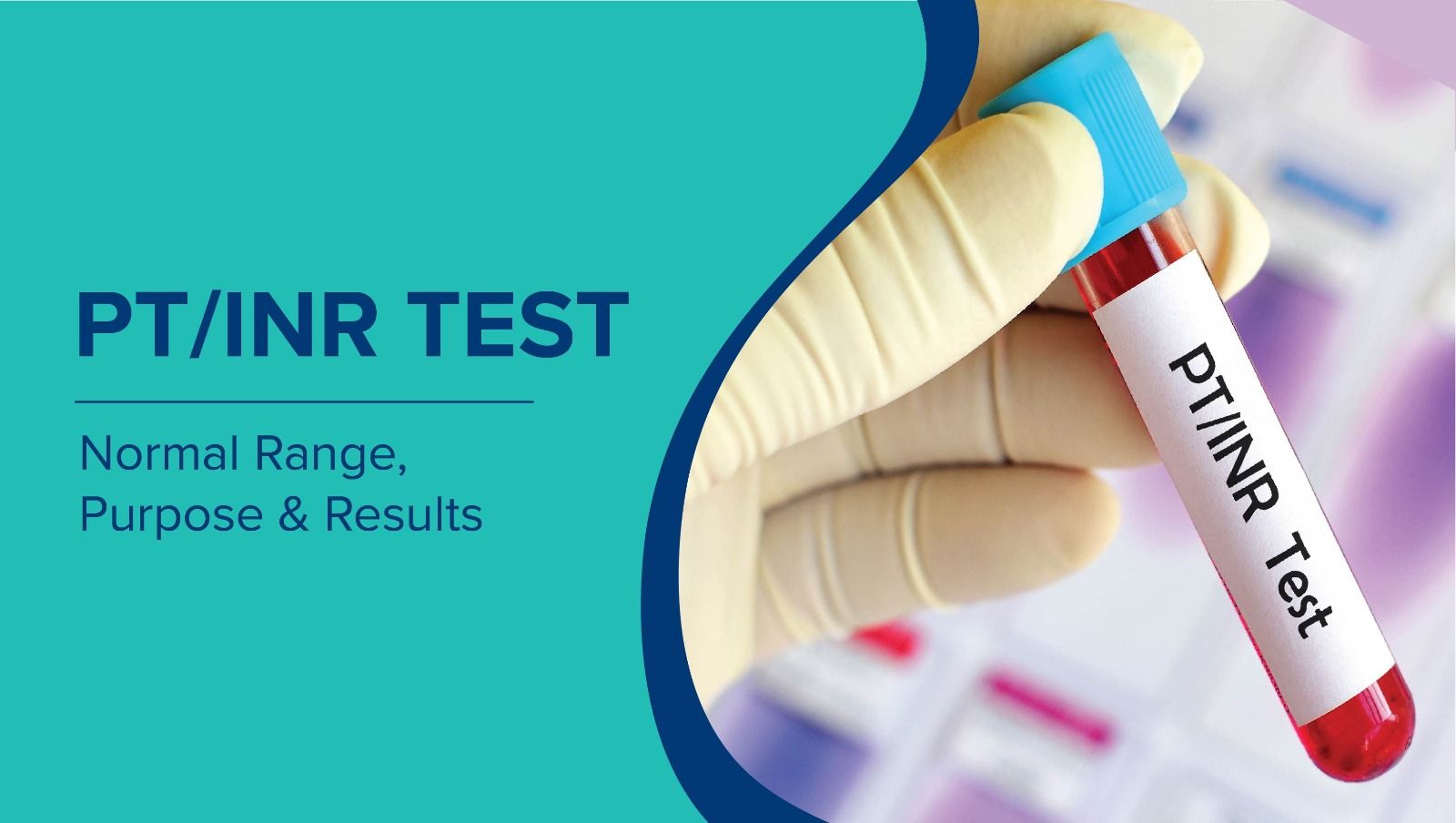


Quick Answer: The PT/INR test checks how long your blood takes to clot. A normal prothrombin time (PT) is about 11 to 13.5 seconds, and a normal INR is 0.8 to 1.1. For most people on warfarin, the target INR is 2.0 to 3.0, though some conditions need a different target. A high INR means blood clots more slowly, which increases bleeding risk. A low INR means blood clots faster, increasing clot risk.
Need a PT/INR check at home?
Book the Prothrombin Time (with INR) test at home, with home sample collection and a digital report.
Book PT/INR Test at Home →What Is a PT/INR Test?
PT stands for prothrombin time. Prothrombin is a protein made by your liver and one of several clotting factors your blood needs to form a clot when you get hurt. The PT test measures, in seconds, how long it takes a blood sample to clot in the lab.
The problem with PT alone is that labs use slightly different chemicals and machines, so the same blood can give slightly different seconds in two labs. The INR (international normalised ratio) solves this. It converts the PT result into a standard number that means the same thing in any lab, which is why doctors rely on it to adjust blood thinner doses.
PT/INR Normal Range
What counts as normal depends on one thing: whether you take a blood thinner such as warfarin.
| Situation | PT (seconds) | INR |
|---|---|---|
| Not on a blood thinner | About 11 to 13.5 | 0.8 to 1.1 |
| On warfarin (most common target) | Longer than normal, as intended | 2.0 to 3.0 |
Normal PT values vary slightly by lab, roughly 10 to 14 seconds, so always compare your result with the reference range printed on your report.
Target INR by Condition
If you take warfarin, your target INR depends on why you take it.
| Reason for warfarin | Usual target INR |
|---|---|
| Atrial fibrillation (irregular heartbeat) | 2.0 to 3.0 |
| Blood clot in the leg (DVT) or lung (PE) | 2.0 to 3.0 |
| Mechanical heart valve | Often higher, such as 2.5 to 3.5 |
Your doctor sets your personal target. An INR of 3.2 might be too high for one person and exactly right for another.
Why Is the Prothrombin Time Test Done?
The main purposes of the prothrombin time test are:
- To monitor blood thinners: this is its most common use. Regular INR checks show whether the warfarin dose is right
- Before surgery or a procedure: to make sure your blood clots normally and you won't bleed too much
- To find the cause of bleeding or bruising: such as frequent nosebleeds, bleeding gums, heavy periods or bruises that appear without injury
- To look for a clotting problem: if you have signs of a clot, such as a painful, swollen leg or sudden breathlessness
- To check the liver: the liver makes clotting factors, so a long PT can point to liver disease. The INR is also part of the MELD score, used to judge how severe chronic liver disease is
- To check for vitamin K deficiency: the body needs vitamin K to make several clotting factors
How the INR Test Shows Blood Clotting
Think of the INR as a clotting speed: the higher the number, the slower your blood clots. The lower the number, the faster it clots.
| INR result | What it usually means |
|---|---|
| Below your range | Blood clots faster than intended. On warfarin, the risk of a clot, stroke or DVT is higher |
| Within your range | Clotting is where your doctor wants it |
| Above your range | Blood clots more slowly. The risk of bleeding is higher |
Warfarin works by slowing vitamin K's action, which is why your INR rises when you take it. The goal is a balance: thin enough to prevent dangerous clots, but not so thin that you bleed easily.
What are high INR causes?
A high INR means your blood is taking longer than it should to clot, so you bleed more easily. The usual causes are the following:
- High Warfarin Conc: In people on warfarin, this is the most common reason. The dose that suited you last month may be too much now, and your INR may be higher.
- Liver disease: Your liver makes most of the proteins that help blood clot. Cirrhosis, hepatitis or liver failure means it makes fewer of them, so clotting slows down.
- Low vitamin K: Your body needs vitamin K to make clotting proteins. Levels can drop if you eat poorly, if your gut doesn’t absorb food well, or after a long course of strong antibiotics, which can wipe out the gut bacteria that make some vitamin K.
- Other medicines: Many medicines can increase warfarin's effect and raise your INR. Common ones are some antibiotics, antifungal medicines and painkillers like ibuprofen (NSAIDs).
What Causes a Low INR?
A low INR means your blood clots too slowly, which raises the risk of a clot in your leg, lungs or brain. The usual causes are:
- Too little warfarin: Taking a lower dose than you need, or missing doses, means the medicine can’t work properly.
- A sudden jump in vitamin K: Vitamin K works against warfarin. If you suddenly eat a lot more spinach, methi, broccoli or other greens than usual, your INR can drop. You don’t have to avoid these foods; just keep the amount about the same each week.
- Herbal products and supplements: Some, like St John’s wort and possibly coenzyme Q10, can make your body clear warfarin faster, so it works less well.
- Certain other medicines: Some medicines, including seizure drugs such as carbamazepine and barbiturates, make the liver break down warfarin faster, which lowers your INR.
Symptoms of a High INR
A high INR often causes no symptoms, which is why regular testing matters. When signs appear, they are signs of bleeding:
- Bruising easily, or small cuts that keep bleeding
- Frequent nosebleeds or bleeding gums
- Red or pink urine
- Red, black or tar-like stools
- Heavier periods than usual
- New or unusual headaches, or feeling dizzy
What Happens Next
Treatment depends on how high the INR is and whether you are bleeding. If you are not bleeding, your doctor may ask you to skip a dose or lower it, and recheck the INR in a few days. Sometimes your doctor will give vitamin K to lower the INR Serious bleeding is treated in hospital, where doctors may use faster-acting treatments such as plasma or clotting factor concentrates. Never skip or change a dose on your own.
When to see a doctor
Go to the nearest emergency or call an ambulance if you:
- Vomit blood or something that looks like coffee grounds
- Pass maroon or very bloody stools
- Have bleeding that won't stop after 15 minutes of pressure
- Have a fall or head injury while on a blood thinner
- Faint, or have a sudden severe headache unlike any before
- Notice signs of a stroke, such as face drooping, arm or leg weakness, trouble speaking, or loss of vision
Living With Warfarin: Keeping Your INR Steady
How Often Is INR Checked?
When you start warfarin or after a dose change, your doctor may check your INR every few days or every week until it settles. Once it is stable in your target range, most people are tested about once a month. Your doctor may test sooner if you start a new medicine, fall ill or change your diet.
Everyday tips to control warfarin Level in blood
- Keep vitamin K steady; don't avoid it: eat roughly the same amount of leafy greens, broccoli, and other vitamin K foods each week
- Avoid alcohol, or follow your doctor's advice strictly
- Check every new medicine first, including antibiotics, painkillers, cold remedies, vitamins, herbal products, and supplements
- Take your dose at the same time daily, and call your doctor if you miss one
- Lower your bleeding risk: use a soft toothbrush and an electric razor, and tell your dentist and every doctor that you take a blood thinner
- Prevent falls at home: use non-slip footwear, keep floors clutter-free and stairs well lit
PT/INR vs aPTT: What's the Difference?
PT/INR and aPTT are both clotting tests, but they assess different clotting factors, so doctors often order them together. PT/INR monitors warfarin, while aPTT mainly monitors heparin and helps detect other bleeding disorders. If your results are abnormal, your doctor may also check your platelet count, liver function, or specific clotting factors.
How to Prepare for a PT/INR Test
- Fasting is usually not needed, unless your doctor tells you otherwise
- If you take warfarin, ask whether to take your daily dose after the test
- Tell your doctor about every medicine and supplement you take, including aspirin, heparin, antibiotics, antihistamines, vitamin C and herbal remedies
- Don't stop or change any medicine before the test without advice
- Let the person drawing your blood know if you bleed easily
What to Expect: Procedure, Risks and Results
A small blood sample is taken from a vein in your arm, which takes only a few minutes. You may feel a quick sting and notice a small bruise afterwards. People on blood thinners may bleed a little longer, so staff apply pressure to the site.
Results usually come within a few hours to a day. Some people on long-term warfarin are trained to use a fingertip home testing device that gives a result in minutes, and they share the readings with their doctor.
Book a PT/INR Test at Home with MAX@Home
If you need regular INR checks, going to a lab every few weeks can be tiring, especially for older parents. MAX@Home offers blood tests at home, where a trained phlebotomist collects your sample at home. If your result is outside your range, you can also book a doctor visit at home to review it and your medicines.
Book Blood Tests at Home →Confirm with MAX@Home when booking the PT/INR price in your area and when the report will be ready.
People Also Ask
What is the normal range for a PT/INR test?
In people not taking blood thinners, a normal prothrombin time is about 11 to 13.5 seconds and a normal INR is 0.8 to 1.1. Normal PT varies slightly between labs, so always compare your result with the reference range printed on your own report.
What is the purpose of a prothrombin time test?
A prothrombin time test checks how well your blood clots. It monitors warfarin, checks clotting before surgery, helps identify the cause of unusual bleeding or bruising, looks for clotting problems and checks for liver disease or vitamin K deficiency.
How does the INR test show blood clotting?
The INR shows how fast your blood clots compared with normal. A higher INR means slower clotting and a higher risk of bleeding. A lower INR means faster clotting and a higher risk of clots. INR is standardized, so you can compare results across different labs.
What causes a high INR?
Liver disease, vitamin K deficiency, or bleeding disorders can cause a high INR. In people on warfarin, common causes are too high a dose, interacting medicines such as some antibiotics, supplements, and alcohol, eating less vitamin K than usual, or illness such as severe diarrhea.
What causes a low INR?
In people on warfarin, a low INR is often caused by too low a dose, missed doses, more vitamin K in the diet, vitamin K supplements, or some medicines, such as estrogen-containing pills. It raises the risk of blood clots, so your doctor may adjust your dose.
What is the normal INR range for someone on warfarin?
For most people on warfarin, such as those with atrial fibrillation or a past blood clot, the target INR is 2.0 to 3.0. People with mechanical heart valves often need a higher target. Your doctor will tell you your personal target range.
How often should INR be checked on warfarin?
When you start warfarin or change your dose, INR may be checked every few days or weekly. Once it is stable in your target range, most people are tested about once a month. Your doctor may test sooner if your medicines, health or diet change.
What is the difference between PT/INR and aPTT?
Both are blood clotting tests, but they check different clotting factors. PT/INR monitors warfarin and checks liver-related clotting, while aPTT mainly monitors heparin and checks for other bleeding disorders. Doctors often order the two tests together.
Do I need to fast before a PT/INR test?
Fasting is usually not needed for a PT/INR test. If you take warfarin, ask your doctor whether to take your dose after the test. Tell your doctor about all medicines and supplements you take, and don't stop any medicine without advice.
Conclusion
The PT/INR test is quick, but it gives your doctor a lot of information. If you are not on a blood thinner, a normal INR is 0.8 to 1.1. If you take warfarin, your target is usually 2.0 to 3.0, or higher for some heart valve conditions. If your result is outside your range, call your doctor; don't change your dose yourself.
Regular testing, a steady diet, and checking every new medicine with your doctor are the simplest ways to keep your INR, and yourself on track.
Related
References
MedlinePlus (National Library of Medicine). Prothrombin time test and INR (PT/INR): https://medlineplus.gov/lab-tests/prothrombin-time-test-and-inr-ptinr/
MedlinePlus (National Library of Medicine). Prothrombin time (PT): https://medlineplus.gov/ency/article/003652.htm
MedlinePlus (National Library of Medicine). Taking warfarin: https://medlineplus.gov/ency/patientinstructions/000292.htm
Mayo Clinic. Prothrombin time test: https://www.mayoclinic.org/tests-procedures/prothrombin-time/about/pac-20384661
Cleveland Clinic. Prothrombin time (PT/INR) test: https://my.clevelandclinic.org/health/diagnostics/17691-prothrombin-time-pt-test
Alberta Health Services, MyHealth Alberta. High INR test result, care instructions: https://myhealth.alberta.ca/Health/aftercareinformation/pages/conditions.aspx?hwid=abq3244



 Call: 9240299624

