


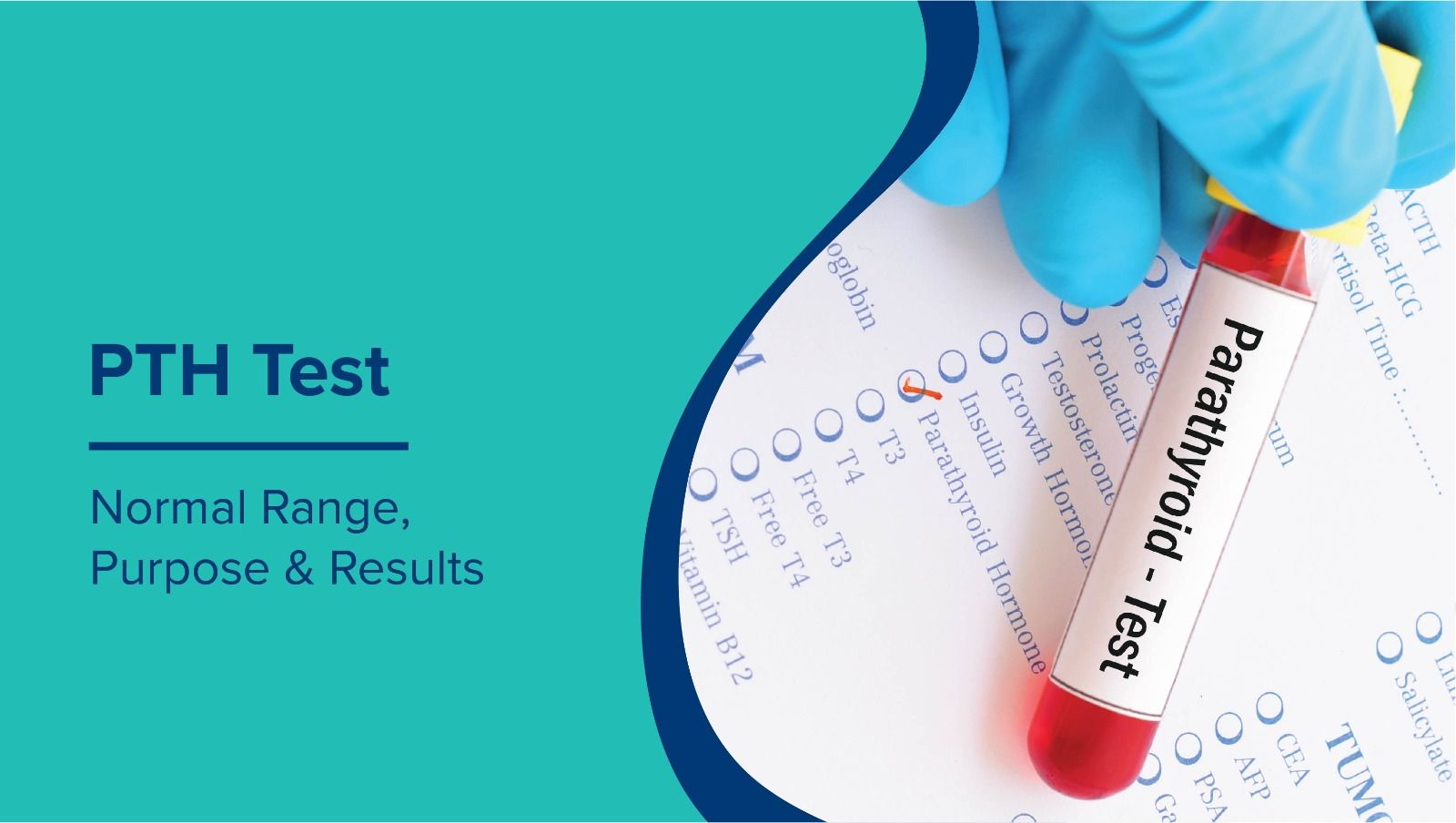


Quick Answer: A PTH test measures parathyroid hormone in your blood, released by the parathyroid gland that regulates blood calcium levels. The PTH normal range for adults is usually about 10 to 65 pg/mL. High PTH with high calcium often points to an overactive parathyroid gland, while low PTH with low calcium suggests the glands aren't making enough hormone.
Tired, aching bones, kidney stones or an abnormal calcium result?
Book a PTH test with home sample collection and receive your report digitally.
Book a PTH test at home →What Is Parathyroid Hormone (PTH) and Its key Function?
Four tiny glands in your neck make parathyroid hormone, each about the size of a grain of rice or a pea. They sit behind the thyroid gland but do a completely different job.
Key Functions of the Parathyroid Gland
PTH acts like your body's calcium thermostat. When blood calcium drops, the glands release more PTH. This hormone then raises calcium in three ways:
Bones: This signals your bone cells, also known as osteoclasts, to release a small amount of calcium into the blood to maintain normal blood calcium. It also releases a small amount of phosphorus
Kidneys: PTH signals and acts on the kidneys, increasing renal calcium absorption to prevent excessive calcium loss in urine and promoting phosphorus loss to maintain serum calcium levels in our body
Gut: PTH helps your kidneys turn vitamin D into its active form, calcitriol, which then helps your intestines absorb more calcium from food.
When calcium rises back to normal, the glands slow down and PTH falls. This balance keeps your nerves, muscles, and heartbeat working properly.
Thyroid vs Parathyroid: What’s the Difference?
Most people confuse the role of the thyroid and parathyroid glands. Here are some of the key differences you must know
| Feature | Thyroid Gland | Parathyroid Glands |
|---|---|---|
| Number | One | Usually four |
| Size | About the size of a walnut | Each is about the size of a grain of rice |
| Hormone made | T4 and T3 | Parathyroid hormone (PTH) |
| Main role | Controls metabolism and energy | Controls blood calcium levels |
| Controlled by | TSH from the pituitary gland | Blood calcium level |
| Common problems | Hypothyroidism, hyperthyroidism, nodules | Hyperparathyroidism, hypoparathyroidism |
| Blood tests | TSH, T3, T4 | PTH, calcium, vitamin D |
Note:Thyroid hormone regulates cellular metabolism, BMR, energy production, and body temperature, while parathyroid hormone (PTH) regulates calcium and phosphate metabolism to maintain mineral balance(mineral homeostasis) in the body.
What Is a PTH Blood Test?
A PTH blood test measures parathyroid hormone in a blood sample drawn from a vein in your arm. The blood draw takes only a few minutes. Since PTH and calcium are so closely linked, a calcium test is almost always done at the same time.
What Is an Intact PTH Test?
PTH breaks down into smaller pieces in the blood. An intact PTH test measures the whole, active hormone rather than these fragments, which gives a more accurate picture of how your parathyroid glands are working. Most labs in India now offer the intact PTH test as the standard PTH test.
Why Your Doctor May Order a PTH Test
The most common reason is to find out whether a parathyroid problem is behind an abnormal calcium result. Your doctor may also order it to:
- Check the cause of high or low calcium on a routine blood test
- Look into unexplained low phosphate levels
- Monitor chronic kidney disease, which often affects PTH
- Find the cause of severe osteoporosis or repeated kidney stones
- Check whether treatment is working or whether parathyroid surgery was successful
Symptoms that may require a parathyroid hormone test
Many people with a parathyroid problem have no symptoms at all, and it's found on a routine test. Symptoms depend on whether calcium is too high or too low.
Signs linked with high calcium (hypercalcemia)
- Tiredness, weakness, and low mood
- Bone, joint or muscle aches
- Increased thirst and frequent urination
- Kidney stones (high urine caclium)
- Nausea, constipation, and poor appetite
- Confusion or memory problems
Possible Signs of Low Calcium (Hypocalcemia)
- Muscle cramps, spasms, or stiffness
- Tingling in the lips, fingers, or feet
- Dry skin, coarse hair and brittle nails
- Irregular heartbeat
- Feeling anxious or irritable
- Seizures in severe cases
Note: Many other conditions may cause these symptoms. If your symptoms don’t go away, ask your doctor about a calcium and PTH test.
How to Prepare for a PTH Blood Test
Preparation is simple, but a few steps help you get an accurate result:
Fasting: Your doctor may ask you to fast overnight for 8 to 12 hours. You can drink plain water. Check with your doctor or lab, as not every lab requires it.
Morning sample: PTH changes slightly through the day, so an early-morning test is often preferred, especially if you're repeating it.
Medicines: tell your doctor about everything you take, including calcium, vitamin D, lithium and water pills (diuretics), as they can affect your result.
Biotin: high-dose biotin supplements, often taken for hair and nails, can interfere with some hormone tests. Ask your doctor whether to pause them before the test.
Same lab for repeat tests: ranges vary slightly between labs, so using the same lab makes results easier to compare.
Need a PTH test but dreading an early-morning trip to the lab?
You can book a PTH test with home sample collection through MAX@Home, so you don't need to travel to a lab on an empty stomach.
Book a PTH test at home →PTH Normal Range: Values and Interpretation
PTH is usually reported in picograms per milliliter (pg/mL). Some labs use picomoles per liter (pmol/L).Values may vary by lab and method.
| Measure | Typical PTH test normal range | Notes |
|---|---|---|
| Intact PTH (pg/mL) | 10 to 65 pg/mL | Commonly used range |
| Intact PTH, some Indian labs | 14 to 72 pg/mL | Lab-specific; check your report. |
| Intact PTH (pmol/L) | About 1.1 to 6.9 pmol/L | Converted from 10 to 65 pg/mL |
Always compare your result with the reference range printed on your own lab report. Pregnancy, age, low vitamin D, and kidney health can all shift what counts as "normal" for you, and people with chronic kidney disease are often given different target ranges by their doctor.
What Abnormal PTH and Calcium Levels Mean
After Blood test, your doctor looks at PTH and calcium levels together because healthy glands should move PTH and calcium in opposite directions. A "normal" PTH can still be a problem if your calcium is high, because PTH should be low in that situation.
| PTH | Calcium | What it may mean |
|---|---|---|
| High | High | Primary hyperparathyroidism: one or more glands are overactive |
| High | Low or normal | Secondary hyperparathyroidism: the glands are reacting to low vitamin D, low calcium intake or kidney disease |
| Low | Low | Hypoparathyroidism: the glands aren't making enough PTH |
| Low | High | Calcium is high for another reason, such as excess vitamin D, some cancers or other conditions |
| Normal | High | Can still suggest mild primary hyperparathyroidism; needs review |
High PTH Levels: What They Mean
High PTH levels mean your parathyroid glands are releasing more hormone than usual. There are three main types.
Primary Hyperparathyroidism
In this condition, one of the four glands becomes hyperactive and produces excess PTH. This condition is most common in people aged 50 to 60 and affects women three to four times more often than men.
Possible causes include:
Parathyroid adenoma- A noncancerous benign tumor responsible for approx. 80-85% of the cases
Genetic condition: Due to autoimmune conditions like Graves' disease or multiple endocrine neoplasia.
Parathyroid Carcinoma: A rare cancerous tumor found in less than 1% of the cases
Secondary Hyperparathyroidism
In this type, the glands are healthy but work overtime because another problem lowers calcium levels. Common causes include:
Low vitamin D: Low level of vitamin D can be due to environmental factors (getting less sunlight) or any other health condition
Diet: Not having a calcium-rich diet such as dairy products (milk, yoghurt), green vegetables, and edible fish such as sardines and salmon
Chronic kidney disease: kidneys become less efficient and unable to convert vitamin D, leading to an increase in PTH hormone levels
Malnutrition: Gut conditions such as celiac disease. Crohn's disease affecting calcium and Vitamin D absorption
Tertiary Hyperparathyroidism
This can happen after years of secondary hyperparathyroidism, usually in people with long-term kidney disease, leading to hyperactive glands that produce PTH even after the original cause is treated.
Low PTH Levels: What They Mean
Low PTH levels mean the glands make too little hormone, or they shut down because calcium is already high. Possible causes include:
- Damage to or removal of the parathyroid glands during thyroid or neck surgery, the most common cause of hypoparathyroidism
- Radiation treatment to the neck
- Autoimmune conditions, where the immune system attacks the glands
- Genetic conditions, such as DiGeorge syndrome
- Very low magnesium levels, which stop the glands from releasing PTH
- Too much calcium or vitamin D from supplements or antacids
- Some cancers that spread to bone, and conditions like sarcoidosis that raise calcium
What Happens After an Abnormal PTH Result?
An abnormal result is a starting point, not a diagnosis. Your doctor may repeat the test and order a few others to find the cause:
- Calcium, phosphorus and magnesium levels
- Vitamin D (25-hydroxy vitamin D) test
- Kidney function tests, such as creatinine
- A 24-hour urine calcium test
- A bone density (DXA) scan to check for bone loss
- A neck ultrasound or sestamibi scan to locate an overactive gland
Treatment depends on the cause. Low vitamin D is often corrected with supplements, while primary hyperparathyroidism may need surgery to remove the overactive gland, which is the only cure.If you're unsure what your result means, a doctor visit at home can help you understand the next steps.
PTH Test Price in India
The parathyroid test price in India depends on your city, the lab and whether the test is part of a package. At Best certified labs, an intact PTH test often costs around ₹1,300 to ₹2,000. It's often ordered with calcium and vitamin D tests, so a combined package can be cheaper. Check MAX@Home's current price when booking your test with home sample collection.
Got an abnormal PTH or calcium result?
Have a doctor go through your report and the next steps at home.
Book a doctor visit at home →People Also Ask
What is the normal range for a PTH test?
The PTH normal range for adults is usually about 10 to 65 pg/mL, or roughly 1.1 to 6.9 pmol/L. Always compare your result with the reference range on your own report, and read it alongside your calcium level.
What is the difference between a PTH test and an intact PTH test?
An intact PTH test measures the whole, active parathyroid hormone rather than broken fragments, so it's more accurate. Today, most labs use the intact PTH test as their standard PTH test, so in practice the two terms usually mean the same thing.
What causes high PTH levels?
High PTH levels are most often caused by an overactive parathyroid gland, usually a benign growth also called an adenoma. They can also result from low vitamin D, low calcium intake, chronic kidney disease, or gut problems that reduce calcium absorption. Your calcium level helps you distinguish between causes.
What causes low PTH levels?
Low PTH levels can be due to damage to the parathyroid glands during thyroid or neck surgery. Other causes include autoimmune disease, radiation, genetic conditions, very low magnesium, and too much calcium or vitamin D from supplements, which tells the glands to switch off.
Do I need to fast before a PTH blood test?
Many labs in India ask you to fast for 8 to 12 hours overnight, drink only water, and to give your sample in the morning. Not every lab requires fasting, so check with your doctor or lab. Tell them about any supplements or medicines you take.
Can low vitamin D raise PTH levels?
When vitamin D is low, your body absorbs less calcium from food. The parathyroid glands respond by making more PTH to keep blood calcium normal. This is called secondary hyperparathyroidism, and PTH often returns to normal once vitamin D is corrected.
Conclusion
A PTH test is a simple blood test that analyzes how well your body is regulating calcium. For most adults, the normal range is around 10 to 65 pg/mL, and your doctor interprets the result by comparing it with your calcium level. High levels can reflect an overactive gland, while low levels are often linked to vitamin D deficiency, kidney disease, or other conditions that affect the glands.
If your result is outside the range, Talk to your doctor, who can order the right follow-up tests and find the cause.
References
1. https://www.parathyroid.com/parathyroid-function.htm
2. https://medlineplus.gov/ency/article/003690.html
3. https://www.niddk.nih.gov/health-information/endocrine-diseases/primary-hyperparathyroidism
4. https://myadlm.org/science-and-research/academy-guidance/biotin-interference-in-laboratory-tests
5. https://www.thyroidcancer.com/blog/the-difference-between-thyroid-and-parathyroid-glands


 Call: 9240299624

