


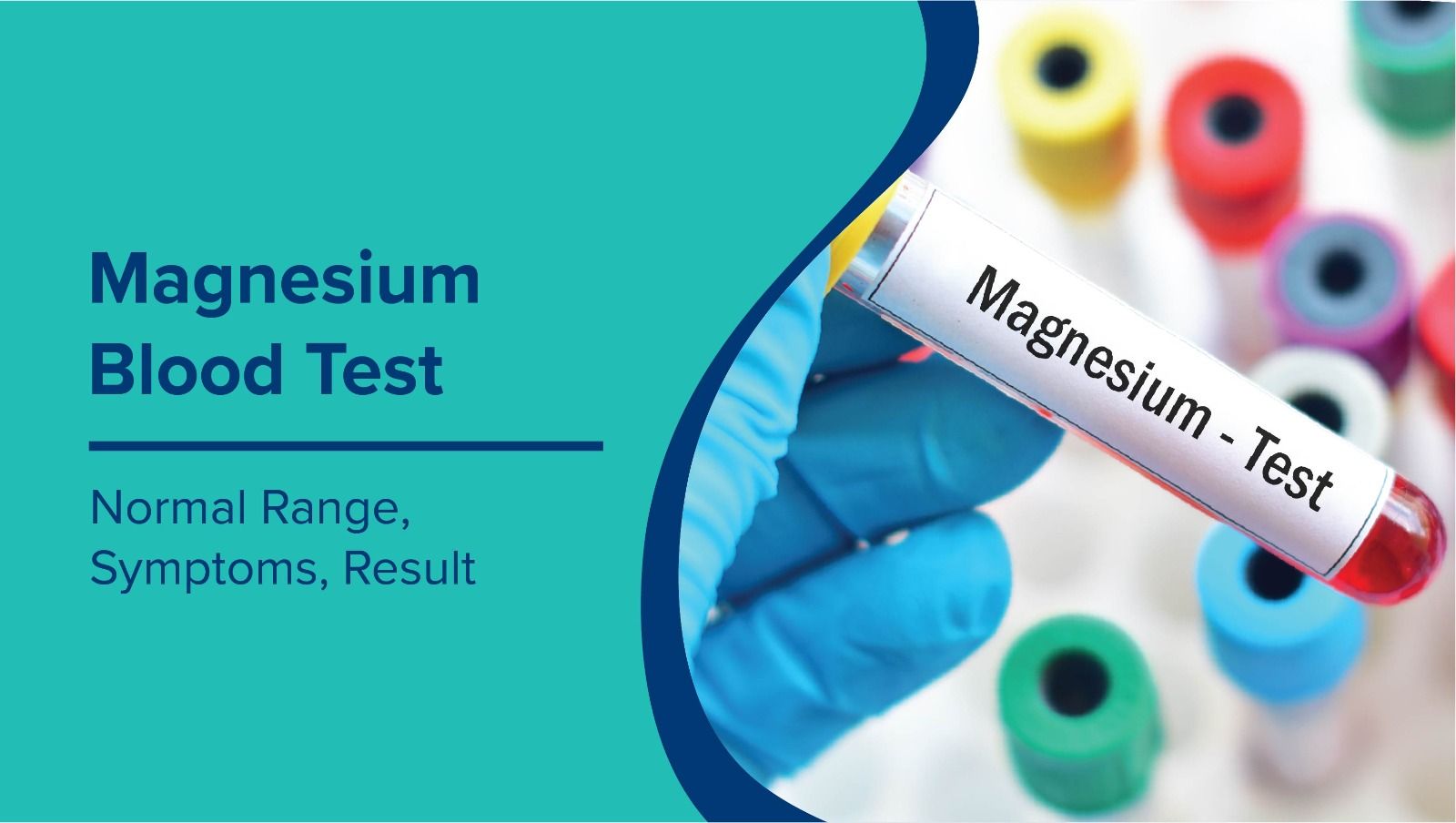


Quick Answer: A magnesium blood test measures how much magnesium is in your blood. The magnesium normal range for adults is roughly 1.7 to 2.2 mg/dL (about 0.70 to 0.91 mmol/L), though some labs use slightly different limits, up to about 2.6 mg/dL. A level below the range is called low magnesium (hypomagnesaemia) and can cause cramps, weakness and an irregular heartbeat. A level above it is called high magnesium (hypermagnesaemia) and is usually linked to kidney problems or too many magnesium-containing medicines.
Noticed muscle cramps, twitching or constant tiredness?
Low magnesium is one possible cause. Book a serum magnesium test at home, with home sample collection and a digital report.
Book Magnesium Test at Home →What Is a Magnesium Blood Test?
A serum magnesium test, also called a magnesium blood test, measures magnesium in the liquid part of your blood (serum). It is a simple blood draw from a vein in your arm and takes only a few minutes.
Why Your Doctor May Order It
- You have symptoms such as muscle cramps, twitching, weakness, numbness or tingling, an irregular heartbeat or unexplained tiredness
- You have long-term diarrhoea, vomiting, or a gut condition that affects absorption
- You have diabetes, kidney disease or a history of heavy alcohol use
- Your calcium, potassium or phosphorus levels are abnormal, since these often go hand in hand with magnesium
- You take medicines that can change magnesium levels, such as acid-reducing tablets or water pills (diuretics)
- You are pregnant, and your doctor is checking for or treating preeclampsia
Why Do We Need Magnesium: Key Functions
Magnesium plays a key role in the body, helping carry out several biochemical reactions such as protein synthesis, nerve conduction, and metabolism, which help keep your heartbeat steady and support strong bones.
Key functions include -
1. Regulates Biochemical Pathways
Magnesium is present in every cell of your body. About 60 percent is stored in your bones, while the rest is distributed throughout your muscles, tissues, and blood. It supports approx. more than 600 chemical processes, including turning food into fuel, making proteins, repairing DNA, controlling muscle movement, and sending signals along your nerves.
2. Improves muscle efficiency
Your body may need more magnesium during periods of intense physical activity. Magnesium helps move glucose into your muscles for energy and supports normal muscle function you can also take a supplement but consult a qualified dietitian or healthcare professional to determine whether you need it and what dose is appropriate.
3. Improve Mood and Anxiety
Our brain relies on magnesium for a stable mood. Magnesium acts as a cofactor in a biochemical pathway that produces serotonin, a neurotransmitter that helps improve emotional stability and happiness. When levels are low, your body may react more strongly to stress, which can make anxiety worse.
4. help regulate blood sugar
Magnesium improves insulin hormone activity. Low blood magnesium is common in people with type 2 diabetes and may make it harder to keep sugar levels in check. Eating more magnesium-rich foods may help improve magnesium levels in the blood
5. Good for Heart and Blood Pressure
Magnesium helps keep your heartbeat regular by releasing nitric oxide, which relaxes blood vessels. And maintains electrolyte balance, such as potassium and sodium, which help regulate blood pressure levels in your body
6. Control inflammation
Magnesium helps regulate immune activity and keeps inflammation in check by preventing unnecessary inflammatory responses. Low magnesium intake may contribute to higher inflammation levels, which are associated with ageing and several chronic health conditions.
9. Keeps Your Bones Strong
Because more than half of your body's magnesium is stored in your bones, it plays a big role in keeping them healthy by stimulating bone-building cells (osteoblasts) and improving collagen levels. It also helps your body convert vitamin D into its active form, which you need to absorb calcium. When magnesium is low, bones can become weaker, which is linked to a higher risk of osteoporosis.
Helps with Migraine
People who get migraines often have lower magnesium levels. Magnesium helps calm overactive nerve signals in the brain and keeps blood vessels from suddenly tightening, both of which can trigger a migraine. That’s why some studies suggest supplements may help prevent attacks or make them milder. Eating magnesium-rich foods may help too, but check with your doctor before taking migraine supplements.
8. Gentler Periods and Less PMS (Premenstrual Syndrome)
Magnesium levels rise and fall during the menstrual cycle, and running low can make PMS worse. Magnesium helps the womb muscles relax, which can ease period cramps.
10. Improves Sleep
Magnesium activates GABA, a calming brain chemical that slows nerve activity and helps your mind settle at night. It also helps your muscles relax. People with conditions such as insomnia so a higher intake has been linked to longer, better-quality sleep.
An adult body holds about 25 grams of magnesium. About half to 60 percent is in your bones, and most of the rest is in your muscles and other cells. Less than 1 percent floats in your blood. A blood test measures that small amount, which matters when you read your results.
How to Prepare
You usually don't need special preparation or fasting. Tell your doctor about all the medicines, supplements and antacids or laxatives you take, because some can raise or lower your result. Don't stop any medicine on your own.
Magnesium Normal Range
Labs use slightly different reference ranges, so always compare your result with the range printed on your report. These are common ranges for the magnesium test:
| Adults (commonly used range) | 1.7 to 2.2 mg/dL |
| Adults (some labs) | 1.8 to 2.6 mg/dL |
| Children | 1.7 to 2.1 mg/dL |
| Newborns | 1.5 to 2.2 mg/dL |
If your report uses mmol/L and you want mg/dL, multiply by about 2.43. A result just outside the range doesn't always mean something is wrong. Your doctor looks at it alongside your symptoms, kidney function and other test results.
What Your Magnesium Levels in Blood Mean
| Below the range | Low magnesium (. Often linked to poor absorption, losses through the gut or kidneys, alcohol, diabetes or certain medicines |
| Within the range | Normal blood level. In some cases body stores can still be low, as explained below |
| Above the range | High magnesium. Usually linked to reduced kidney function or too much magnesium from medicines or supplements |
Low Magnesium Symptoms (hypomagnesaemia)
Mild low magnesium often causes no symptoms at all. As levels drop further, low magnesium symptoms tend to appear in stages.
Early Signs
- Loss of appetite
- Nausea or vomiting
- Tiredness and weakness
In later stage
- Muscle cramps, twitching or tremors
- Numbness or tingling
- Irregular or fast heartbeat
- Mood or personality changes
- Seizures, in severe cases
Severe low magnesium can also pull down calcium and potassium levels. In fact, doctors sometimes find that potassium or calcium won't come back to normal until magnesium is corrected first.
Common Causes of Low Magnesium
- Gut problems: long-term diarrhoea, Crohn's disease, coeliac disease or surgery on the small intestine
- Type 2 diabetes, especially when blood sugar isn't well controlled
- Heavy alcohol use over a long time
- Medicines: long-term acid-reducing tablets (proton pump inhibitors), some diuretics, certain antibiotics and some cancer medicines
- Older age, because the body absorbs less and loses more through the kidneys
- Poor diet with few whole grains, greens, nuts and pulses
- Pregnancy-related conditions such as preeclampsia
High Magnesium Levels (hypermagnesemia)
High magnesium levels are much less common. Healthy kidneys simply flush out any extra, so a high result usually means the kidneys aren't working well or a person is taking too much magnesium in medicines.
Causes of High Magnesium
- Kidney disease or reduced kidney function, the most common reason
- Too many magnesium-containing laxatives or antacids, or high-dose supplements, especially with weak kidneys
- Dehydration
- Other conditions such as diabetic ketoacidosis, adrenal insufficiency, or lithium treatment
Signs & Symptoms of High Magnesium
High doses of magnesium supplements may lead to diarrhea, nausea, and stomach cramps. Very high blood levels can cause low blood pressure, drowsiness and muscle weakness.Below are some of the condition that may require urgent medical care.
Early Warning Signs
- Nausea or an upset stomach.
- Vomiting, especially after taking magnesium supplements.
- Diarrhoea due to excess magnesium intake.
- Stomach pain or cramps.
- Dizziness or feeling faint.
- Unusual tiredness or sleepiness.
- Muscle weakness or heaviness in the arms and legs.
- Dull or persistent headaches.
- Facial redness and warmth.
- Slower-than-usual reflexes..
Critical Signs to Watch For
- Slow heartbeat or an unusually low heart rate.
- Irregular heartbeat or an abnormal heart rhythm.
- Difficulty breathing or slow, shallow breaths.
- Severe confusion or trouble recognising surroundings.
- Extreme drowsiness or difficulty staying awake.
- Paralysis or inability to move certain muscles.
- Cardiac arrest, when the heart suddenly stops beating.
- Coma, involving loss of consciousness and responsiveness..
Is the Magnesium Blood Test a Good Magnesium Deficiency Test?
The serum magnesium test is the most common magnesium deficiency test, and it's useful for spotting clearly low or high levels. But it has a limit you should know about. Because less than 1 percent of your body's magnesium is in the blood, your blood level can look normal even when the magnesium stored in your cells and bones is running low.
There's no single perfect test for body magnesium. So if your result is normal but you have symptoms and risk factors, your doctor may repeat the test, check related minerals like calcium and potassium, or look at your diet, medicines and kidney function to get the full picture.
Daily Magnesium Requirement by Age and Gender
Below are the magnesium requirements. For babies. These figures are Adequate Intake (AI), the amount that's assumed to be enough. All other figures are the Recommended Dietary Allowance (RDA).
For Childeren and adults
| Age Group | Males (approx.) | Females(approx.) |
|---|---|---|
| Babies, 0 to 6 months | 30 mg | 30 mg |
| Babies, 7 to 12 months | 75 mg | 75 mg |
| Children, 1 to 3 years | 80 mg | 80 mg |
| Children, 4 to 8 years | 130 mg | 130 mg |
| Children, 9 to 13 years | 240 mg | 240 mg |
| Teens, 14 to 18 years | 410 mg | 360 mg |
| Adults, 19 to 30 years | 400 mg | 310 mg |
| Adults, 31 years and above | 420 mg | 320 mg |
Recommended Daily Intake (RDA) in pregnancy
| Age Group | Pregnancy | Breastfeeding |
|---|---|---|
| 14 to 18 years | 400 mg | 360 mg |
| 19 to 30 years | 350 mg | 310 mg |
| 31 to 50 years | 360 mg | 320 mg |
Supplements can help when a doctor finds a true deficiency. For adults, magnesium from supplements and medicines shouldn't go above 350 mg a day unless your doctor advises it. This limit doesn't include magnesium from food.
How to Improve Magnesium Level Naturally
Magnesium-rich foods
The most natural way to raise your magnesium level is through food. Most adults need somewhere between 310 and 420 mg a day, depending on age and sex. You don’t have to track numbers on a label. A plate with a good mix of plant foods, such as greens, pulses, nuts and whole grains, usually covers what your body needs.
Here’s where to find it.
Leafy Green Vegetables
Greens top the list because the magnesium sits in their green pigment, chlorophyll. Once cooked, they shrink, so a small bowl gives you more.
- Cooked spinach (½ cup): 78 mg
- Cooked Swiss chard (½ cup): 75 mg
- kale(~53-74 mg)
- Collard greens (½ cup): 25 mg
Seeds and Nuts
These make easy, filling snacks. A small handful between meals, or a spoonful added to oats or smoothies, gives your magnesium intake a quick boost.
- Pumpkin seeds, roasted (28 g): 150 mg
- Chia seeds (28 g): 111 mg
- Almonds, roasted (28 g): 80 mg
- Cashews, roasted (28 g): 72 mg
- Peanuts, dry roasted (28 g): 49 mg
- Whole flaxseed (1 tbsp): 40 mg
Brazil nuts are among the richest sources, but they’re also high in selenium. Eat only one or two at a time.
Pulses and Beans
Beans are a great source of protein, fiber, and essential minerals. You can easily add them to salads, curries, or soups to make your meals more nutritious.
- Black beans, boiled (½ cup): 60 mg
- Edamame, cooked (½ cup): 50 mg
- Lima beans, cooked (½ cup): 40 mg
Whole Grains
Grains lose much of their magnesium when they’re refined or polished. Choosing the whole version keeps more of it on your plate.
- Quinoa, cooked (½ cup): 60 mg
- Plain shredded wheat cereal (1 cup): 56 mg
Everyday Vegetables
Everyday vegetables can help you meet your mineral needs throughout the day. Keep the skin on potatoes whenever possible, as it contains a good amount of minerals.
- Potato with skin (1 medium): 48 mg
- Green peas (½ cup): 31 mg
- Sweet corn (½ cup): 27 mg
Healthy fruits
Fruit contributes less than seeds or greens, but two portions a day still help you reach your target.
- Avocado (1 whole): 58 mg
- Papaya (1 small): 33 mg
- Banana (1 medium): 32 mg
- Blackberries (1 cup): 29 mg
Dried figs also make a good mineral-rich snack with magnesium.
Milk and Yogurt
Dairy is known for calcium, but it also contains a little magnesium. Low-fat options keep the calories in check.
- Plain low-fat yogurt (225 g): 42 mg
- Skimmed milk (1 cup): 24 to 27 mg
Magnesium Blood Test Price
The cost of a magnesium blood test varies depending on your city and the laboratory. You may save money by booking it as part of a package that includes kidney function, calcium, and potassium tests. Home sample collection is also widely available.
With MAX@Home blood tests, a trained phlebotomist collects your sample at home, and you receive your report once it is ready. Check the latest price for your location when booking.
What to Do After Your Result
- Don't self-treat. Taking magnesium supplements without checking can be risky, especially if you have kidney problems
- Share the report with your doctor, along with any symptoms and the medicines you take
- Ask whether to check related tests, such as calcium, potassium, and kidney function
- Get urgent care if you have a very irregular heartbeat, severe weakness, confusion, or seizures
If you'd like a doctor to review your results and medicines at home, you can book a home visit with MAX@Home.
Not sure what your result means?
Book a doctor visit at home to go through your report, symptoms and medicines without travelling to a clinic.
Book Doctor Visit at Home →People Also Ask
What is the normal range for magnesium in blood?
For adults, normal blood magnesium levels typically range from 1.7 to 2.2 mg/dL (0.70 to 0.91 mmol/L). Some labs use a wider reference range, with the upper limit extending to 2.6 mg/dL. Since reference ranges can vary, always compare your results with the range mentioned in your lab report.
What does a serum magnesium test measure?
A serum magnesium test measures the amount of magnesium in the liquid part of your blood. It helps identify low or high blood magnesium levels, but because less than 1 percent of the body's magnesium is in blood, it doesn't always reflect what's stored in cells and bones.
What are the symptoms of low magnesium?
Early low magnesium symptoms include loss of appetite, nausea, tiredness and weakness. As levels fall further, you may notice muscle cramps, twitching, numbness, tingling or an irregular heartbeat. Severe deficiency can cause seizures and lower calcium and potassium levels, so it needs medical attention.
What causes high magnesium levels?
High magnesium levels usually result from reduced kidney function, because healthy kidneys remove excess magnesium. Taking large amounts of magnesium-containing laxatives, antacids or supplements, especially with weak kidneys, can also raise levels. Dehydration and some other medical conditions are less common causes.
Do I need to fast for a magnesium blood test?
No, you usually don't need to fast for a magnesium blood test. Tell your doctor about any medicines, supplements, antacids or laxatives you take, as some can raise or lower your result. Don't stop any prescribed medicine before the test without your doctor's advice.
Is the blood test the best magnesium deficiency test?
The serum test is the most commonly used magnesium deficiency test, but it isn't perfect. Your blood level can look normal while body stores are low. If you have symptoms and risk factors, your doctor may repeat the test or also check calcium, potassium and kidney function.
Can I take magnesium supplements without a test?
It's better to check with your doctor first. Too much supplemental magnesium can cause diarrhoea and stomach cramps, and it can build up dangerously if your kidneys are weak. Adults shouldn't take more than 350 mg a day from supplements unless a doctor advises it.
How much does a magnesium blood test cost?
The price of a magnesium blood test depends on your city, the lab and whether it's part of a package with other tests like calcium, potassium or kidney function. Many labs, including MAX@Home, offer home sample collection. Check the current price for your area when booking.
Conclusion
A magnesium blood test is a simple way to check your magnesium levels, which can help identify the cause of muscle cramps or an irregular heartbeat. In adults, normal levels are usually between 1.7 and 2.2 mg/dL, although the range may vary by laboratory. Low magnesium levels are more common than high levels and may be linked to poor dietary intake, digestive problems, diabetes, alcohol use, or certain medications.
Whatever your number, the next step is the same: talk it through with your doctor before reaching for supplements.
Related
References
https://www.verywellhealth.com/signs-of-too-much-magnesium-11936385
https://my.clevelandclinic.org/health/diseases/hypermagnesemia
https://pmc.ncbi.nlm.nih.gov/articles/PMC8108907/
https://www.sciencedirect.com/science/article/pii/S0011393X24000250
https://www.ucsfhealth.org/care/medical-tests/magnesium-blood-test
https://ufhealth.org/conditions-and-treatments/magnesium-blood-test



 Call: 9240299624

