




Introduction
Allergies have become a chronic health condition worldwide. They occur when your immune system overreacts to substances called allergens, such as pollen, dust mites, certain foods, insect stings, or medications. Mild allergies may cause little discomfort, but if left untreated, they can significantly affect your quality of life and, in some cases, become life-threatening.
What Are Allergies?
Allergies are unusual immune responses to certain foreign substances like pollen, dust mites, and certain foods that enter the body and cause allergic reactions such as sneezing, itching, and watery eyes. It can sometimes be life-threatening, leading to low Blood pressure and airway swelling (anaphylaxis)
What Happens During an Allergic Reaction?
When an allergen enters your body, your immune system actively releases chemicals like IgE and histamine, which trigger symptoms such as inflammation in your nose, lungs, skin, digestive system, or eyes. Contact your doctor and seek the right medical attention if the symptoms persist for a long time.
Common Allergy Symptoms
Sneezing and Runny Nose
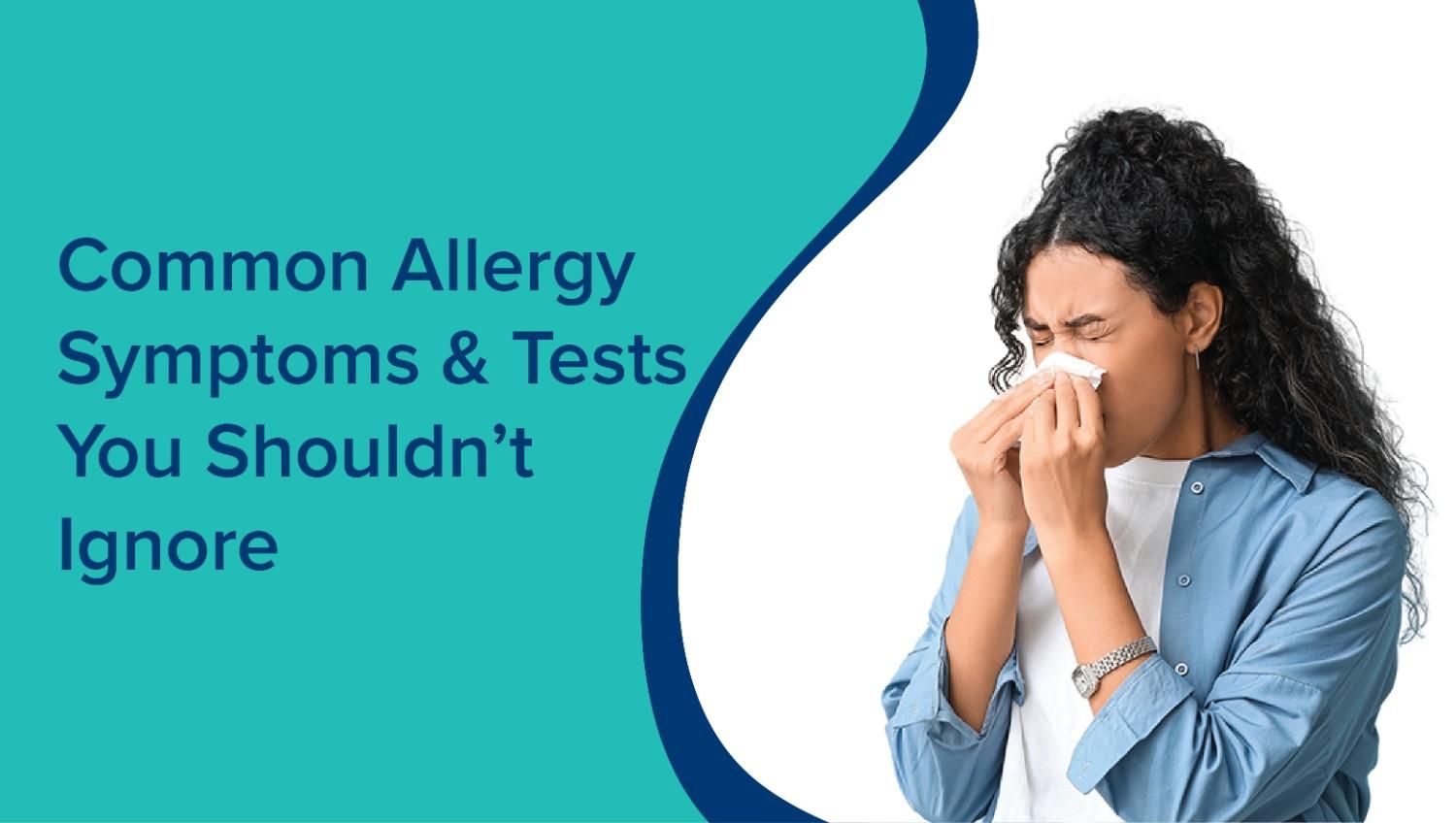
Common allergy signs during an allergic reaction include a runny or stuffy nose, nasal congestion, and an itchy throat. If you are sneezing frequently, especially in the morning or during seasonal changes, it could indicate allergic rhinitis (hay fever).
These symptoms are often mistaken for a cold, but allergies usually last longer. Contact your doctor accordingly.
Itchy, watery, or Red Eyes
During pollen seasons, eye irritation is common, but it can sometimes lead to conditions like allergic conjunctivitis, which can make eyes red, itchy, and watery. Early warning signs include swollen eyelids, burning sensations, and sensitivity to light.
Skin Rash or Eczema
People with skin allergies can sometimes have conditions like hives (urticaria), which appear as red, raised, itchy welts, while eczema leads to dry, scaly patches that may crack or ooze, which may be triggered by certain foods (milk, peanuts, eggs), detergents or cosmetics, and insect bites.
Don't ignore it, as long-term skin allergies can lead to infections or worsening inflammation.
Breathing Difficulty or Wheezing
Signs like wheezing, shortness of breath, chest tightness, and a persistent cough can indicate allergic asthma, which can develop and irritate the lungs, and cause breathing problems. Don't ignore these signs and delay treatment, as they may lead to severe respiratory illness.
Lips, Face, or Throat Swelling
A sudden swelling, especially after eating certain foods or taking medication, may indicate a serious allergic reaction. Swelling can block the airways, which can be dangerous. Early signs include difficulty swallowing, a hoarse voice, and trouble breathing.
Digestive Issues
People with food allergies may have symptoms like nausea, vomiting, abdominal pain, or diarrhea soon after consuming the allergen. If you have repeated digestive issues while eating food, contact your allergist for proper evaluation.
Chronic Fatigue or Headache
People sensitive to allergens may experience tiredness, sinus pressure, or headaches if allergies go untreated. If you often feel exhausted during allergy season, it may be time for proper testing and treatment.
Importance of Allergy Testing
People with allergic symptoms may have overlapping illnesses. Without testing, you may treat the symptoms without addressing the underlying cause. An accurate diagnosis helps doctors create personalized allergy treatment plans, avoid triggers, and prevent serious reactions.
Blood Test to Diagnose Allergies
Skin prick test
One of the most common tests for skin allergy tests involves applying a small amount of allergen to the skin (forearm or back), and pricking it; a raised bump within 15-20 min indicates an allergy.
IgE Blood test
This test is used to analyze food or medication allergies. In this test, a blood sample is taken to check the level of allergen-specific IgE antibodies; its high level indicates an allergic reaction.
Below is the table for high IGE level interpretation
Disclaimer: Refer to your doctor to get a detailed analysis of your IgE blood test report
| IgE Level | Value (IU/mL) | Meaning |
| Normal | 0–150 | Within normal range |
| Mildly Elevated | 151–300 | Possible allergic response |
| High | >300 | Strong allergy, parasitic infection, or immune disorder |
| Very Low (Rare) | <2 | May indicate an immune deficiency |
Patch Test
Used to assess skin allergies like contact dermatitis or to identify any cosmetic metal- and chemical-related allergies by checking whether your skin reacts to certain substances and identifying delayed allergic reactions.
Oral Food Challenge
A gold standard for diagnosing food allergies here, this test involves consuming the suspected food under strict medical supervision. If symptoms appear, the allergy is confirmed. This test requires a specialized healthcare setting.
Spirometry test
A specialized lung function test that checks breathing capacity and airflow obstruction caused by allergic asthma. This test.
Elimination Diet Test
To check for any food allergies or intolerances and help you to make a personalized eating plan, the doctor removes some of the allergy causing foods and gradually reintroduces them to analyze pinpoint triggers leading to skin or digestive issues.
Note: consultation with an allergy specialist to help select the most appropriate test based on your symptoms, medical history, and clinical needs.
When Should You Consider Allergy Testing?
- Symptoms that last longer than two weeks
- Having Recurring sneezing, cough, or rash
- Breathing difficulty after exposure to dust or pollen
- Reactions after eating specific foods
- Severe swelling or throat irritation
Take the first step toward allergy relief with MAX@Home.
With allergy profile test, accurate diagnostics, and convenient home sample collection, MAX@Home helps identify the root cause of your symptoms early—so you can get the right treatment, avoid triggers, and breathe easier, all from the comfort of your home.
Conclusion
Allergies are one of the common illnesses nowadays and shouldn't be ignored, especially when they become persistent or severe. Identifying the cause through proper testing helps ensure timely, effective treatment. Take control of your health by understanding the common allergy symptoms and the diagnostic tests that confirm them to avoid unnecessary complications.


 Call: 9240299624

