


Quick answer: Allergic rhinitis is inflammation of the nasal lining set off by something you breathe in, usually dust mite debris, pollen, pet dander or mould. It brings on sneezing, a runny or blocked nose and itchy, watery eyes, but no fever. Lasting relief comes from three things done together: cutting exposure to your own trigger, using the right medicine consistently rather than only on bad days, and treating the underlying sensitivity with immunotherapy when symptoms refuse to settle.
Not sure if your sneezing is an allergy?
Start with an allergy screening test that checks for common inhaled allergens, with free home sample collection.
Book an allergy screening at home →What is allergic rhinitis?
Your immune system is built to attack things that can hurt you. In allergic rhinitis it misreads something harmless, a speck of pollen or the droppings of a dust mite, as a threat. It makes IgE antibodies against that particle, and the next time you breathe it in, those antibodies trigger a release of histamine and other chemicals in the lining of your nose. The lining swells, produces fluid and becomes itchy. That swelling and fluid is what you feel as a blocked, dripping, maddeningly itchy nose.
Two things follow from that. There is no virus involved, so there is no fever and nothing to pass on to anyone else. And the reaction starts within minutes of exposure rather than days later.
You will also see it called hay fever, which is an unhelpful name on both counts. Hay has little to do with it and fever is not part of it. Doctors may use rhinitis for nasal inflammation in general and allergic rhinitis for the kind driven by an allergy, because plenty of runny noses are non-allergic and need a different approach.
Allergic rhinitis symptoms
Below are some of the symptoms that may seen in the earlier stage these are: -
Within minutes of exposure
- Sneezing, often in runs of four or five rather than one at a time
- A clear, watery discharge that drips rather than thickens
- Itching in the nose, the roof of the mouth, the throat, or the ear canal
- Itchy, red, watering eyes
Building up over hours and days
- A blocked nose, which for many people is the symptom that bothers them most
- Reduced sense of smell, and food tasting flat as a result
- Postnasal drip, with a cough that is worse at night and on waking
- Blocked or popping ears, and pressure across the cheeks and forehead
- Dark, puffy shadows under the eyes, sometimes called allergic shiners
- Broken sleep, and the daytime fatigue and short temper that follow it
What it looks like in children
Children seldom say their nose itches. Instead, you notice a child breathing through an open mouth, rubbing the nose upward with the palm until a horizontal crease forms across it, snoring, waking often, or struggling to concentrate at school. Repeated ear infections and fluid behind the eardrum also show up more in children with untreated nasal allergy. If the sneezing and blocked nose arrive with the same season or the same room every year, mention that pattern. It is more useful to a doctor than the symptom list itself.
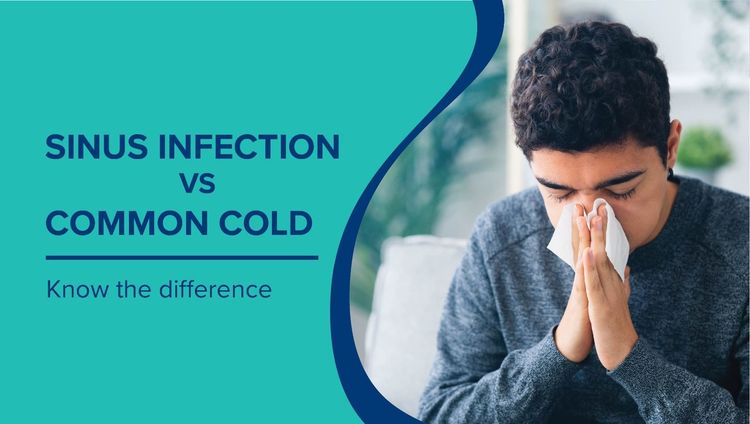
Allergic rhinitis vs a common cold: how to tell them apart
Below are some of the ma
| Feature | Allergic rhinitis | Common cold |
|---|---|---|
| Cause | Allergen you breathe in | Virus |
| Onset | Within minutes of exposure | One to three days after infection |
| Fever | No | Sometimes, usually low grade |
| Body ache | No | Common |
| Itchy eyes and nose | Typical | Unusual |
| Discharge | Thin, clear, watery | Starts watery, often turns thick and yellow |
| Duration | Weeks or months while exposure continues | Three to seven days |
| Pattern | Returns with the same season, room or activity | Random, and spreads to others |
| Contagious | No | Yes |
A rough rule that holds up well: itching and sneezing without fever points to allergy, while fever and body ache point to infection. Symptoms that drag past two weeks are worth getting looked at either way.
What triggers allergic rhinitis?
Finding your trigger is the single most useful thing you can do, because it decides whether you need to change your bedroom or change your month.
Indoor triggers, which never really leave
House dust mites are the big one in most Indian homes. They are microscopic, they live in mattresses, pillows, upholstery, carpets and soft toys, and they feed on shed skin. You are not allergic to the mite so much as to the protein in its droppings. How clean your house is matters far less than how warm and humid it is, which is why mite numbers stay high all year round in most of the country.
Pet allergy works the same way. Fur is not the allergen, so no breed is truly hypoallergenic. The trigger is protein in saliva and shed skin cells, which float in the air and settle on soft surfaces. Cockroach droppings are a significant indoor trigger too, and mould grows wherever there is damp, so bathrooms, kitchen corners, water seepage on walls and the back of a fridge all qualify.
Pollen, and the seasonal pattern
Tree, grass and weed pollens are carried on the wind, which is why they reach you indoors and why hot, dry, breezy days are worse than wet ones. Rain washes pollen out of the air and usually buys you a quiet day or two. Flower pollen spread by insects rarely causes trouble, so the bouquet in your living room is probably innocent.
Air pollution, and why winters are harder in Delhi NCR
Pollution does not make you allergic, but it reliably makes an existing allergy worse. Fine particulate matter irritates and inflames the same nasal lining that is already reacting, so a dose of allergen that you would normally shrug off becomes a bad week. A Delhi NCR hospital study of adults with allergic rhinitis and asthma found symptom peaks and pollution peaks arriving together in the post-monsoon and winter months, with measurably poorer lung function in the group carrying both conditions.
Smoke, incense, strong perfume, mosquito coils, frying fumes and fresh paint belong in a separate box. They are irritants rather than allergens, so they will not show up on an allergy test, but they set off the same streaming nose. If your reports come back clear and your symptoms are real, irritants are usually the explanation.
Common triggers, where they hide and what cuts exposure
| Trigger | Where it hides | What actually reduces it |
|---|---|---|
| Dust mites | Mattress, pillows, quilts, sofa, carpets, soft toys | Zip-on mite-proof mattress and pillow covers, hot water wash of bedding every one to two weeks, fewer soft furnishings in the bedroom |
| Pollen | Outdoor air, carried indoors on clothes and hair | Windows shut on dry windy days and while driving, a shower and change of clothes after coming home, laundry dried indoors in peak season |
| Pet dander | Anywhere the pet goes, settling on fabric | Keep pets out of the bedroom entirely, wash hands after contact, vacuum with a HEPA filter |
| Mould | Damp walls, bathrooms, kitchen corners, flower pots, fridge seals | Fix seepage and leaks, run exhaust fans, dry wet areas, cut indoor humidity |
| Cockroach debris | Kitchen cupboards, drains, gaps behind appliances | Food sealed away, no standing water, gaps and cracks closed up, professional pest control |
| Pollution and smoke | Outdoor air, cooking fumes, incense, cigarettes | A well-fitted mask outdoors on bad air days, no smoking indoors, kitchen ventilation, an indoor purifier in the bedroom |
Seasonal or year-round? The two patterns
Which pattern you have changes what you do about it. Seasonal allergy can often be managed by starting treatment before your bad month arrives. Year-round allergy calls for changes at home, because the trigger lives with you.
Seasonal and perennial allergic rhinitis compared
| Column 1 | Seasonal | Perennial |
|---|---|---|
| Usual triggers | Tree, grass and weed pollen, outdoor mould spores | Dust mites, pet dander, cockroach debris, indoor mould |
| Timing | Same few weeks or months each year | Any time, often worse at night and on waking |
| Giveaway clue | Symptoms track the calendar and the weather | Symptoms track rooms, bedmaking, cleaning and sleep |
| First line of attack | Begin medication a week or two before your usual season | Reduce the allergen load at home, starting with the bedroom |
Plenty of people have both: a year-round background of dust mite symptoms with a sharp seasonal spike on top. Treatment guidelines increasingly describe symptoms as intermittent or persistent, and mild or moderate to severe, because how much the symptoms disrupt your sleep and your day matters more for choosing treatment than which calendar month it is.
Getting tested, and what the results really mean
A doctor can usually diagnose allergic rhinitis based on your symptoms and medical history. Identifying the specific allergen is helpful when symptoms persist, to find ways to reduce exposure at home, or when considering immunotherapy.
- A specific IgE profile for allergy, asthma and rhinitis measures antibodies against individual inhaled allergens, which is what points to dust mites rather than pollen.
- A broader allergen panel widens the net across dust, mould, grass, weed, tree, animal and food groups when the trigger is not obvious.
- An absolute eosinophil count is a simple, inexpensive pointer to allergic inflammation, though it cannot name the culprit.
- A Phadiatop screening test answers the yes or no question of whether an inhaled allergy is present before anyone spends money on a full panel.
- Skin prick testing, done in a clinic, gives a reading within about twenty minutes and is still widely used where it is available and safe to do.
Here is the part that gets missed. A positive result means you are sensitised, not that the allergen is definitely causing your symptoms. Results only earn their keep when they line up with your story. A high dust mite reading in someone who sneezes while making the bed is useful. The same reading in someone whose symptoms arrive only in March deserves a second look. Blood samples for all of these can be collected at home, which saves a trip when your nose is already streaming.
How to get long-term relief
Many people use medicines for allergic rhinitis only when symptoms worsen and stop once they feel better. However, this may prevent proper control of the condition. Managing allergic rhinitis requires regular treatment to keep symptoms under control and provide lasting relief.
Cut the exposure
Nothing else works as well for as long, and it costs the least. Start with the bedroom, since that is where you spend a third of your life breathing the same air. Mite-proof covers on the mattress and pillows, bedding washed hot, soft toys and heavy curtains out, pets kept to other rooms. For pollen, keep the windows shut on dry windy days and rinse off when you get home. For mould, deal with the damp rather than the smell.
Always rinse the nose
A saline rinse flushes allergens, mucus and irritants off the nasal lining, and the evidence behind it is better than its low cost suggests. A review of fourteen trials found it may reduce symptom severity in both adults and children for up to three months, with no adverse effects reported. Whether it beats a steroid spray is still unsettled, so treat it as a useful partner to treatment rather than a replacement for it.
One safety point that matters: use distilled water, or water that has been boiled and cooled, and rinse the device out and let it dry between uses. Straight tap water is not safe in the nose.
Use proper medicine
The classes do different jobs, which is why one person swears by tablets and another finds them useless. Any of these needs a doctor's input on what suits your age, your other conditions and your other medicines.
Treatment options and what each one is best at
| Option | Works best on | How soon | Worth knowing |
|---|---|---|---|
| Non-sedating oral antihistamines (such as cetirizine, levocetirizine, fexofenadine) | Sneezing, itching, runny nose, itchy eyes | Within an hour or two | Does relatively little for a blocked nose. Some still cause drowsiness in some people |
| Intranasal corticosteroid spray (such as fluticasone, mometasone, budesonide) | All nasal symptoms, including congestion | A few days, with full effect over one to two weeks | The most effective single treatment for persistent symptoms. Needs daily use, and most people stop too early to feel the benefit |
| Intranasal antihistamine spray (such as azelastine) | Fast relief of sneezing and itching | Within minutes | Often combined with a steroid spray in one device for moderate to severe symptoms |
| Decongestant nasal spray (such as oxymetazoline, xylometazoline) | Short-term blocked nose | Minutes | Hard limit of three to five days depending on the product. Longer use causes rebound congestion that is worse than the original problem |
| Leukotriene receptor antagonist (such as montelukast) | Nasal symptoms where asthma coexists | Days | Prescription only. Mood and sleep side effects are recognised, so flag any mental health history to your doctor |
| Saline rinse or spray | Congestion, crusting, postnasal drip | Immediate but short lived | Safe alongside everything else, and safe in pregnancy and in children |
Note: Don't try to self-medicate. Medicine above should be consumed only after a consultation with your doctor
What happens if you leave it alone
Allergic rhinitis is not dangerous in itself. The cost shows up in what it drags along with it.
- Sinusitis, because a swollen nasal lining blocks the narrow openings that let the sinuses drain
- Middle ear infection and fluid behind the eardrum, which is a common route to muffled hearing in children
- Nasal polyps, soft growths that follow long-standing inflammation and block the nose further
- Broken sleep, snoring, and daytime tiredness, with the knock-on effect on school and work
- Harder to control asthma, since the upper and lower airway inflame together and a flaring nose often means a flaring chest
The connection between allergic rhinitis and asthma is important. Many people with allergic rhinitis also have asthma or may develop it over time. Poorly controlled nasal allergies can also make asthma symptoms worse. If sneezing is accompanied by wheezing, chest tightness, a persistent cough or breathlessness during mild activity, consult a doctor for proper evaluation. If visiting a clinic is difficult, you can book a pulmonologist at home.
When to see a doctor
Book an appointment if any of these fit:
- Symptoms last longer than two weeks or keep coming back.
- Over-the-counter(OTC) medicines provide little or no relief.
- You have blockage in only one nostril, nosebleeds, or foul-smelling nasal discharge.
- Sleep, work, school or exercise is being affected
- You are wheezing, coughing persistently or getting breathless
- Facial pain and pressure keep building, or fever appears
- A child is mouth breathing, snoring or having repeated ear problems
Take two pieces of information with you: when the symptoms started and what you were doing or where you were when they did. That pattern often does more to identify the trigger than any test.
Book an allergy test at home.
Sneezing fits, a blocked nose or itchy eyes that keep coming back?
Find out which allergen is behind it. MAX@Home collects your sample at home and reports from a Max Healthcare lab, so you can stop guessing and start treating the right trigger.
Book an allergy test at home →People Also Ask
What is the main cause of allergic rhinitis?
An allergen you breathe in. House dust mite droppings are the most common culprit in Indian homes, followed by pollen, pet dander, cockroach debris and mould. Your immune system makes IgE antibodies against that particle and releases histamine whenever you are exposed to it again.
Can allergic rhinitis be cured permanently?
There is no guaranteed permanent cure, and claims of one are a red flag. Allergen immunotherapy comes closest, because roughly three years of treatment can give lasting remission after the course ends. Everything else controls symptoms very well without altering the underlying allergy.
How do I know if it is allergic rhinitis or just a cold?
Check for fever and itching to help identify the cause. Allergies usually cause itchy eyes and nose without fever or body aches. Symptoms can start within minutes of exposure to an allergen and often return repeatedly. A cold usually develops over a day or two, may cause fever or body aches, and generally clears within a week.
Which test is done for allergic rhinitis?
A specific IgE blood test can identify the allergens triggering your symptoms using a single blood sample. A skin prick test is another option performed at a clinic. An absolute eosinophil count or Phadiatop test may also help identify allergic inflammation before further testing is recommended.
Why do I sneeze every morning?
Morning sneezing usually points to dust mites in your bedding, since you have spent hours in close contact with them. Overnight nasal congestion that clears when you stand up fits the same picture. Mite-proof mattress and pillow covers plus hot washing of bedding are the first things to try.
How long does allergic rhinitis last?
As long as the exposure lasts. A pollen allergy may run for a few weeks each year, while a dust mite allergy can cause symptoms every day indefinitely. That is the clearest difference from a cold, which resolves on its own in three to seven days whatever you do.
Do air purifiers help with allergic rhinitis?
They can help with airborne particles such as pollen, pet dander and pollution, especially in a closed bedroom with a HEPA filter. They do far less for dust mite allergy, because mite allergen sits in bedding and upholstery rather than floating in the air.
Which foods should you avoid with allergic rhinitis?
There is no specific diet that everyone with allergic rhinitis needs to follow, as the condition is usually triggered by airborne allergens rather than food. However, some people with pollen allergies may experience mouth itching after eating certain raw fruits or nuts. Tell your doctor about these reactions and avoid foods that consistently trigger your symptoms.
Is allergic rhinitis contagious?
No. There is no infection involved, so you cannot pass it to anyone. It does run in families though, and a child with one or both parents affected by allergy, eczema or asthma carries a higher chance of developing nasal allergy themselves.
Related support from MAX@Home
References
Allergic rhinitis, MedlinePlus Medical Encyclopedia, US National Library of Medicine
Hay fever: symptoms and causes, Mayo Clinic
Allergic rhinitis (hay fever), Cleveland Clinic
Allergic rhinitis, National Health Service (UK)
Head K and others. Saline irrigation for allergic rhinitis. Cochrane Database of Systematic Reviews, 2018
Global Asthma Network Phase I, India: results for allergic rhinitis and eczema in 127,309 children and adults. Journal of Allergy and Clinical Immunology: Global, 2022
Impact of ambient air pollution on allergic rhinitis with comorbid asthma in adults from Delhi NCR. Indian Journal of Otolaryngology and Head & Neck Surgery, 2026



 Call: 9240299624

