


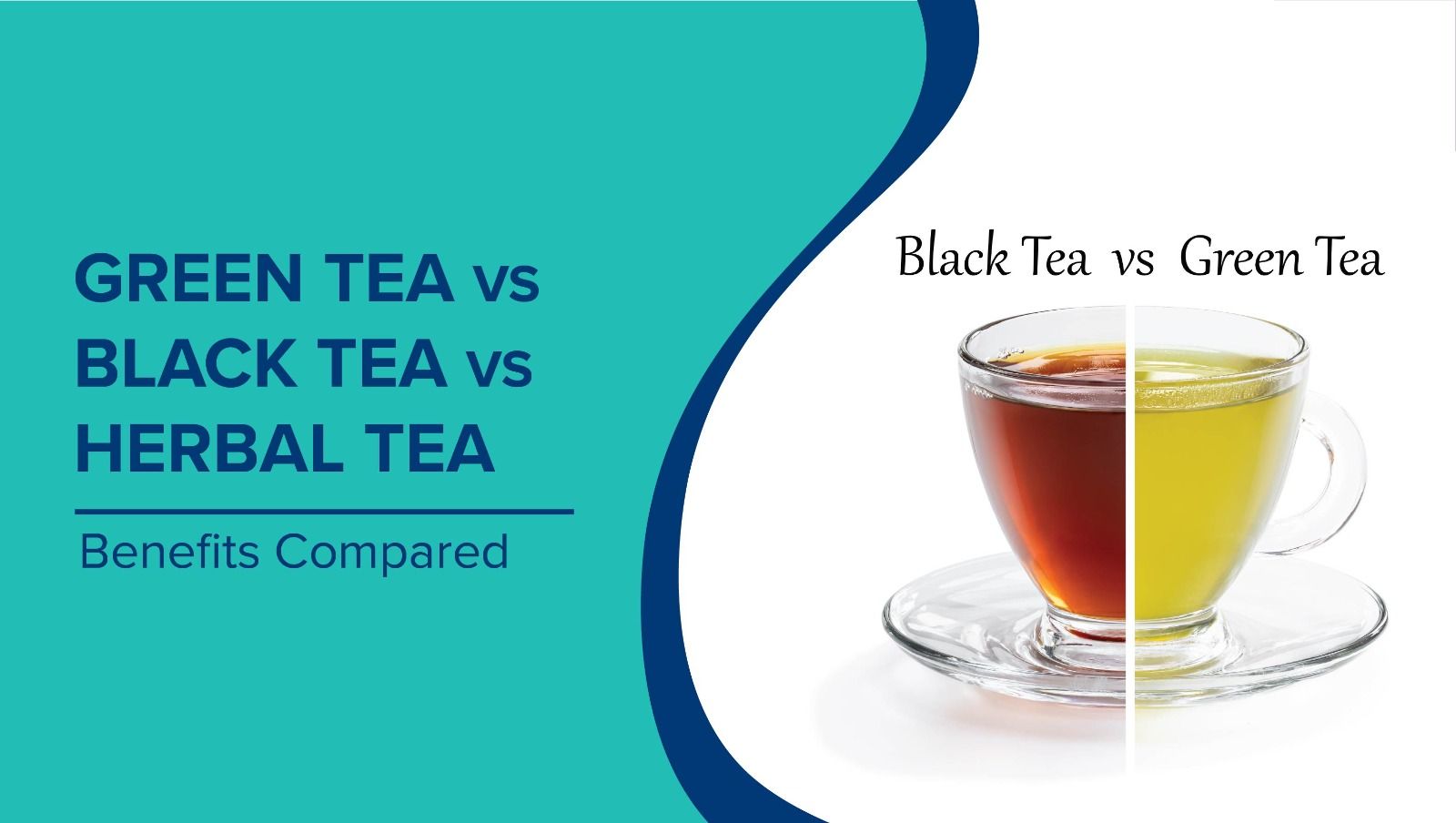


Quick Answer: Green tea and black tea come from the same plant. Green tea is less processed, has slightly more antioxidants and less caffeine, while black tea is fully oxidized, stronger and has more caffeine. Both are linked to better heart health when drunk regularly without much sugar. Herbal teas are not true teas, are usually caffeine-free, and each herb has its own, often limited, evidence. The healthiest choice is the one you enjoy, with little or no sugar.
Curious how your nutrition is doing?
Check key vitamins and nutrients with an at-home test, with home sample collection and a digital report.
Book Nutrition Test at Home →What Is the Difference Between Green Tea, Black Tea and Herbal Tea?
Green tea and black tea come from the same plant, Camellia sinensis. The difference is in how the leaves are processed. For green tea, the leaves are steamed or pan-fired soon after picking, which stops them from oxidizing, so they keep their green colour and fresh taste. For black tea, the leaves are rolled and left exposed to air until they fully oxidise, turning dark and developing a stronger, maltier flavour. Assam and Darjeeling are well-known Indian black teas.
Herbal teas (tisanes) are infusions made from flowers, leaves, roots or seeds of other plants, such as chamomile, ginger, peppermint, hibiscus or tulsi. Because they do not come from the Camellia sinensis plant, they are not technically true teas. Most common culinary herbs are naturally caffeine-free, but a few, like yerba mate, guayusa and yaupon, do contain caffeine.
Green,Black and Herbal Tea: Quick Comparison
| Plant | Camellia sinensis | Camellia sinensis | Other plants (chamomile, ginger, mint, hibiscus) |
| Processing | Not oxidized | Fully oxidised | Dried herbs, flowers or roots |
| Main compounds | Catechins, especially EGCG | Theaflavins and thearubigins | Depends on the herb |
| Caffeine (per cup) | ~29 mg | ~ 48 mg | Usually none |
| Taste | Light, grassy | Strong, malty | Varies widely |
| Best for | A lighter, lower-caffeine cup | A strong morning cup | A caffeine-free evening cup |
Caffeine Comparison: Green Tea, Black Tea & Coffee
If you are watching your caffeine, this is the clearest difference between them. Approximate caffeine per 8 oz (237 ml) cup:
The value may vary across different sources, so verify it before referring to it.
Benefits of Green Tea
Contains Antioxidants: It has epigallocatechin gallate (EGCG), which helps prevent cellular damage from ROS (reactive oxygen species), neutralizes free radicals, and also aids in improving skin health
Heart health: Regular green tea drinking helps reduce blood pressure and improves overall cardiovascular health, thus lowering the risk of heart disease
Cholesterol: It can help lower total and LDL ("bad") cholesterol, though most of this evidence comes from extract supplements rather than the drink
Weight management: catechins and caffeine help improve metabolism, which helps to control weight, but the effect is modest and varies from person to person
Brain health: Green tea contains L-theanine that can help improve mood and also reduce the risk of age-related cognitive disease
Health Benefits of Black Tea
Black tea contains theaflavins and thearubigins, which are different antioxidants. Its benefits overlap a lot with green tea:
Heart and blood vessels: both black and green tea contain flavonoids (found in dark chocolate and nuts) that may reduce inflammation and help blood vessels work better and improve cardiovascular health and
Cholesterol: short-term studies suggest black tea may help lower LDL cholesterol
Heart attack and stroke: large population studies link regular tea drinking with fewer heart attacks and strokes, though tea drinkers may also have other healthy habits, so tea alone isn't proven to be the cause
Focus and alertness: its higher caffeine gives a stronger morning boost than green tea
Health Benefits of Herbal Tea
Every herbal tea is different, and the evidence for most is limited. Here is an honest look at the popular ones:
1. Ginger Tea
Ginger tea has a warm, spicy taste and is a popular home remedy for nausea. It contains gingerol, a natural compound with antioxidant and anti-inflammatory effects. Ginger may slow blood clotting, so check with your doctor if you take blood thinners, are pregnant or have surgery coming up.
2. Chamomile Tea
Chamomile tea is made from dried chamomile flowers and is a caffeine-free option for relaxing before bed. It contains antioxidant flavonoids and may help ease anxiety and some PMS symptoms. Early research has also explored its possible benefits for heart health, immune function and bone health, but more studies are needed to confirm these effects. If you have a ragweed, daisy or other related pollen allergy, check with your healthcare professional before drinking chamomile tea.
3. Hibiscus Tea
Hibiscus tea is made from the dried parts of the hibiscus flower and has a refreshing, slightly sour taste. It contains antioxidants called anthocyanins, along with small amounts of minerals such as potassium, calcium and magnesium. Some studies suggest that hibiscus tea may help lower blood pressure and improve cholesterol and triglyceride levels. Laboratory research has also explored its potential antiviral effects, but more studies are needed to confirm these benefits in humans.
Note: Hibiscus tea may lower blood pressure and affect fluid and electrolyte balance. It may interact with medicines such as hydrochlorothiazide, lisinopril and amlodipine. Consult your doctor before drinking it regularly if you take blood pressure medication.
Peppermint Tea
Peppermint oil capsules may help symptoms of irritable bowel syndrome (IBS), but there is not enough research to say whether peppermint tea itself helps. The tea appears to be safe, though peppermint can trigger heartburn in some people.
Which tea Can Be a Better Choice for weight loss?
Green tea is the one usually linked to weight loss, but the effect is small. Catechins and caffeine may slightly boost the body's energy use, and the result depends on the person and how active they are. Tea won't melt fat on its own.
What makes a bigger difference is what you add to your cup. A plain cup of green, black or herbal tea has almost no calories. A cup of chai with full-fat milk and two teaspoons of sugar, several times a day, adds up quickly. Bottled iced teas can contain as much sugar as soft drinks. If weight is your goal, drink tea plain or with very little sugar, and pair it with a balanced diet and regular activity.
Which tea can be best suited for your skin?
You will find many claims that green tea gives glowing skin. In reality, strong research showing that drinking any tea improves skin is limited. Researchers have studied green tea's antioxidants mainly in creams and extracts, not in the drink. Good skin depends more on sleep, sun protection, a balanced diet, and enough water. Unsweetened tea counts toward your daily fluids, but it isn't a skincare treatment.
Which Tea Is Best for You?
| Less caffeine, a light taste | Green tea |
| A strong morning boost | Black tea, ideally with little sugar |
| A caffeine-free evening cup | Herbal tea such as chamomile or peppermint |
| Help with mild nausea | Ginger tea, after checking with your doctor if pregnant |
| Support for slightly high blood pressure | Hibiscus tea, alongside your doctor's advice |
| Heart health in general | Green or black tea, drunk regularly with little sugar |
Possible Side Effects of Green Tea
Tea is safe for most people in normal amounts, but there are a few things to know:
Too much caffeine: Excessive green or black tea may cause a fast heartbeat, jitters, anxiety, headaches, stomach discomfort and poor sleep. Avoid drinking it late in the evening if it affects your sleep.
Pregnancy and breastfeeding: Keep caffeine intake within recommended limits and consult your doctor about how much is safe. Check with your doctor before drinking herbal teas regularly, as the safety of many herbs during pregnancy and breastfeeding is not well established.
Green tea supplements: Drinking green tea is generally safe for most adults, but concentrated green tea extract supplements have been linked to rare cases of liver injury.
Medicine interactions: Green tea and certain herbal teas may interact with medicines. Green tea can reduce nadolol absorption, while green tea extracts may affect atorvastatin levels. High and inconsistent vitamin K intake can also interfere with warfarin. Chamomile may increase the risk of bleeding when taken with blood thinners. Consult your doctor if you take regular medicines.
Heartburn and acidity: Green and black tea have similar acidity levels, but their caffeine and other compounds may trigger heartburn in some people. They can worsen symptoms by relaxing the muscle that prevents stomach acid from flowing back into the oesophagus or by increasing stomach acid production.
Iron absorption: Tea contains polyphenols that can reduce the absorption of non-heme iron found in plant-based foods and supplements. This may be a concern for vegetarians, vegans and people with iron deficiency. Drinking tea between meals rather than with food may help.
Allergies: Chamomile may cause allergic reactions in people sensitive to ragweed, daisies, marigolds or related plants.
Tips to Make Your Teacup Healthy
- Keep sugar low, or skip it. A little is fine, but several teaspoons cancel out much of the benefit
- Limit sweetened bottled teas and instant tea mixes, as they may contain added sugar.
- Brew green tea in water at around 80°C for 2–3 minutes to keep its flavour mild and prevent bitterness.
- Brew black tea in boiling water for 3 to 5 minutes
- Switch to herbal tea in the evening if caffeine affects your sleep
- Treat tea as a healthy habit, not a medicine
Get a complete picture of your health
Book the WellWise Essential Profile, a health screening that covers heart, kidney, liver and diabetes markers, with home sample collection.
Book WellWise Essential Profile →People Also Ask
What is the difference between green tea and black tea?
Green tea and black tea come from the same plant, Camellia sinensis. Green tea leaves are heated soon after picking so they don't oxidize, while black tea leaves are fully oxidised. That makes black tea darker, stronger and higher in caffeine, while green tea is lighter and has slightly more catechins.
Which is better for health, green tea or black tea?
Both green tea and black tea can be part of a healthy diet. Green tea contains antioxidants and usually has less caffeine, while black tea has a stronger flavour and offers its own health benefits. Both may support heart health when consumed regularly. The better choice depends on your taste and how you prefer to drink your tea.
Is green tea or black tea better for weight loss?
Green tea is often associated with weight loss, but the effect is usually small and may vary from person to person. Neither green tea nor black tea can burn fat on its own. Drinking tea without added sugar and including it in a balanced diet, along with regular exercise, can better support your weight-loss goals.
How much caffeine is in green tea, black tea and coffee?
An 8 oz cup of brewed coffee has about 96 mg of caffeine, black tea about 48 mg and green tea about 29 mg. Most herbal teas have none. Actual amounts vary with brand, leaf quantity and brewing time, so a strong chai may contain more.
Which tea is better for skin?
There is little strong evidence that drinking any tea improves skin. Researchers have mainly studied green tea antioxidants in creams and extracts, not as a drink. Good sleep, sun protection, a balanced diet and enough water do more for your skin than choosing one tea over another.
What are the side effects of green tea and black tea?
Too much of either can cause poor sleep, jitters, a fast heartbeat, headaches or an upset stomach because of caffeine. Black tea is more acidic and may trigger acidity. Green tea extract supplements have rarely caused liver injury, and large amounts may interact with some medicines.
Are herbal teas healthier than green or black tea?
Not necessarily. Herbal teas are usually caffeine-free, so they can be a good choice before bed or if you're sensitive to caffeine. Their benefits depend on the herbs used. For example, hibiscus tea may help lower blood pressure, while ginger tea may help relieve nausea during pregnancy. Choose a herbal tea that suits your needs and remember that its effects can vary from person to person.
How many cups of tea can I drink a day?
Most healthy adults can consume up to 400 mg of caffeine daily from all sources. The number of cups this equals depends on the type of tea and how it’s brewed. Pregnant women and people who are sensitive to caffeine may need to limit their intake further. If you drink tea several times a day, try to keep added sugar low to avoid consuming too much sugar.
Conclusion
Green tea, black tea and herbal teas can all be good choices for your daily routine. Green tea generally contains less caffeine, while black tea has a stronger taste. Both may offer heart health benefits, and herbal teas provide a caffeine-free option with benefits that vary depending on the herbs used.
What matters most is how you drink your tea. Limit added sugar, keep an eye on your caffeine intake and enjoy tea as part of a balanced diet rather than relying on it for specific health benefits.
Related
References
National Center for Complementary and Integrative Health (NIH). Green tea: https://www.nccih.nih.gov/health/green-tea
National Center for Complementary and Integrative Health (NIH). Chamomile: https://www.nccih.nih.gov/health/chamomile
National Center for Complementary and Integrative Health (NIH). Ginger: https://www.nccih.nih.gov/health/ginger
National Center for Complementary and Integrative Health (NIH). Peppermint oil: https://www.nccih.nih.gov/health/peppermint-oil
Mayo Clinic. Caffeine content for coffee, tea, soda and more: https://www.mayoclinic.org/healthy-lifestyle/nutrition-and-healthy-eating/in-depth/caffeine/art-20049372
U.S. Food and Drug Administration. Spilling the beans: how much caffeine is too much?: https://www.fda.gov/consumers/consumer-updates/spilling-beans-how-much-caffeine-too-much
Harvard Health Publishing. Drinking tea may benefit the heart and blood vessels: https://www.health.harvard.edu/press_release/drinking-tea-may-benefit-the-heart-and-blood-vessels
https://www.health.harvard.edu/diet-and-nutrition/the-health-benefits-of-3-herbal-teas



 Call: 9240299624

