


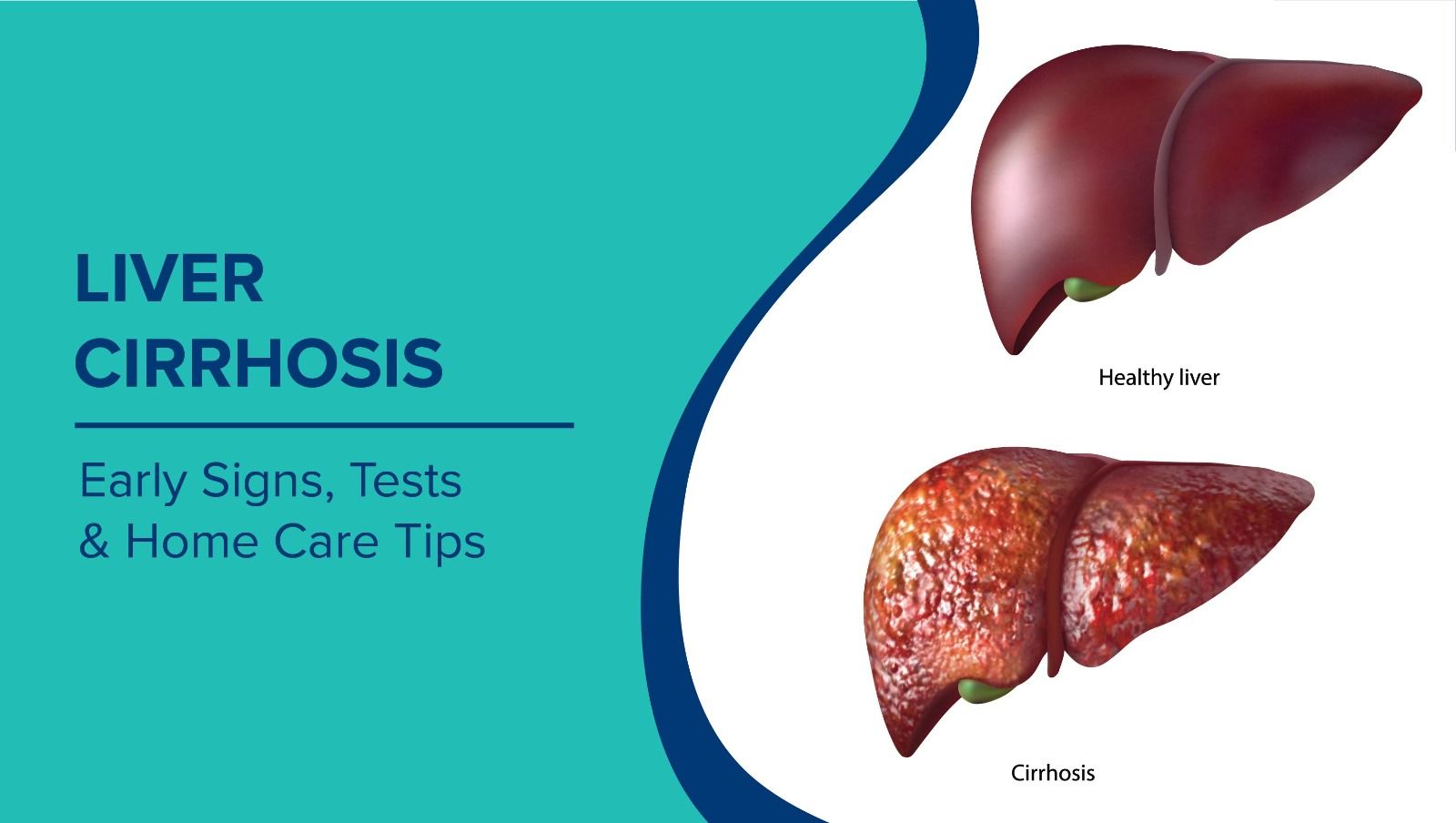


Quick Answer: Liver cirrhosis is long-term scarring that prevents the liver from working properly. Early signs are often vague, such as tiredness, weakness, poor appetite, nausea, weight loss and mild pain on the upper right side of the abdomen, and some people have no symptoms at all. Doctors diagnose it with blood tests, an ultrasound or a liver stiffness scan, and sometimes a biopsy. Cirrhosis can't be cured, but treating the cause can slow or stop it.
Worried about your liver health?
Book an at-home Liver Function Test (LFT) and get a digital report without stepping out.
Book LFT at Home →Introduction
The liver is a quiet organ. It keeps working even when it is badly hurt, which is why cirrhosis is often found late, sometimes during a routine check for something else.
That is also the good news. If doctors catch the damage early and treat the cause, many people can slow the disease and live well for years. This guide explains the early signs of cirrhosis, what causes it, which tests confirm it and how it is treated.
What Is Cirrhosis of the Liver?
Cirrhosis is a condition in which scar tissue slowly replaces healthy liver tissue. It happens after the liver has been damaged again and again over many years may be due to bad lifestyle habits like alcohol, fatty liver disease, hepatitis or other causes.
As scarring builds up, the liver hardens and can't do its functions properly, such as cleaning the blood, making proteins that help blood clot, storing energy, and helping digest food. Scarring also slows blood flow through the liver, which raises pressure in the veins that carry blood to it. That pressure is called portal hypertension, and it causes many of the serious problems linked to cirrhosis.
Stages of Cirrhosis
Doctors usually describe cirrhosis in two broad stages.
Compensated cirrhosis
The liver is scarred but still coping. There may be no symptoms, or only mild ones like tiredness.
Decompensated cirrhosis
The liver can no longer keep up. Serious problems appear, such as jaundice, fluid in the belly, bleeding or confusion.
Doctors also use scores such as Child-Pugh and MELD, which are worked out from blood test results, to judge how severe the disease is and whether a transplant should be considered.
Liver Cirrhosis Symptoms
Early Symptoms of Cirrhosis
In the early stage, many people have no symptoms. When symptoms do show up, they are easy to brush off:
- Feeling tired or weak
- Poor appetite, nausea or vomiting
- Losing weight without trying
- Mild pain or discomfort on the upper right side of the abdomen
- Itchy skin
- Muscle loss, weakness or cramps
- Red palms and small spider-like blood vessels on the skin
- Sexual problems
Symptoms in the later stage (decompensated cirrhosis)
As the liver gets worse, the signs become harder to miss:
- Yellow eyes and skin (jaundice) and dark urine
- Swelling of the legs, ankles or feet
- Swelling of the belly from fluid build-up (ascites)
- Bruising or bleeding easily
- Confusion, memory problems, personality changes or poor sleep
- Severe itching
- Sexual changes in the form of low sex drive (libido) change in menstrual cycle or testicular shrinkage
- Vomiting blood or passing black stools from bleeding veins in the food pipe or stomach
Get emergency help if someone with liver disease vomits blood, passes black or bloody stools, becomes confused or very drowsy, or has a high fever with a swollen belly.
What Causes Liver Cirrhosis?
Cirrhosis is a slow scarring process triggered by long-term inflammation in the liver. Any chronic liver disease that keeps the liver inflamed can lead to it. The causes fall into four main groups, and some people have more than one cause.
1. Lifestyle-Related Causes
Most common causes, and lifestyle changes can often slow or prevent them.
- Alcohol-related liver disease: Long-term heavy drinking inflames the liver, leading to scar formation. Alcohol is the best-known cause, but non-alcohol causes are also common
- Fatty liver disease (MASLD and MASH): fat builds up in the liver and, over time, can cause inflammation and scarring. It is linked to obesity, type 2 diabetes, high blood fats (cholesterol and triglycerides) and high blood pressure
2. Viral and Other Infections
Long-term infections can quietly damage the liver for years before any symptoms appear.
- Chronic hepatitis C: becomes long-term in most people who catch it. It can now be cured with antiviral medicines, but many people don’t know they have it
- Chronic hepatitis B: becomes long-term in a smaller number of people, and then lasts for life. It can be treated to slow liver damage, but not cured. About 240 million people were living with chronic hepatitis B in 2024
- Other infections: such as syphilis and brucellosis, if left untreated
3. Genetic and Inherited Causes
Some inherited conditions may cause harmful substances to build up in the liver and damage it.Some of these are
- Haemochromatosis: too much iron builds up in the body
- Wilson’s disease: copper collects in the liver
- Alpha-1 antitrypsin deficiency: can damage both the lungs and the liver
- Cystic fibrosis: affects the lungs, digestive system and other organs
- Glycogen storage disease and galactosaemia: disorders of how the body handles sugar
- Biliary atresia and Alagille syndrome: rare conditions, usually found in childhood, that affect the bile ducts
4. Autoimmune and heart-related conditions
Although less common, they are important to rule out.
- Autoimmune hepatitis: the immune system attacks the liver by mistake
- Primary biliary cholangitis: the small bile ducts in the liver are slowly destroyed
- Primary sclerosing cholangitis: the bile ducts harden and scar
- Toxic hepatitis: long-term exposure to certain environmental toxins or medicines, such as methotrexate and some painkillers like NSAIDs and paracetamol (acetaminophen) when overused
- Heart and blood flow problems: congestive heart failure can cause blood to back up into the liver, and poor blood supply to the liver (chronic ischaemia) can also damage it
Never stop a prescribed medicine on your own. If you take a medicine that can affect the liver, your doctor may check your liver regularly.
Who are at higher risk of getting liver cirrhosis
Anyone can develop cirrhosis, but your risk is higher if you:
Have long-term hepatitis B or C: these infections can damage the liver silently for years, often without any symptoms
Are overweight or obese: extra weight, especially around the belly, raises the risk of fatty liver disease (MASLD), which can lead to scarring
Have type 2 diabetes: diabetes often comes with obesity and fatty liver, and together they add to liver damage
Drink heavily over many years: regular heavy drinking is one of the most common causes of cirrhosis
Have high cholesterol or high blood pressure: these conditions have shown strong link to fatty liver disease
Have an autoimmune liver disease: Inlcudes autoimmune hepatitis, primary biliary cholangitis or primary sclerosing cholangitis
Have a family history of liver disease: inherited conditions like haemochromatosis, Wilson’s disease and alpha-1 antitrypsin deficiency run in families
Take certain medicines long-term: such as methotrexate or isoniazid, or are regularly exposed to harmful chemicals
Note: Having one or more of these risk factors does not mean you will get cirrhosis. But the more risk factors you have, the higher your chances. If you fall into any of these groups, speak to your doctor about getting checked early
Diagnosis Tests for Liver Cirrhosis
No single test confirms cirrhosis. Doctors combine your history, an examination and a few tests.
Blood Tests
A liver function test (LFT) checks enzymes such as ALT, AST and alkaline phosphatase, along with bilirubin and albumin, to show how well the liver is working. A complete blood count can pick up low platelets, anaemia from hidden bleeding or infection. A clotting test (PT/INR) shows how well the liver makes clotting proteins, and a kidney test (creatinine) is used with other results to work out the MELD score.
To find the cause, doctors may also order hepatitis B and C tests and autoimmune tests such as ANA (antinuclear antibody test), SMA(smooth muscle antibody) and AMA(antimitochondrial antibody).
Imaging scans to diagnose liver stiffness
An ultrasound, CT, or MRI shows the size, shape and texture of the liver, fluid in the belly and signs of cancer. Elastography, a liver stiffness scan, measures liver stiffness. More stiffness means more scarring, and this test can often avoid the need for a biopsy.
Liver Biopsy and Endoscopy
Biopsy includes a small tissue sample that is taken and examined by the doctor when the results are unclear, to confirm scarring and find the cause. An upper endoscopy checks for swollen veins (varices) in the food pipe or stomach that could bleed.
Many of these blood tests can be done with a home sample collection, including liver function tests, so you don't have to travel for a routine check.
Complications of Liver Cirrhosis
If left untreated,at the advanced stage, the risk of serious illness is higher. These are:
Portal hypertension: scarring raises pressure in the veins that carry blood to the liver, which leads to many of the other problems below
Fluid build-up: swelling in the legs (oedema) and belly (ascites)
Enlarged spleen: the spleen traps platelets and white blood cells, so their levels in the blood drop
Bleeding: swollen veins (varices) in the food pipe or stomach can burst and cause life-threatening bleeding
Infections: the body finds it harder to fight infection, and fluid in the belly can become infected
Malnutrition: weakness, muscle loss, and weight loss due to loss of function of liver
Confusion (hepatic encephalopathy): toxins build up in the brain and affect thinking and in severe cases, can lead to coma
Jaundice: yellow skin and eyes, a sign the liver is infected, can be confirmed with SGOT and SGPT blood tests
Kidney failure: reduced blood flow to the kidneys (hepatorenal syndrome)
Weak bones: a higher risk of fractures due to an improper cycle of bone tissue formation
Liver cancer: In some people, cirrhosis in an advanced stage may lead to hepatic cancer (due to loss of hepatic cell cycle, requires PET CT scan for proper diagnosis)
Liver Cirrhosis Treatment
Cirrhosis can't be reversed, and treatment focuses on treating the underlying cause and management of ther ongoing condition
- Alcohol: stop drinking completely. Your doctor can refer you to an alcohol treatment programme
- Fatty liver disease: It may lead to cirrhosis, so to avoid this, improve your lifestyle, lose weight through diet and exercise and control blood sugar, cholesterol and blood pressure
- Hepatitis C: antiviral medicines, usually for 8 to 12 weeks, cure most people
- Hepatitis B: antiviral medicines slow or stop liver damage, though they don't cure the infection
- Autoimmune hepatitis: medicines that calm the immune system
- Bile duct and inherited diseases: treatment depends on the specific condition
Treating the associated complications
| Fluid in the belly (ascites) and leg swelling | Low-salt diet, water tablets (diuretics), and, if needed, draining the fluid |
| Swollen veins (varices) | Medicines to lower pressure, and banding through an endoscope to stop or prevent bleeding |
| Confusion (hepatic encephalopathy) | Medicines that lower toxin levels in the blood |
| Infections | Antibiotics |
| Liver cancer risk | Ultrasound and blood tests about every 6 months |
| Liver failure | Liver transplant |
Liver Transplant (last option)
A liver transplant is considered when cirrhosis has led to liver failure or when other treatments are no longer working. The new liver can come from a deceased donor or from a living donor. People with alcohol-related cirrhosis are usually expected to stop drinking for good to be considered.
Diet for Liver Cirrhosis
Good nutrition matters a lot in cirrhosis as many people with cirrhosis lose muscle and weight, so eating enough is just as important as eating right. A dietitian can set a plan that fits your stage and other health conditions.
Foods to eat
- Protein-rich foods: contain less cholesterol and help improve liver health, also reducing the risk of fatty liver as well
- Pulses and legumes: plant protein plus fibre, and easy to add to Indian meals.
- Fruits and vegetables: naturally low in salt, with a mix of colours to cover vitamin gaps.
- Whole grains and millets: good source of energy and fibre to prevent constipation, improve gut health and keep your fat under control
- Nuts, seeds and healthy fats: extra calories in a small portion for people losing weight or with a poor appetite.
- Drinks: stay hydrated, but follow fluid limits if you have swelling.
- Herbs and spices: keeping food tasty after cutting salt.
Foods to avoid
- Alcohol: It directly affects liver health and is a major contributor to raising the risk of liver cirrhosis, so avoiding it is the best solution.
- High-salt foods: salt worsens fluid build-up, and much of it is hidden in ready-made foods.
- Processed foods: hidden salt, unhealthy fats and preservatives, with a tip to check labels.
- Fried and fatty foods: hard to digest, and they add weight that matters for fatty liver.
- Raw or undercooked foods: why infections are more dangerous in cirrhosis.
- Supplements and herbal products: “natural” isn’t always safe, and some interact with medicines.
Meal Timing
Eat smaller meals more often, about every 3 to 4 hours while you are awake, and have a light snack before bed or an early breakfast. Long stretches without food make the body break down muscle for energy, which a damaged liver can't handle well.
Daily Care With Cirrhosis
- Check every medicine with your doctor, including painkillers, sleeping tablets and over-the-counter products
- Take your medicines exactly as prescribed and keep up with follow-up tests
- Get vaccinated against hepatitis A and B, flu, pneumonia and shingles, as your doctor advises
- Wash your hands often to lower the risk of infection
- Go for liver cancer screening with an ultrasound and blood tests about every 6 months, if your doctor recommends it
Who Should Get Their Liver Checked?
Talk to your doctor about a liver check if you drink alcohol regularly, have diabetes, obesity or high cholesterol, have had hepatitis B or C, have a family history of liver disease, or notice any of the early signs above. A simple liver function test and an ultrasound are often the first step.
How MAX@Home Can Help
MAX@Home can help with blood tests at home, doctor visits at home to review reports and medicines, and nursing care at home for patients who need closer support.
Book Blood Tests at Home →Cirrhosis at a Glance
| Early signs | Often none; tiredness, poor appetite, nausea, weight loss, itchy skin, mild upper right belly pain |
| Later signs | Jaundice, dark urine, swollen legs and belly, easy bruising, confusion, vomiting blood or black stools |
| Main causes | Alcohol, fatty liver disease, hepatitis B and C |
| Other causes | Autoimmune hepatitis, bile duct diseases, inherited conditions, some medicines, heart failure |
| Blood tests | LFT, complete blood count, PT/INR, creatinine, hepatitis and autoimmune tests |
| Scans and procedures | Ultrasound, CT or MRI, elastography, liver biopsy if needed, endoscopy for varices |
| Treatment | Treat the cause, manage complications, liver cancer screening, transplant if the liver fails |
| Diet | No alcohol, less salt if advised, enough protein, small meals every 3 to 4 hours, no raw seafood or meat |
People Also Ask
What are the early signs of cirrhosis?
Early cirrhosis may cause no symptoms. When signs appear, they include tiredness, weakness, poor appetite, nausea, weight loss without trying, itchy skin, muscle cramps and mild pain on the upper right side of the abdomen. Because these are vague, a blood test and ultrasound are often needed to find it.
What are the symptoms of advanced liver cirrhosis?
Advanced cirrhosis can cause yellow skin and eyes, dark urine, swelling of the legs and belly, easy bruising, confusion and severe itching. Vomiting blood or passing black stools means bleeding and needs emergency care. These signs mean the liver is struggling to cope and needs urgent medical attention.
What causes cirrhosis of the liver?
The most common causes are heavy alcohol use, fatty liver disease linked to obesity and diabetes, and long-term hepatitis B or C infection. Less common causes include autoimmune hepatitis, bile duct diseases, inherited conditions and some medicines. Some people have more than one cause.
Which tests are used to diagnose cirrhosis?
Doctors use a liver function test, complete blood count, clotting tests and hepatitis tests, along with an ultrasound, CT or MRI. A liver stiffness scan (elastography) can show scarring without a needle. A liver biopsy is done only when other results are unclear.
Can liver cirrhosis be reversed?
No. The scarring from cirrhosis cannot be reversed with current treatments. But treating the cause, such as stopping alcohol or treating hepatitis, can slow or stop further damage. That is why finding cirrhosis early and sticking to treatment makes a real difference to long-term health.
How is liver cirrhosis treated?
Treatment focuses on the cause, such as stopping alcohol, weight loss for fatty liver or antiviral medicines for hepatitis. Doctors also treat complications like fluid build-up, swollen veins and confusion. Regular checks for liver cancer are advised. A transplant is considered if the liver fails.
Can fatty liver turn into cirrhosis?
Yes. Fatty liver disease can lead to inflammation and scarring over time, and in some people it progresses to cirrhosis. The risk is higher with obesity, type 2 diabetes, high cholesterol and high blood pressure. Weight loss and good control of these conditions can help protect the liver.
What should I eat if I have cirrhosis?
Eat enough protein and calories, spread over small meals every 3 to 4 hours, with a snack before bed. Cut back on salt if your doctor advises it, avoid all alcohol and avoid raw or undercooked seafood and meat. A dietitian can set a plan that suits your stage.
Conclusion
Cirrhosis of the liver often grows quietly, but it doesn't have to be found late. Knowing the early signs, getting a simple liver check if you are at risk, and treating the cause early can slow the damage and protect the liver you have.
If you have diabetes, drink alcohol regularly, have had hepatitis, or notice any of the signs, speak to your doctor or hepatologist and get your liver tested.
Related
References
National Institute of Diabetes and Digestive and Kidney Diseases (NIH). Symptoms and causes of cirrhosis: https://www.niddk.nih.gov/health-information/liver-disease/cirrhosis/symptoms-causes
National Institute of Diabetes and Digestive and Kidney Diseases (NIH). Diagnosis of cirrhosis: https://www.niddk.nih.gov/health-information/liver-disease/cirrhosis/diagnosis
National Institute of Diabetes and Digestive and Kidney Diseases (NIH). Treatment for cirrhosis: https://www.niddk.nih.gov/health-information/liver-disease/cirrhosis/treatment
National Institute of Diabetes and Digestive and Kidney Diseases (NIH). Eating, diet and nutrition for cirrhosis: https://www.niddk.nih.gov/health-information/liver-disease/cirrhosis/eating-diet-nutrition
Mayo Clinic. Cirrhosis, diagnosis and treatment: https://www.mayoclinic.org/diseases-conditions/cirrhosis/diagnosis-treatment/drc-20351492
Cleveland Clinic. Cirrhosis of the liver: https://my.clevelandclinic.org/health/diseases/15572-cirrhosis-of-the-liver
World Health Organization. Hepatitis B fact sheet: https://www.who.int/news-room/fact-sheets/detail/hepatitis-b


 Call: 9240299624

